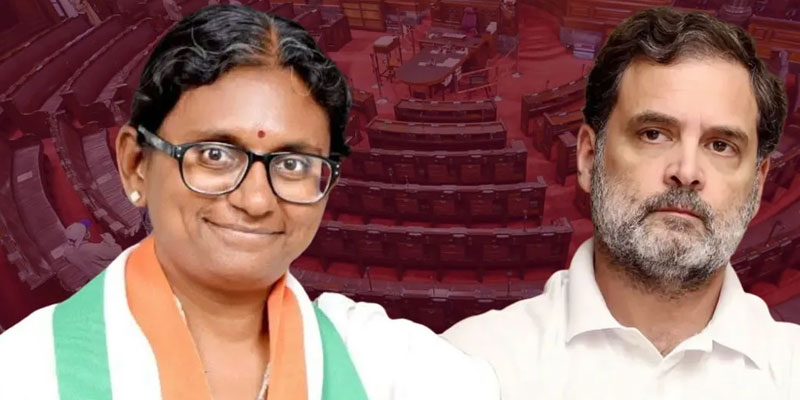
Congress leader Meenakshi Natarajan found herself at the centre of a major political controversy after her Rajya Sabha nomination from Madhya Pradesh was rejected over an affidavit-related issue linked to a private complaint filed in Hyderabad. The rejection on June 9, 2026, has sparked intense debate over election disclosure rules, exposed factional tensions within the Congress party, and provided the Bharatiya Janata Party (BJP) with a strategic political opportunity ahead of crucial parliamentary calculations.
The Affidavit Dispute Explained
The controversy revolves around allegations that Natarajan failed to disclose details of a pending legal matter in her election affidavit submitted under Form 26. The Returning Officer rejected her nomination on grounds that the affidavit was incomplete.
The case stems from a private complaint filed in Hyderabad in August 2025 by former Congress worker A. Srilatha. The original allegations date back to 2022, when Srilatha accused Telangana Congress leader Kumbham Shivakumar Reddy of harassment, molestation and coercion. In 2025, she expanded the complaint to include several Congress officials, including Natarajan, accusing them of organisational inaction despite being informed about the allegations.
Importantly, Natarajan was not accused in the original 2022 case. Her name surfaced only in the later private complaint, where she was listed as “accused number four” for allegedly failing to act on internal complaints.
Congress leaders argue that the Hyderabad magistrate court had merely issued a pre-cognisance notice under Section 223 of the Bharatiya Nagarik Suraksha Sanhita (BNSS) and not a formal criminal summons. According to the party, the Returning Officer incorrectly treated the notice as evidence of an active criminal proceeding requiring mandatory disclosure.
BJP’s Tactical Political Intervention
The BJP quickly moved to challenge Natarajan’s nomination during the scrutiny process, alleging deliberate concealment of material facts. Sudhanshu Trivedi accused Congress of knowingly filing an incomplete nomination despite anticipating defeat.
Meanwhile, Madhya Pradesh minister Kailash Vijayvargiya indirectly suggested that BJP received assistance from Congress insiders in Telangana to uncover details related to the complaint. His remarks intensified speculation that internal Congress rivalries may have contributed to the controversy becoming public at a politically sensitive moment.
Congress Infighting Comes into Public View
The controversy has also highlighted internal factionalism within the Congress party, especially in Telangana where Natarajan serves as AICC in-charge. Political observers and opposition leaders have pointed to possible intra-party rivalries behind the leak of sensitive information.
Dasoju Sravan alleged that “internal conspiracies” within Congress contributed to Natarajan’s exclusion from the Rajya Sabha race.
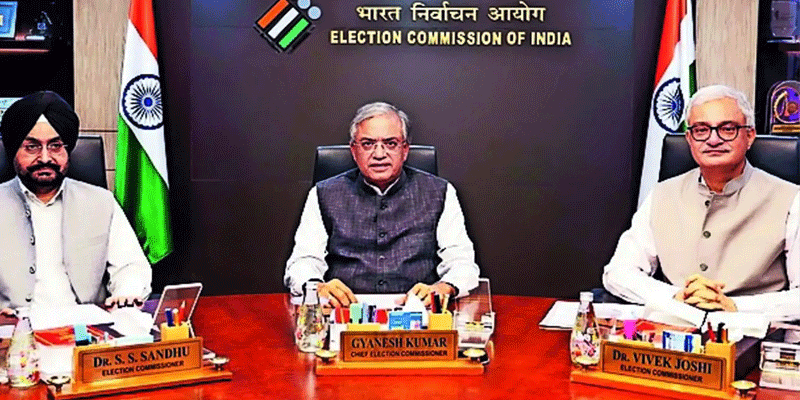
Natarajan, however, dismissed the allegations and accused the BJP of manipulating the electoral process for political gain. Congress has since approached the Election Commission seeking relief and clarification, arguing that the legal notice did not amount to formal criminal charges and therefore did not mandate disclosure in the affidavit.
Legal And Political Implications
The dispute raises important questions about election law and candidate disclosures. Under existing rules, candidates are generally required to disclose criminal cases where charges have been formally framed for offences punishable by imprisonment of two years or more.
Congress maintains that the Hyderabad matter remains at a preliminary stage and that no direct criminal allegations have been established against Natarajan.
Politics, Procedure and Power Collide
The rejection of Meenakshi Natarajan’s Rajya Sabha nomination has evolved beyond a technical affidavit dispute into a broader political battle involving legal interpretation, party infighting and strategic intervention by rivals.
For Congress, the episode exposes vulnerabilities within its internal structure and coordination, while for the BJP, it demonstrates how procedural challenges can become effective political tools. The controversy also underlines the increasing role of legal scrutiny and documentation in India’s high-stakes electoral politics.
As the matter moves through institutional and political channels, it is likely to remain a significant flashpoint in the ongoing contest between India’s two largest political parties.
(With agency inputs)