From Exam Irregularities to Political Showdown
The alleged NEET-UG 2026 paper leak has snowballed from a student-led agitation into a major political confrontation, raising questions over examination integrity, police action and democratic accountability. What began as protests over alleged irregularities has now become a broader debate on institutional trust and the government's handling of dissent.
The agitation intensified after the Cockroach Janata Party (CJP) organised a "Sansad Chalo" march during the Monsoon Session, demanding the resignation of Union Education Minister Dharmendra Pradhan, ₹1 crore compensation for families of students allegedly driven to suicide due to exam-related stress, and the release of activist Sonam Wangchuk, who has been on a prolonged hunger strike supporting the movement.
Crisis of Confidence in NEET
NEET is India's largest medical entrance examination and a crucial pathway for millions of aspirants. Allegations of paper leaks and examination irregularities have shaken confidence in the country's centralized testing system, with students arguing that repeated lapses are undermining merit and equal opportunity.
Delhi Turns into the Protest Epicentre
The "Sansad Chalo" march became the movement's biggest flashpoint as protesters attempted to reach Parliament, leading to clashes with Delhi Police. Authorities said over 118 police personnel and around 60 protesters were injured, while buses and public property were damaged.
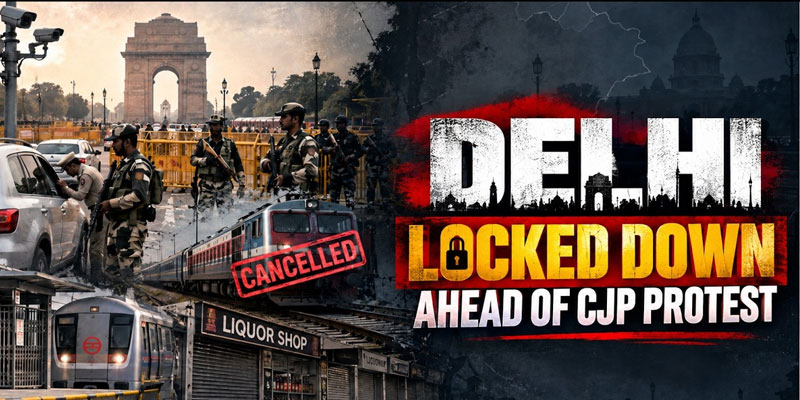
In response, central Delhi witnessed unprecedented security measures. Roads leading to Parliament were barricaded, paramilitary forces were deployed, Metro stations including Rajiv Chowk and Janpath were temporarily closed, and railway stations remained on high alert to prevent further mobilisation.
Security Versus Democratic Rights
Delhi Police registered multiple FIRs under the Bharatiya Nyaya Sanhita, arrested around 70 protesters, and indicated that a wider conspiracy probe may follow. The government has justified the action as necessary to protect Parliament and maintain law and order.
Protesters and CJP leaders, however, allege excessive force, claiming students, activists and relatives of Sonam Wangchuk were mistreated and peaceful dissent was suppressed.
Opposition Unites Around NEET
The protests have rapidly acquired political momentum. Uddhav Thackeray urged Opposition parties to unite behind the movement, accusing the Centre of adopting "dictatorial" methods. Former Odisha Chief Minister Naveen Patnaik also demanded Dharmendra Pradhan's resignation, while BJD MPs protested at Vijay Chowk after visiting injured students.
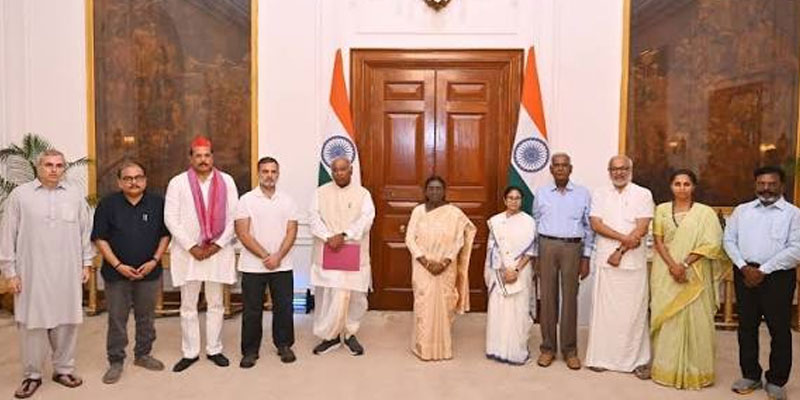
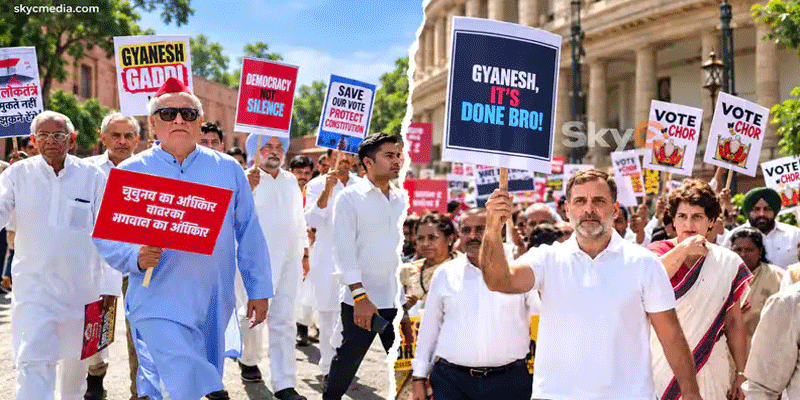
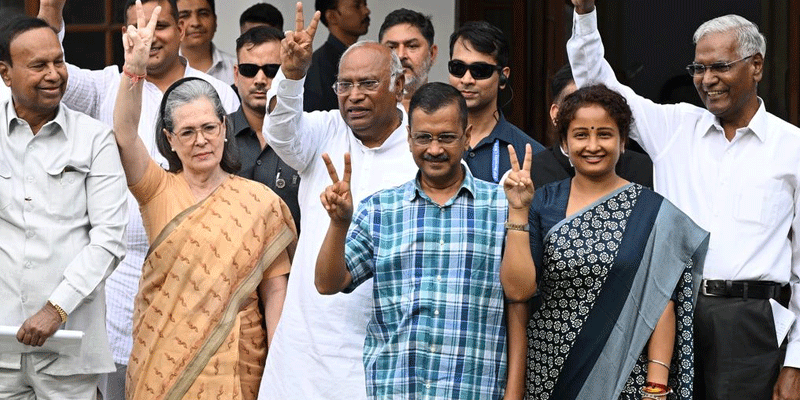
Inside Parliament, Opposition MPs from Congress, Samajwadi Party and Trinamool Congress wore black clothes, calling it a "Black Day" for democracy and accusing the government of avoiding discussion on NEET and police action.
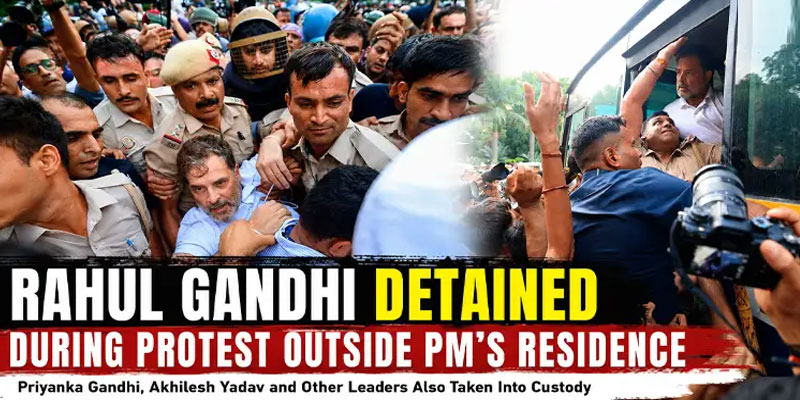
Congress further organised nationwide demonstrations after Rahul Gandhi, Priyanka Gandhi Vadra and other leaders were detained during a "Chalo PM Residence" protest. The party has highlighted reports of Rahul Gandhi being manhandled to reinforce allegations of excessive police action.
BJP Defends Government's Stand
The BJP has strongly rejected the Opposition's allegations. Senior leader Ravi Shankar Prasad described Rahul Gandhi's march towards the Prime Minister's residence as irresponsible and a violation of security protocols. The party maintains that police acted to protect high-security institutions and has accused the Opposition of politicising the issue for electoral gains.
A Larger Test of Institutions
Beyond politics, the controversy reflects a deeper crisis of confidence in India's examination system. The demand for ₹1 crore compensation symbolises both the human cost of alleged administrative failures and growing frustration among students whose futures depend on fair examinations. While the Centre has agreed to examine the protesters' demands following discussions with Union Minister J.P. Nadda, no firm assurances have been announced.
A Defining Moment for Governance
The NEET paper leak protests have evolved into a contest over exam credibility, democratic rights and political accountability. For the Opposition, the issue combines youth anger with concerns over governance and civil liberties. For the government, the challenge is balancing public order with public trust. How Parliament addresses the controversy, whether an independent inquiry is initiated, and how authorities respond to student concerns will determine whether this remains an examination scandal or becomes a defining political issue ahead.
(With agency inputs)