The Oxford Union Debate Incident
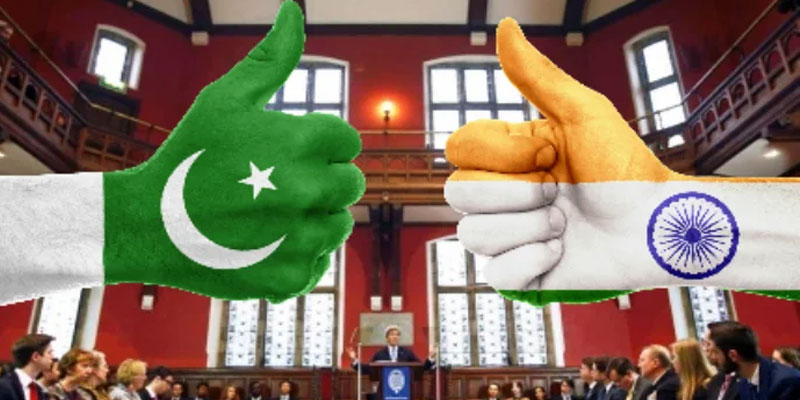
On November 27, 2025, a high-profile Oxford Union debate titled “India’s Policy Towards Pakistan is a Populist Strategy Sold as Security Policy” ended in confusion and controversy. The debate, meant to feature Indian and Pakistani representatives facing off in a parliamentary-style forum, was abruptly canceled, triggering a heated narrative clash over responsibility.
Initially, the Indian side, including prominent lawyer J Sai Deepak, ex-Army Chief Gen M.M. Naravane, BJP MP Subramanian Swamy, and Congress leader Sachin Pilot, were prepared to participate. The Pakistani team, slated to include former Foreign Minister Hina Rabbani Khar, Lt Gen Zubair Mahmood Hayat, and ex-diplomat Dr. Mohammad Faisal, did not arrive on time. According to Sai Deepak, Indian speakers refused to debate students in the absence of the official Pakistani delegation, as Oxford Union rules required representation from both sides.
The sudden cancellation left the audience, which included students and international observers, bewildered. Organizers cited the absence of one side as the procedural reason for halting proceedings, while social media and news outlets quickly became battlegrounds for competing narratives.
The Cancellation and Blame Game
Conflicting claims emerged immediately after the incident. The Pakistan High Commission in the UK asserted that the Indian delegation had withdrawn at the last moment, framing the cancellation as an “uncontested win” or walkover. The High Commission characterized India as lacking confidence in defending its policy, a narrative widely amplified on social media and Pakistani outlets.
Indian representatives strongly rejected these claims. Sai Deepak described the assertion as a “shameless and desperate spin,” emphasizing that the debate was canceled because the Pakistani delegation never showed up. He noted that Indian speakers were present and prepared to engage students but declined to debate without the official team. Indian sources also criticized the Oxford Union’s management, terming the episode “shambolic” due to poor coordination and communication, which compounded public confusion.
Thus, the incident quickly morphed into a public blame game, with each side accusing the other of mismanagement or deliberate narrative manipulation. Social media hashtags and commentaries further fueled the perception battle, highlighting how modern diplomatic disputes often migrate into academic and digital forums.
India-Pakistan Narrative Clash
Beyond procedural confusion, the incident reflects deeper India-Pakistan strategic and diplomatic tensions. Analysts point to several dimensions:
· Pakistan’s Narrative: By claiming a last-minute Indian withdrawal, Pakistan framed the incident as an intellectual victory, reinforcing its international messaging on India’s policy fragility. This fits a broader strategy to project victimhood and gain soft power leverage.
· India’s Approach: India prioritized controlled discourse and message discipline, opting not to engage students in a reduced-capacity debate. The withdrawal from a compromised forum reflects sensitivity to domestic political optics and national security narratives.
The clash also underscores a trend: bilateral tensions spilling over into global academic and media platforms, where optics often influence perception more than factual accuracy.
Lessons in Narrative Diplomacy
The Oxford Union debate fiasco illustrates the increasing importance of perception management in international discourse. While procedural missteps played a role, the incident was amplified by strategic messaging from both nations. India’s refusal to debate without the Pakistani team emphasized caution and controlled engagement, while Pakistan’s claims of victory highlighted the use of narrative as a diplomatic tool.
Ultimately, the episode reveals that modern diplomatic rivalries are fought as much in media, academia, and public perception arenas as on the ground. The fallout serves as a reminder that in sensitive bilateral contexts, even academic debates can become instruments of strategic narrative warfare. The Oxford Union incident will be remembered less for the debate itself than for how it became a symbolic battleground in the India-Pakistan narrative struggle.
(With agency inputs)