Final Electoral List Released After Intensive Revision
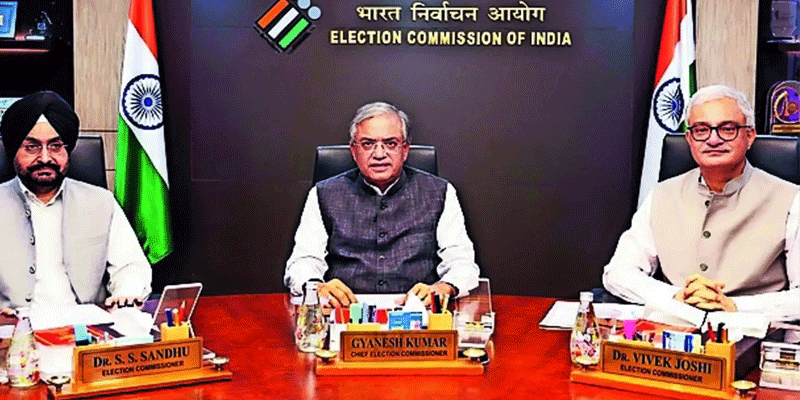
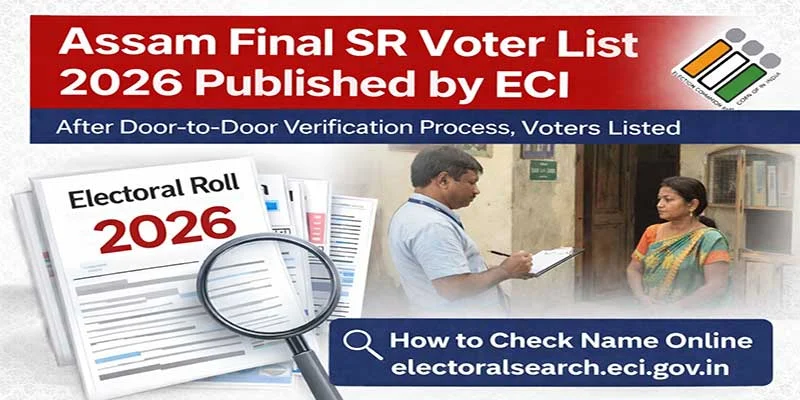
Assam has published its final electoral roll following a Special Intensive Revision (SIR), listing about 2.49 crore voters across the state’s 126 assembly constituencies. The updated register reflects a reduction of more than 2.4 lakh names from the draft list issued in December, after months of verification, objections, and corrections. The Election Commission says the exercise aimed to improve accuracy before the 2026 assembly election, but the deletions and redrawn rolls have already triggered political debate.
A Crucial Administrative Exercise with Political Stakes
Electoral roll revisions are routine, yet Assam’s latest update carries heightened significance due to the state’s complex demographic and migration history. With elections approaching, the refined list is expected to shape campaign strategies, constituency calculations, and voter outreach. The SIR process involved extensive field verification to eliminate inaccuracies, but its outcomes also intersect with broader questions about representation, migration, and electoral fairness.
Composition of the Updated Voter Base
The final roll presents a near-equal gender balance, with male and female voters each accounting for roughly half the electorate and a small number of third-gender electors recorded. Rural voters continue to dominate the list, reflecting Assam’s largely agrarian demographic profile. Younger voters form a sizable share of the electorate, indicating a generational shift that could influence political messaging and turnout patterns.
At the same time, constituency boundaries redrawn in recent delimitation exercises have altered the distribution of reserved seats and changed the demographic composition of several constituencies. These adjustments, combined with the revised voter list, are likely to reshape electoral competition across regions.
Reasons Behind the 2.43 Lakh Deletions
The removal of approximately 2.43 lakh names stems from multiple factors identified during the verification process. Election officials cite confirmed deaths as a major category, with several lakh entries updated after field checks. Another significant portion involved individuals who had permanently relocated from their registered constituencies. Duplicate or multiple registrations were also detected and removed to ensure that each eligible voter appears only once on the rolls.
The revision followed house-to-house verification carried out by thousands of booth-level officers, publication of a draft list, and a claims-and-objections window that allowed citizens to request corrections. Those who believe they were wrongly removed retain the option to seek reinstatement through formal applications before polling.
Political and Administrative Implications
While officials describe the exercise as a technical clean-up, the scale of deletions has drawn scrutiny from opposition parties, which have raised concerns about potential disenfranchisement. The government, however, maintains that the revision strengthens electoral integrity by removing outdated or inaccurate entries.
The updated rolls, coupled with earlier delimitation changes, could influence campaign strategies across the state. Parties are recalibrating outreach efforts to account for demographic shifts, particularly in constituencies where migration and population movement have altered voter profiles.
Accuracy, Trust, and the Road to 2026
Assam’s revised voter list represents more than an administrative update; it is a key foundation for the credibility of the upcoming election. Ensuring accurate rolls is essential for public confidence in the democratic process, yet transparency and accessible grievance mechanisms remain equally important. As the state moves toward the 2026 polls, the true impact of the revision will depend on whether voters view the exercise as a fair correction of records or a politically charged intervention.
(With agency inputs)