High-Level Talks Signal Strategic Intent
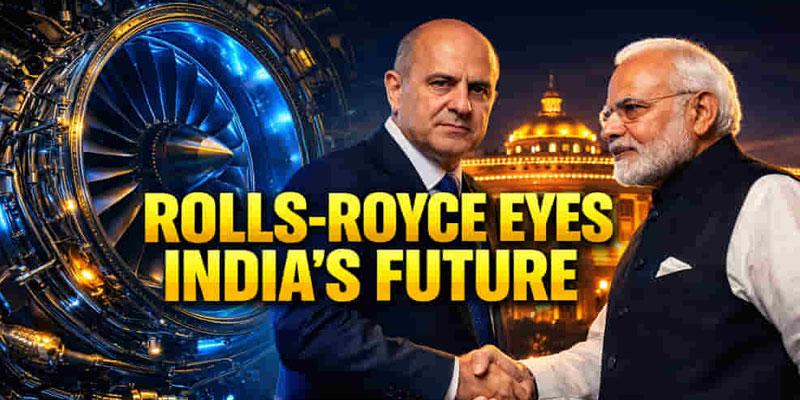
Prime Minister Narendra Modi’s meeting with Rolls-Royce CEO Tufan Erginbilgic in February 2026 highlighted the British engineering group’s expanding ambitions in India. The discussion underscored India’s growing importance as both a market and a manufacturing base for advanced engineering systems. From civil aviation engines to military propulsion and marine technologies, the conversation centered on scaling cooperation to support India’s long-term industrial and technological goals.
Scaling Up for India’s Development Vision
Rolls-Royce has steadily increased its footprint in India, positioning the country as a key hub for design, engineering, and manufacturing. Its global capability center in Bengaluru—now among the company’s largest worldwide—serves as a core facility for research, digital engineering, and maintenance support.
The company is aligning its investments with India’s broader development priorities, including the “Viksit Bharat” vision and policies encouraging local production. Plans include expanded co-manufacturing, skill development programs for Indian engineers, and partnerships with domestic firms in aerospace and power systems. By integrating Indian talent and supply chains into global operations, Rolls-Royce aims to both meet domestic demand and support exports to international markets.
India’s rapidly expanding aviation sector, with hundreds of aircraft on order from domestic carriers, also presents a strong commercial opportunity. Engine servicing, maintenance, and long-term support contracts are expected to grow alongside fleet expansion, reinforcing India’s role in the company’s global strategy.
Impact on Defence and Aerospace Capabilities
Rolls-Royce’s expansion carries significant implications for India’s defence and aerospace sectors. The company already supports engines used in various aircraft operated by the Indian Air Force and Navy. Expanded local manufacturing and maintenance capabilities could reduce reliance on imports while improving operational readiness.
Future collaboration may extend to next-generation fighter aircraft engine development, naval propulsion systems, and armored vehicle power units. Such partnerships would strengthen India’s efforts to build indigenous defence capabilities and enhance self-reliance. Increased local production of components and subsystems can also accelerate maintenance cycles and lower lifecycle costs for military equipment.
In the aerospace domain, deeper integration with Indian suppliers could help create a more robust domestic ecosystem. Technology transfer, joint research initiatives, and workforce training programs may contribute to the development of advanced propulsion technologies within India. This would position the country as both a consumer and a contributor in the global aerospace value chain.
Economic and Strategic Dimensions
The expansion aligns with broader India-UK economic cooperation goals, particularly as both countries seek to deepen trade and technology ties. For India, partnerships with established engineering firms provide access to advanced expertise and global markets. For Rolls-Royce, India offers a fast-growing aviation sector, a skilled workforce, and supportive policy frameworks encouraging local manufacturing.
However, challenges remain. Intellectual property safeguards, regulatory approvals, and competition from other global engine manufacturers could shape the pace of expansion. Ensuring effective technology transfer and sustainable partnerships will be critical to long-term success.
A Partnership with Long-Term Implications
The Modi-Erginbilgic meeting reflects a broader shift toward strategic industrial collaboration between India and global engineering leaders. Rolls-Royce’s expanding presence could play a key role in strengthening India’s aerospace and defence capabilities while contributing to economic growth and technological development.
If executed effectively, this partnership may help India move closer to its goal of self-reliance in critical technologies while positioning the country as a major hub in the global aerospace and engineering landscape.
(With agency inputs)