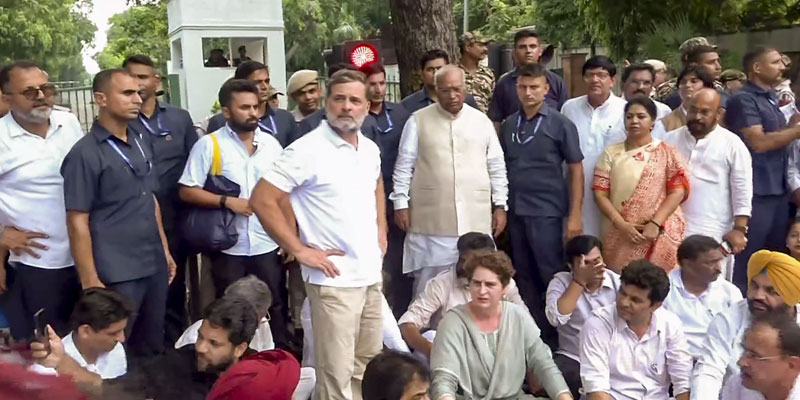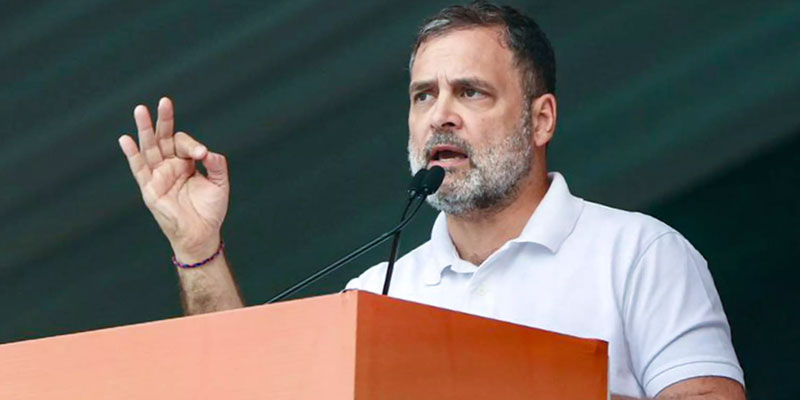
Congress leader Rahul Gandhi has escalated his criticism of the government over the proposed India–U.S. trade agreement, posing five pointed questions and seeking clarity on its potential impact on farmers and key sectors. The renewed attack places the ruling government led by Narendra Modi under pressure to explain the terms and long-term implications of the evolving trade framework between India and the United States.
A Political and Economic Flashpoint
The debate over the interim India–U.S. trade arrangement has quickly turned into a political flashpoint. Rahul Gandhi’s outreach to farmer organisations and his public questions have framed the agreement as a potential risk to domestic agriculture and strategic autonomy. The Congress leader argues that transparency is essential before the agreement progresses further, especially given its implications for tariffs, imports and long-term trade commitments.
The government, however, has maintained that the agreement is designed to expand export opportunities while safeguarding sensitive sectors. The clash reflects broader tensions between economic diplomacy and domestic political concerns.
Rahul Gandhi’s Five Key Questions
Rahul Gandhi has sought detailed clarifications on several aspects of the proposed deal, focusing largely on agriculture and policy autonomy. His five key questions include:
· Whether imports of distillers’ dried grains (DDG) from the U.S., often linked to genetically modified corn, could make India’s dairy sector dependent on foreign feed.
· Whether reduced tariffs by the U.S. on Indian goods are tied to broader geopolitical considerations, including India’s energy purchases and foreign policy choices.
· How the government plans to prevent incremental tariff reductions from gradually expanding to more agricultural commodities.
· Whether safeguards for sensitive sectors—reportedly excluding a large share of agricultural items—are firmly protected from future renegotiations.
· Whether genetically modified products could enter Indian supply chains indirectly through processed feeds or imports.
By raising these questions, Gandhi has attempted to position himself as a defender of farmers’ interests and economic sovereignty.
India–U.S. Trade Deal Essentials
The interim trade understanding aims to ease market access for goods on both sides. For India, reduced U.S. tariffs could benefit exports such as textiles, seafood, spices and select manufactured products. In return, India may lower duties on certain U.S. industrial goods and agricultural inputs, including feed products, edible oils and specialty items.
Officials argue that most sensitive agricultural sectors remain protected and that any tariff reductions would be gradual and calibrated. The government has also emphasised potential gains in exports, supply-chain diversification and strategic economic engagement with Washington.
BJP’s Response: Allegations of Misinformation
The ruling Bharatiya Janata Party has dismissed Rahul Gandhi’s allegations as politically motivated. Party leaders have described his interactions with farmer groups as “stage-managed” meetings involving Congress workers rather than independent unions.
They have also rejected his claims as “baseless lies,” arguing that they rely on outdated U.S. factsheets rather than the current negotiating framework. According to government representatives, there is no commitment that would harm farmers or open the door to unrestricted imports of genetically modified products. The BJP maintains that the agreement will expand market opportunities for Indian producers while retaining strong safeguards.
Transparency and Trust at the Core
The dispute over the India–U.S. trade deal highlights the delicate balance between economic engagement and domestic sensitivities. For the opposition, the issue provides an opportunity to champion farmers and question policy transparency. For the government, it is a test of its ability to communicate the benefits and safeguards of international trade negotiations.
Ultimately, sustained parliamentary scrutiny and public disclosure of key provisions will be essential to building trust. As India deepens global economic partnerships, ensuring that trade agreements align with domestic priorities will remain central to maintaining both political consensus and economic stability.
(With agency inputs)