PoK Leader’s Cry for Aid Amid Pakistan’s Brutalities
A deepening political and humanitarian crisis in Pakistan-occupied Kashmir (PoK) has taken a dramatic turn after Sardar Aman Khan, a prominent leader of the Joint Awami Action Committee (JAAC), appealed to India for humanitarian assistance and sought the opening of the Line of Control (LoC) for civilian movement. His appeal comes amid allegations of an intensified crackdown by Pakistani authorities on anti-government protests, leading to severe shortages of food, fuel and medicines across several parts of the region. Khan’s remarks have drawn widespread attention because they shift the narrative beyond local protests to questions of governance, humanitarian relief and Islamabad’s handling of unrest in the territory.
Economic Grievances Fuel Mass Protests
The unrest in PoK has been building for months over issues such as soaring electricity tariffs, shortages of subsidised wheat, rising inflation and widespread dissatisfaction with governance. These long-standing economic grievances have united diverse sections of society under the banner of the Joint Awami Action Committee, which has emerged as the principal platform for coordinated protests against the administration.
As demonstrations expanded across the region, Pakistani authorities reportedly responded with arrests, heightened security deployment and restrictions aimed at curbing the movement. Rather than easing tensions, these measures have intensified public resentment and transformed scattered protests into a broader challenge to Islamabad’s authority in PoK.
Humanitarian Distress and Growing Public Anger
The latest developments suggest that the crisis has moved beyond political mobilisation into a humanitarian emergency. In a widely circulated social media video, Sardar Aman Khan appealed directly to India, saying, “We need India's help. There is a shortage of rations... and we need your help.” He alleged that intensified security operations had disrupted the supply of essential commodities, leaving many residents struggling to access food and medicines.
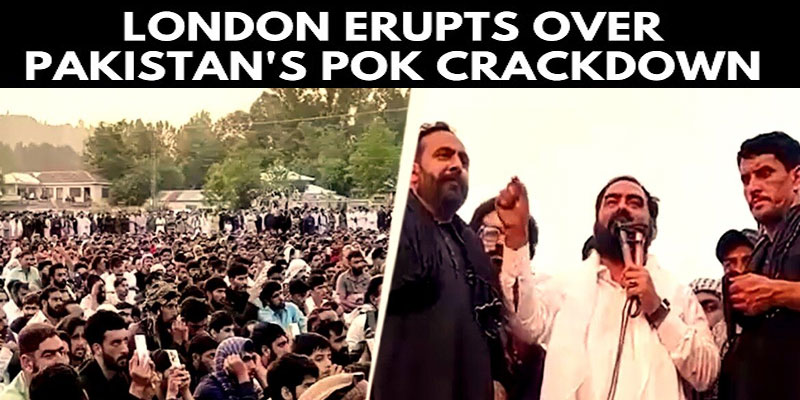
Addressing a large public gathering at Rawalakot’s Eidgah Ground, Khan also asked supporters whether they should move towards the Line of Control, drawing repeated affirmative responses from the crowd. He urged India to consider opening the LoC for civilian movement, particularly through sectors such as Poonch and Doda, to facilitate humanitarian assistance.
Reports indicate that shortages are being experienced in areas including Rawalakot, Bagh, Neelum Valley and parts of Poonch. Residents and transport operators have alleged that the movement of essential goods has been severely affected, resulting in scarcity, rising prices and mounting hardship. Whether due to administrative restrictions, security measures or prolonged protest shutdowns, the disruption of supply chains has significantly aggravated the humanitarian situation.
Strategic and Political Implications
Khan’s appeal carries significance beyond immediate humanitarian concerns. By seeking India’s assistance, he has effectively internationalised what Pakistan has largely portrayed as an internal law-and-order issue. The request shifts attention towards civilian welfare and governance, while also highlighting growing dissatisfaction with Islamabad’s administrative approach.
The crisis illustrates how prolonged reliance on coercive measures may suppress protests temporarily but risks weakening public trust and further fuelling political discontent. The convergence of economic hardship, humanitarian distress and political mobilisation has created a volatile situation with broader regional implications.
Governance Challenges Demand Humanitarian Solutions
The unfolding situation in Pakistan-occupied Kashmir demonstrates how unresolved economic grievances and heavy-handed administrative responses can rapidly evolve into a humanitarian and political crisis. Sardar Aman Khan’s appeal underscores the urgency of addressing civilian needs while restoring public confidence through dialogue and accountable governance. As conditions remain fragile, the priority must be ensuring the uninterrupted availability of essential supplies, protecting civilian welfare and pursuing peaceful solutions that prevent further escalation in an already sensitive region.
(With agency inputs)