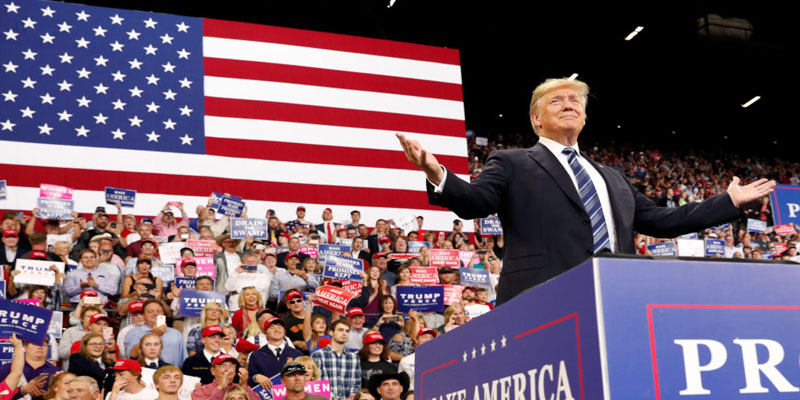
On February 24, 2026, President Donald Trump delivered the longest State of the Union address in American history, speaking for 1 hour and 48 minutes—surpassing his own previous record and even Bill Clinton’s lengthy 2000 speech. True to form, the address blended campaign-style bravado with sweeping claims of domestic revival and global dominance. Republicans rose repeatedly in applause; Democrats remained largely seated, turning the chamber into a tableau of the nation’s deepening political divide.
India–Pakistan: Claiming Credit for Nuclear De-escalation
One of the most striking foreign policy claims came when Trump asserted, he had personally prevented a nuclear confrontation between India and Pakistan. Framing it as part of “ending eight wars in ten months,” he suggested his intervention not only saved millions of lives but even protected Pakistani Prime Minister Shehbaz Sharif.
Neither New Delhi nor Islamabad has publicly verified such direct mediation. However, the statement fits Trump’s longstanding narrative of himself as a dealmaker capable of defusing global crises. Strategically, the claim serves dual purposes: appealing to nationalist voters by projecting American indispensability, and signaling continued U.S. interest in maintaining stability in South Asia amid rising Indo-Pacific competition.
Analysts interpret the assertion less as a detailed diplomatic account and more as political messaging—reaffirming Washington’s leverage in a volatile nuclear neighborhood.
Iran’s Nuclear Program: Maximum Pressure Reimagined
Trump adopted a stern tone on Iran, vowing never to allow what he called the “world’s No. 1 sponsor of terror” to obtain nuclear weapons. He referenced “Operation Midnight Hammer,” describing U.S. strikes that allegedly crippled Iran’s nuclear infrastructure during a 2025 Israel-Iran escalation. Though he expressed openness to diplomacy, the thrust of his remarks signaled a revival of the “maximum pressure” doctrine.
By coupling military readiness with restarted talks, Trump positioned himself as both hawk and negotiator. The warning aimed to deter Tehran’s nuclear ambitions while reassuring regional allies unsettled by shifting Middle East dynamics. Yet critics argue that unilateral force risks escalation and diplomatic isolation, especially as Iran attempts to rebuild capabilities.
The Iran segment underscored Trump’s broader worldview: peace through strength, but on American terms.
Tariffs, Taxes and Economic Nationalism
On the domestic front, tariffs dominated the economic narrative. Trump defended them aggressively, claiming they protect American workers and could eventually replace income taxes—without requiring congressional approval. He touted 53 stock market highs, deregulation efforts, and millions lifted from food assistance rolls, while attacking “abusive” trading partners.
The speech reframed tariffs not as temporary leverage but as structural policy. This pivot signals a deeper embrace of economic nationalism, even as courts challenge aspects of executive trade authority. For supporters, the message was clear: American manufacturing first. For critics, it risks inflation, retaliation, and fiscal imbalance.
Democratic Reactions: Theater and Rebuke
Democrats responded with visible dissent. Many remained seated through applause lines, prompting Trump to call them “crazy” during the address. The partisan tension reflected broader national fault lines.
Virginia Governor Abigail Spanberger delivered the official Democratic rebuttal, accusing Trump of scapegoating and deepening division. House Minority Leader Hakeem Jeffries issued a sharp critique, challenging the president’s economic claims and accusing him of prioritizing rhetoric over governance.
Media commentary characterized the speech as confrontational and light on policy detail. While it energized Trump’s base, polls suggested mixed reactions among independents as midterm elections approach.
Endurance in a Fractured Union
Trump’s marathon SOTU was less a traditional policy blueprint and more a political spectacle—assertive, polarizing, and meticulously crafted for campaign resonance. By claiming credit for averting an India-Pakistan war, warning Iran, and doubling down on tariffs, he projected strength and unilateral decisiveness. Yet the stark Democratic backlash underscored a nation sharply divided over both facts and direction.
In length and tone, the address symbolized Trump’s enduring political strategy: dominate the stage, define the narrative, and let confrontation sharpen the contrast. Whether that approach consolidates power or deepens fracture remains the defining question for America’s next chapter.
(With agency inputs)