Victory Day Truce Fails to Silence the Battlefield
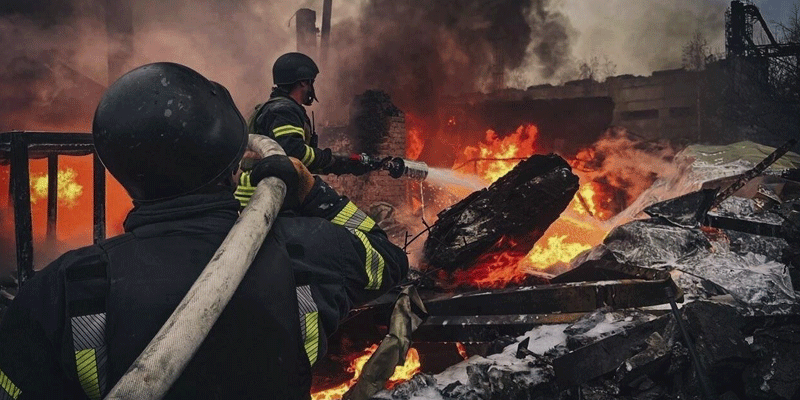
The war between Russia and Ukraine has continued unabated despite President Vladimir Putin announcing a unilateral ceasefire to coincide with Russia’s World War Two Victory Day commemorations. Rather than easing tensions, the proposed truce has intensified accusations, propaganda battles and fears of escalation, exposing how deeply entrenched the conflict has become more than four years after Moscow’s 2022 invasion.
While Russia framed the ceasefire as a humanitarian and symbolic gesture linked to the Soviet Union’s victory over Nazi Germany, Ukraine dismissed it as political theatre and accused Moscow of continuing attacks across the frontlines.
Competing Ceasefires and Mutual Accusations
Putin declared a two-day ceasefire for May 8 and 9, aligning it with Victory Day celebrations — one of the most significant patriotic events in modern Russian political culture. However, Ukraine rejected the proposal and instead called for a longer truce beginning earlier in the week, which Moscow ignored.
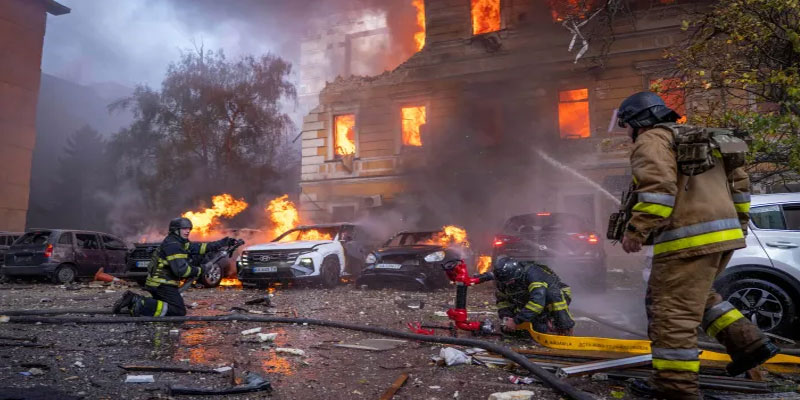
Both sides then accused each other of violating ceasefire understandings. Russia’s Defence Ministry claimed Ukrainian forces launched repeated drone and artillery strikes on border regions such as Belgorod and Kursk, while also targeting Russian infrastructure deeper inside the country. Moscow stated that it intercepted more than 260 Ukrainian drones, including attacks directed toward the capital and industrial regions in the Urals.
Ukraine offered a sharply different account. President Volodymyr Zelenskyy said Russian attacks on Ukrainian positions continued overnight, arguing that Moscow had made “not even a token attempt” to halt military operations. Kyiv maintained that it would continue responding militarily as long as Russian strikes persisted.
The episode reflects a recurring pattern in the conflict: ceasefire announcements are increasingly used for strategic messaging rather than as genuine steps toward peace.
Victory Day Politics and Russia’s Security Concerns
The truce controversy is inseparable from the political symbolism of Victory Day itself. The Kremlin has consistently linked the war in Ukraine to the Soviet Union’s struggle against Nazi Germany during what Russians call the “Great Patriotic War.” Through this narrative, Moscow portrays its military campaign as part of a broader historical mission against alleged neo-Nazism and Western hostility.
Yet the symbolism has become increasingly complicated. Russia’s war in Ukraine has now lasted longer than the Soviet Union’s direct conflict with Nazi Germany between 1941 and 1945. Instead of a decisive triumph, the Kremlin faces a prolonged and costly war marked by attrition and uncertainty.
Security preparations around Moscow have therefore intensified dramatically. Reports indicate increased anti-drone deployments, heightened patrols near the Kremlin, metro closures and restrictions on mobile internet services. Russian officials have also warned that any Ukrainian attempt to disrupt the Victory Day Parade would trigger massive missile retaliation against Kyiv.
Historical Memory Versus Present Reality
The Kremlin’s wartime rhetoric relies heavily on the memory of Soviet sacrifice during World War Two, when nearly 27 million Soviet citizens died defeating Nazi Germany. That historical legacy remains central to Russia’s national identity and political messaging.
However, analysts note that the comparison between the two conflicts is deeply contested. During World War Two, the Soviet Union fought a defensive war against invasion and ultimately achieved a clear military victory. In contrast, today’s conflict involves Russia conducting an offensive campaign against a neighbouring state backed by Western military assistance, with neither side appearing close to decisive success.
This contrast has intensified debates globally over whether Moscow’s historical narrative reflects genuine memory politics or strategic mobilisation for a prolonged modern conflict.
A War Without a Clear Exit
The failure of the Victory Day ceasefire illustrates how difficult meaningful de-escalation has become in the Russia-Ukraine war. Symbolic pauses and competing narratives increasingly serve political objectives rather than humanitarian outcomes.
At the same time, the conflict shows no obvious pathway toward compromise. Both governments remain heavily invested militarily, politically and emotionally in their respective war aims, while public rhetoric continues to harden.
The result is a grim paradox: even during commemorations marking the end of history’s deadliest war in Europe, another devastating conflict continues with little sign of resolution.
(With agency inputs)