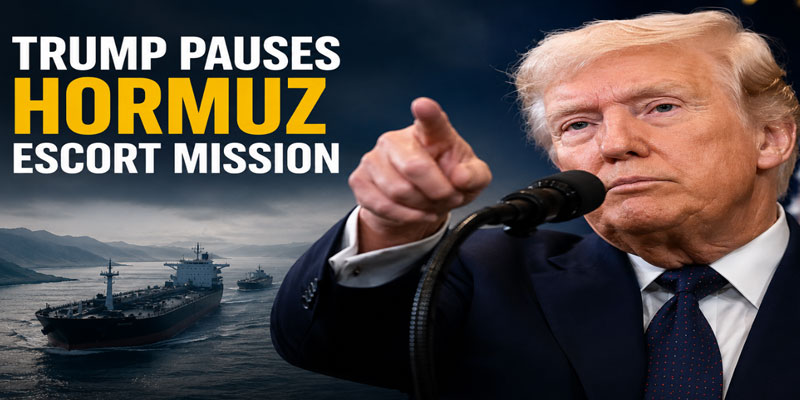
Donald Trump has announced that the United States will temporarily pause its mission to escort commercial vessels through the Strait of Hormuz, citing “great progress” in negotiations with Iran. The decision signals a potential diplomatic breakthrough, yet continued missile and drone activity in the Gulf underscores that the conflict is far from resolved.
Why the US Paused the Escort Mission
The escort initiative, known as “Project Freedom,” was launched to safeguard oil tankers and cargo ships navigating the Strait of Hormuz after escalating hostilities disrupted nearly 20% of global seaborne oil supply. Within 48 hours, however, Trump announced a pause, claiming mutual agreement between the US and Iran, facilitated by intermediaries including Pakistan.
This move appears strategic. By suspending escorts, Washington signals openness to diplomacy while retaining leverage—its naval presence remains intact, and operations can resume if negotiations collapse. The broader maritime blockade, notably, has not been lifted.
From ‘Epic Fury’ to Defensive Posture
The pause follows the formal conclusion of “Operation Epic Fury,” the US-led offensive campaign targeting Iran’s nuclear and military infrastructure. Secretary of State Marco Rubio has emphasised that the US has achieved its objectives and is now shifting to a “strictly defensive” posture.
Under this framework, US forces aim to deter further aggression and protect international shipping rather than initiate new strikes. Rubio has reiterated that Washington prefers a peaceful resolution but remains prepared to respond if Iran escalates, particularly in the Hormuz corridor.
Ground Reality: UAE Under Attack
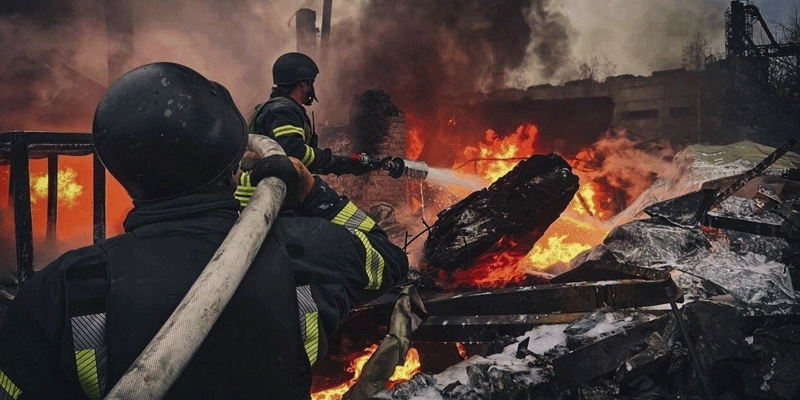
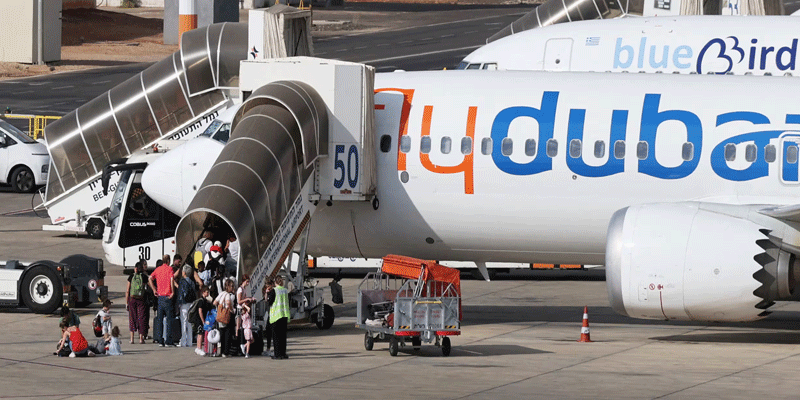
Despite diplomatic signals, the situation on the ground remains volatile. The United Arab Emirates has reported multiple missile and drone attacks in recent days, allegedly originating from Iran. Strikes in Fujairah reportedly set an oil facility ablaze and injured foreign nationals, including Indian citizens.
Iran has denied involvement, accusing adversaries of fabricating incidents to derail negotiations and justify continued US military presence. This cycle of accusation and denial complicates verification and erodes trust at a critical moment in talks.
Strategic Implications: Pause or Pivot?
The pause in escort operations reflects a broader transition—from active conflict to a hybrid phase of deterrence and diplomacy. For the US, it offers a way to reduce military exposure while testing Iran’s willingness to engage constructively.
However, the risks remain high. The Strait of Hormuz continues to operate under partial disruption, and any escalation—whether real or perceived—could quickly unravel diplomatic gains. Gulf allies, particularly the UAE, remain vulnerable, and their security concerns could influence Washington’s next steps.
A Fragile Diplomatic Window
Analytically, this moment represents a narrow window for de-escalation. If ongoing negotiations yield a verifiable agreement—covering maritime security, missile activity, and broader regional conduct—it could stabilise one of the world’s most critical energy corridors.
Conversely, if talks falter or attacks intensify, the US may be compelled to resume escort missions or even re-enter a more aggressive posture, especially under pressure from allies and domestic stakeholders.
Progress Claimed, Uncertainty Remains
Trump’s announcement marks a shift in tone—from confrontation to cautious optimism. Yet, the underlying dynamics of the conflict remain unresolved. The pause in Hormuz escorts is less an endpoint than a test: of diplomacy, of restraint, and of mutual intent.
In a region where miscalculation can have global consequences, the coming days will determine whether this pause evolves into lasting stability—or proves to be just another interlude in a prolonged geopolitical standoff.
(With agency inputs)