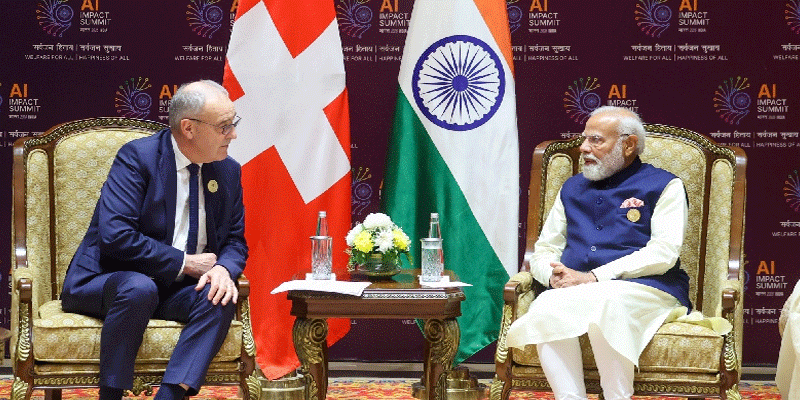
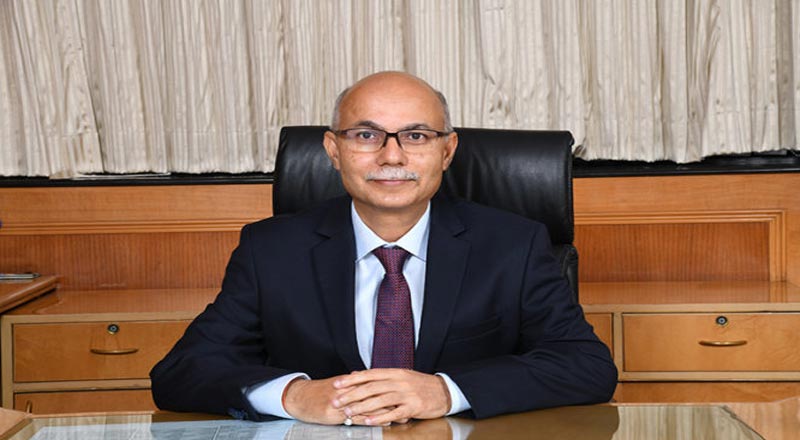
At a time of rising geopolitical uncertainty, growing economic fragmentation and multiple global conflicts, the European Union’s relationship with India is rapidly emerging as one of the most consequential partnerships of the 21st century. EU Ambassador to India Herve Delphin recently described the EU-India partnership as “limitless,” strongly endorsing Prime Minister Narendra Modi’s repeated assertion that “this is not an era of war.” The statement reflects a broader convergence between Europe and India on strategic autonomy, economic resilience and multilateral diplomacy at a time when global power equations are undergoing significant transformation.
A Strategic Partnership Expanding Beyond Economics
The relationship between India and the European Union has evolved far beyond conventional trade engagement. The 16th EU-India Summit and the 2025 Joint Communication framework laid the foundation for what both sides now call the “New Strategic EU-India Agenda.”
A major breakthrough came in January 2026 with the signing of the first-ever EU-India Security and Defence Partnership. The agreement expands cooperation in maritime security, cybersecurity, counterterrorism and Indo-Pacific stability — areas increasingly critical as tensions rise around China’s growing influence and global supply-chain vulnerabilities.
High-level political engagement has also intensified. The visit of senior European Commissioners to India in 2025 signalled Europe’s recognition of India as a long-term strategic pillar in Asia, not merely an emerging market.
Trade and Technology Become the Core Drivers
Trade remains one of the strongest pillars of the relationship. Bilateral trade between India and the EU crossed €120 billion in 2025, and both sides are now working toward an ambitious Free Trade Agreement that could potentially double trade volumes to nearly $300 billion by 2030.
Negotiations are focusing on reducing tariffs, improving market access and strengthening supply-chain resilience. Sectors expected to benefit significantly include IT services, pharmaceuticals, textiles, chemicals and critical minerals.
The India-EU Trade and Technology Council has further accelerated collaboration in artificial intelligence, semiconductor supply chains, cybersecurity and digital governance. For India, deeper engagement with Europe also provides strategic diversification at a time when global trade tensions and protectionist policies, particularly from the United States, are becoming increasingly unpredictable.
Modi’s Peace Doctrine Finds Resonance in Europe
One of the most notable aspects of the growing relationship is the political and diplomatic convergence around peace and multilateralism. Prime Minister Modi’s statement — “this is not an era of war” — first articulated during the Russia-Ukraine conflict and repeated at several international forums, has found strong resonance within Europe.
Ambassador Delphin noted that the message has been positively received across European capitals because it aligns with the EU’s long-standing emphasis on diplomacy, sovereignty and conflict resolution. Europe increasingly sees India as a balancing power capable of engaging multiple geopolitical blocs without becoming fully aligned with any single camp.
This convergence has become particularly visible amid the ongoing tensions in West Asia, where both India and the EU have advocated dialogue, restraint and stability rather than military escalation.
Challenges Remain Despite Expanding Cooperation
Despite growing alignment, differences still persist. Negotiations over agricultural subsidies, data localisation rules and climate-related trade regulations remain sensitive. India and Europe also maintain nuanced differences in their approach toward China and strategic dependencies.
However, both sides appear increasingly willing to manage disagreements pragmatically because of the broader geopolitical and economic benefits of partnership.
A Defining Partnership in a Fragmented World
The expanding EU-India relationship reflects the emergence of a more multipolar global order where strategic partnerships are shaped not only by economics but also by shared geopolitical interests and diplomatic values. As Europe seeks reliable democratic partners and India expands its global influence, the partnership is steadily transforming into a cornerstone of global stability, technology cooperation and rules-based international engagement. If current momentum continues, the EU-India alliance could become one of the defining geopolitical and economic partnerships of the coming decades.
(With agency inputs)