Beijing Visit Blends Diplomacy, Optics and Strategic Messaging
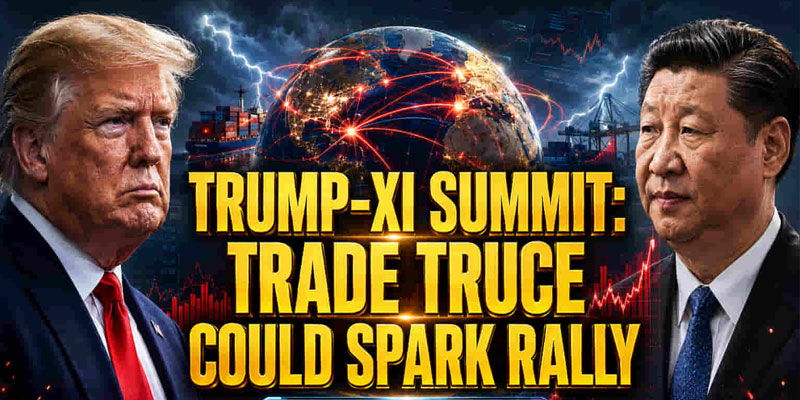
President Donald Trump’s visit to Beijing comes at a highly sensitive moment in US-China relations, where economic cooperation coexists uneasily with deep geopolitical rivalry. The carefully planned two-day engagement combines ceremonial grandeur with intense closed-door diplomacy, reflecting the importance both sides attach to maintaining communication despite rising tensions.
The itinerary includes formal meetings at the Great Hall of the People, a symbolic tour of the Temple of Heaven, a state banquet on Thursday evening, and follow-up tea discussions and a working lunch on Friday. These events are designed not merely as diplomatic rituals but as opportunities for extended personal interaction between Trump and Chinese President Xi Jinping. The blend of formal negotiations and private conversations allows both leaders to address contentious issues in a more flexible setting while projecting an image of stability to global markets.
For China, the visit reinforces Beijing’s role as a central global power capable of hosting high-level diplomacy on its own terms. For Washington, the summit provides an opportunity to secure economic concessions while preventing further deterioration in one of the world’s most consequential bilateral relationships.
Trade and Economic Stability Drive the Agenda
Economic issues dominate the official agenda. The Trump administration’s immediate priority is to preserve and extend the fragile October trade truce while extracting visible commercial gains that can be presented as diplomatic successes back home. Discussions are expected to focus on expanded Chinese purchases of American agricultural products such as soybeans and beef, along with potential aircraft procurement agreements benefiting major US manufacturers.
Another important proposal involves the creation or revival of a bilateral dispute-management mechanism, informally described as a “Board of Trade.” Such a platform would institutionalize economic dialogue, reduce the risk of sudden tariff escalations, and provide a structured framework for handling future disagreements.
China, meanwhile, seeks assurances on long-term economic stability. Beijing is expected to push for relaxation of certain US trade barriers, clearer rules governing technology restrictions, and broader investment opportunities for Chinese companies. Chinese negotiators are likely to emphasize predictability and mutual market access as essential to stabilizing bilateral ties amid slowing global growth.
Business Delegation Highlights Technology Priorities
A major feature of the visit is Trump’s high-profile business delegation, which reportedly includes Elon Musk and Nvidia CEO Jensen Huang. Huang’s late addition to the delegation—reportedly at Trump’s personal request during an Air Force One refuelling stop—underscores the administration’s focus on technology and industrial cooperation.
The presence of influential figures from the semiconductor, electric vehicle, and artificial intelligence sectors reflects the summit’s deeper technological dimension. Discussions are expected to touch on semiconductors, critical mineral supply chains, AI cooperation, and selective carve-outs that could ease commercial tensions without fundamentally altering strategic competition.
Beyond economic substance, the participation of leading corporate executives sends a broader message to international investors that dialogue between the United States and China remains active despite escalating rivalry.
Xi’s Taiwan Warning Raises Strategic Stakes
The most sensitive discussions, however, revolve around security issues—particularly Taiwan. During meetings in Beijing, President Xi reportedly warned Trump that the United States and China “could come into conflict” if the Taiwan issue is mishandled. The warning highlights how central Taiwan remains to Beijing’s national priorities and reflects growing Chinese concern over continued US military and political support for Taipei.
China is expected to seek firmer assurances regarding Washington’s cross-Strait policy, including greater restraint or prior consultation on future US arms sales to Taiwan. For the United States, however, any major shift remains politically difficult because of domestic bipartisan support for Taiwan and existing security commitments in the Indo-Pacific.
The exchange underscores the fundamental contradiction shaping US-China relations: while both countries seek economic cooperation and strategic stability, neither side appears willing to compromise on core security interests.
Iran and Broader Geopolitical Concerns
Regional security issues beyond East Asia are also expected to feature prominently. The ongoing Iran conflict and concerns about broader Middle Eastern instability are likely to be discussed in detail. Washington may seek Beijing’s diplomatic cooperation to reduce escalation and limit support channels that could prolong regional tensions.
China, in turn, may attempt to leverage cooperation on Iran as part of broader negotiations involving trade, technology restrictions, and regional security arrangements. This interconnected bargaining reflects the increasingly global scope of US-China competition.
Fragile Stability Amid Deep Strategic Divisions
The Beijing summit is unlikely to produce dramatic policy breakthroughs, but its importance lies in preserving communication and preventing escalation. Modest trade deals, renewed economic coordination, and symbolic demonstrations of engagement may help stabilize relations temporarily. Yet beneath the carefully managed optics remain unresolved disputes over Taiwan, technology controls, and global influence. The visit ultimately reflects a relationship defined not by trust, but by mutual recognition that sustained dialogue remains essential to avoiding deeper confrontation.
(With agency inputs)