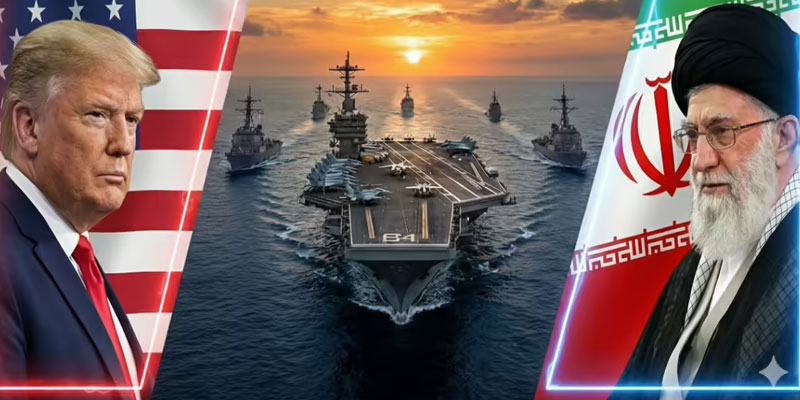
A fresh wave of geopolitical friction has emerged after Donald Trump suggested that a change in leadership in Tehran might ultimately serve Iran’s interests, even as Washington confirmed the dispatch of a second U.S. aircraft carrier to the region. The remarks arrive at a delicate moment: nuclear negotiations remain stalled, military assets are repositioning across West Asia, and the possibility of escalation is increasingly discussed in policy circles.
Fort Bragg Comments and Strategic Messaging
Speaking to U.S. troops at Fort Bragg on February 13, 2026, Trump characterized ongoing nuclear diplomacy with Iran as arduous and largely unproductive. He argued that decades of talks had failed to deliver meaningful change, hinting that a new political order in Tehran could yield better outcomes. His remarks also suggested that the threat of force—rather than negotiation alone—has historically compelled Iran to engage.
The rhetoric is consistent with Trump’s longstanding preference for coercive diplomacy: applying pressure through sanctions and military signaling while keeping negotiations on the table. By publicly musing about regime change, he has revived a theme that resonates with hardline voices in Washington but alarms regional actors wary of destabilization.
Military Posture and Diplomatic Deadlock
The Pentagon’s decision to deploy another carrier strike group alongside existing forces reflects a deliberate show of strength. While officials frame the move as defensive and precautionary, the expanded naval presence broadens Washington’s operational options. Analysts interpret the dual-carrier posture as leverage designed to push Tehran toward concessions in nuclear talks mediated by Oman, with further discussions expected in Geneva.
At issue are Iran’s uranium enrichment levels, missile program, and support for regional militias. Tehran insists on maintaining a civilian nuclear capacity and demands guarantees that any future agreement will not be abandoned by a subsequent U.S. administration. Washington, meanwhile, seeks stricter limits and a broader security framework. The resulting impasse has increased reliance on military signaling as a negotiating tool.
Tehran’s Reaction and Calculated Silence
As of February 14, Iranian authorities had not issued a direct, formal response to Trump’s suggestion of leadership change. This restraint may reflect a tactical choice to avoid inflaming tensions ahead of scheduled talks. However, past statements from Iranian leaders offer clues to likely reactions.
Supreme Leader Ayatollah Ali Khamenei has repeatedly condemned U.S. calls for political change as interference, while senior officials such as Ali Larijani have warned that any attack on Iranian territory would trigger retaliation against U.S. bases and allies. Tehran typically frames regime-change rhetoric as psychological warfare aimed at weakening domestic stability.
In previous months, Iranian officials also accused Washington of supporting unrest inside the country, reinforcing a narrative of external pressure. Against this backdrop, Trump’s latest comments are likely to be met with defiance rather than concession, even if Tehran keeps its public response measured for now.
Pressure, Perception, and Risk
The convergence of assertive rhetoric and heightened military deployments underscores a volatile phase in U.S.–Iran relations. Washington appears intent on using a mix of force projection and negotiation deadlines to extract concessions, while Tehran balances resistance with cautious engagement. The absence of an immediate Iranian rebuttal does not signal acceptance; rather, it reflects a calculated pause amid sensitive diplomacy.
Ultimately, the dual-track approach—military pressure paired with stalled talks—raises the stakes for both sides. Without a diplomatic breakthrough, the risk of miscalculation grows, with potential consequences for regional stability, energy markets, and global security.
(With agency inputs)