Canada School Killer and a Family Home Prelude
An 18-year-old trans woman, later identified as the perpetrator of a school shooting in Canada, began her attack inside her own home—first killing her mother and then her young step-brother. From there, she traveled to a nearby secondary school she once attended, where the violence expanded into a mass casualty incident. The case has shocked the small northern community and triggered national debate over mental health intervention, firearm access, and rural safety frameworks.
Violence in a Remote British Columbia Town
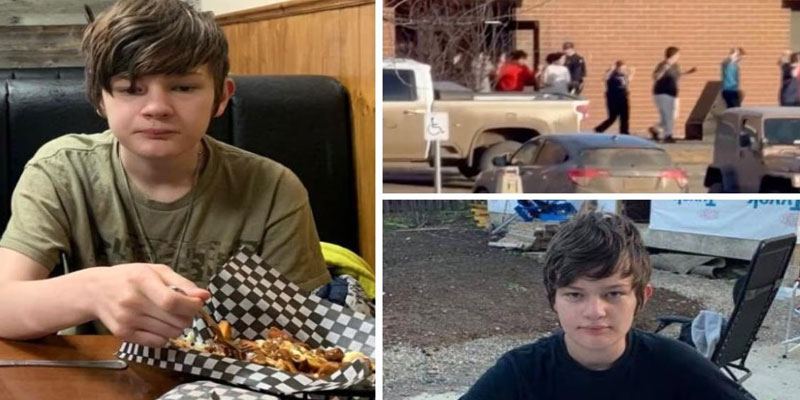
On February 10, 2026, the quiet settlement of Tumbler Ridge in northeastern British Columbia became the site of a devastating mass shooting that left eight people dead and more than two dozen injured. Authorities from the Royal Canadian Mounted Police (RCMP) named 18-year-old Jesse Van Rootselaar as the lone suspect. She died at the scene from a self-inflicted gunshot wound.
The sequence of events unfolded in two stages. Investigators report that the suspect first shot and killed her 39-year-old mother and 11-year-old stepbrother at their residence. She then traveled roughly two kilometers to Tumbler Ridge Secondary School, where she opened fire, killing a teacher and five students aged between 12 and 13, and injuring at least 25 others before taking her own life.
The town—home to roughly 2,500 residents—has been left reeling. No clear motive has yet been confirmed, and officials say the investigation continues into family circumstances and how the weapons were obtained.
Background and Risk Factors
Authorities noted that the suspect had previously experienced mental health challenges and had been the subject of several police welfare checks. She had once held a minor’s firearms license for supervised activities such as hunting or target shooting, though the permit expired in 2024. Firearms had earlier been seized from the household and later returned to a lawful owner.
The case underscores complex intersections between mental health support, firearm oversight, and rural isolation. Remote communities often face limited access to mental health services, while firearm ownership—frequently tied to hunting culture—can be more common. The combination may create vulnerabilities when warning signs go unaddressed or when licensing lapses fail to prevent access.
Patterns in Rural Canadian Mass Shootings
Canada experiences fewer mass shootings than many countries, and incidents in rural areas are comparatively rare. However, several cases highlight recurring themes.
The 2020 Nova Scotia attacks remain the deadliest in modern Canadian history, with 22 victims killed across multiple small communities. Earlier incidents, including a 2018 semi-rural Quebec grocery shooting and the 2014 Moncton attack in New Brunswick, also revealed links to personal crises, grievances, or mental health struggles.
Rural settings can complicate emergency response times and reduce the availability of intervention resources. Firearms, while regulated, may still be present in households for legitimate uses. These factors can converge in ways that heighten risk when preventive systems falter.
A Call for Coordinated Prevention
The Tumbler Ridge shooting has renewed scrutiny of Canada’s mental health and firearm-monitoring frameworks, particularly in remote regions. While the nation’s gun laws are comparatively strict, enforcement gaps, limited support networks, and geographic isolation may leave warning signs insufficiently addressed.
Moving forward, policymakers and communities face the challenge of strengthening early-intervention systems, improving communication between licensing authorities and mental health services, and ensuring that rural residents have access to timely care. The tragedy stands as a stark reminder that even small, close-knit communities are not immune to extreme violence—and that prevention requires coordinated attention to both social and regulatory safeguards.
(With agency inputs)