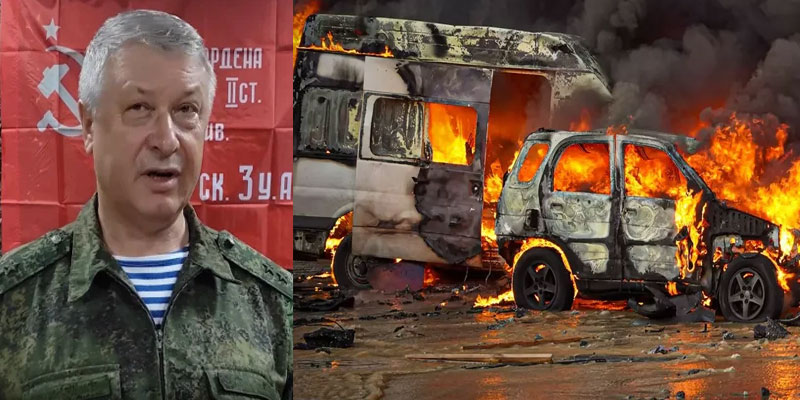
On 6 February 2026, Lieutenant General Vladimir Alexeyev—deputy head of Russia’s military intelligence agency and a senior architect of operations linked to Ukraine and Syria—was shot several times in a residential building stairwell in northwest Moscow. The 64-year-old officer survived after emergency surgery and later regained consciousness. Russian authorities quickly framed the incident as part of a growing pattern of attacks against high-ranking military figures since the 2022 invasion of Ukraine. Within days, investigators announced the identification of three suspects, claiming connections to Ukrainian intelligence structures.
A Flashpoint in the Shadow War
The attempted assassination of a top GRU official underscores the increasingly covert dimension of the Russia-Ukraine conflict. Beyond conventional battlefield clashes, both sides have accused one another of conducting clandestine operations targeting commanders, logistics networks, and symbolic figures. Moscow’s announcement of suspects and its suggestion of Ukrainian involvement highlight the rising stakes of this shadow conflict, while Kyiv’s swift denial reflects the broader information and diplomatic struggle accompanying the war.
Suspects and Russian Allegations
Russia’s Investigative Committee and Federal Security Service (FSB) identified Lyubomir Korba, a Ukrainian-born Russian citizen in his mid-60s, as the alleged gunman. According to officials, Korba arrived in Moscow in late December 2025 and carried out the attack using a suppressed Makarov pistol. He reportedly fled abroad but was extradited from the United Arab Emirates on 8 February. Russian media circulated footage of his transfer into custody.
Authorities also cited two alleged accomplices: one detained inside Russia and another believed to have escaped to Ukraine. Investigators say the firearm has been recovered and forensic testing is underway. Moscow asserts the suspects were acting on instructions from Ukrainian intelligence agencies, portraying the attack as retaliation for Alexeyev’s involvement in military operations linked to Ukraine.
A Pattern of Targeted Strikes
The shooting follows a series of incidents involving senior Russian personnel since the invasion began. Moscow has previously blamed Kyiv for bombings and assassinations of military officers, though evidence has often remained contested. Russian officials argue that Alexeyev’s senior role in intelligence coordination made him a likely target, while state media frame the incident as proof of a widening covert campaign against Russia’s leadership.
The timing is also significant. Diplomatic efforts to revive negotiations have stalled, and international pressure—particularly from the United States—has mounted for a ceasefire. Russian authorities suggest such attacks undermine prospects for talks and justify potential retaliation.
Ukraine’s Response to the Accusations
Kyiv has firmly rejected Russia’s claims. Ukrainian Foreign Minister Andrii Sybiha stated that Ukraine had “nothing to do” with the shooting, characterizing Moscow’s narrative as propaganda or internal power struggles within Russia. Officials in Kyiv argue that similar accusations in the past have served domestic political purposes or been used to justify escalation.
Ukrainian representatives also contend that no credible evidence has been publicly presented linking the suspects to Ukrainian intelligence. They emphasize that attention should remain on the front lines and diplomatic channels rather than what they call unverified allegations. The denial aligns with Kyiv’s broader strategy of dismissing Russian claims of hybrid warfare operations conducted on Russian territory.
Escalation Risks and Strategic Messaging
The attempted killing of Lt Gen Alexeyev illustrates how the Russia-Ukraine conflict continues to expand beyond conventional combat into intelligence operations and narrative warfare. Moscow’s swift attribution to Ukrainian actors may foreshadow retaliatory measures or new sanctions, while Kyiv’s rejection highlights the persistent mistrust shaping any negotiation prospects. Regardless of the ultimate findings of the investigation, the episode deepens an atmosphere of suspicion and retaliation that threatens to further erode security for political and military elites on both sides. As covert operations and public accusations intensify, the incident signals a conflict increasingly defined not only by battlefield dynamics but also by clandestine confrontation and competing strategic narratives.
(With agency inputs)