Moscow Looks Abroad as Workforce Shrinks
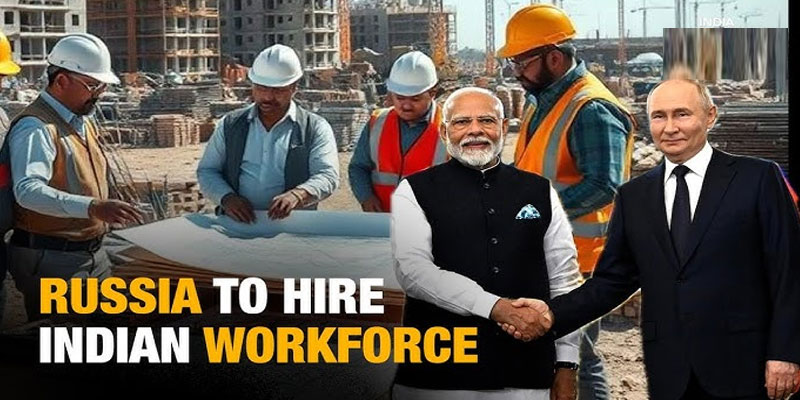
Russia, grappling with a deepening labour crunch exacerbated by the war in Ukraine, is increasingly turning to India to plug gaps across its economy. With hundreds of thousands mobilised for military service and demographic pressures intensifying, Russian authorities and businesses are recruiting foreign workers at scale. Thousands of Indians are already employed in sectors such as manufacturing, construction, and services, and bilateral agreements suggest the numbers could rise significantly in the coming years.
A Strategic Workforce Realignment
Labour shortages have become one of the most pressing structural challenges facing Russia’s economy. Sanctions, emigration, and wartime mobilisation have reduced the domestic workforce, forcing policymakers to look for alternative labour sources. India, with its large working-age population and expanding overseas employment networks, has emerged as a key partner. The resulting migration corridor reflects both economic necessity in Russia and employment opportunities for Indian workers seeking higher wages abroad.
Drivers Behind Russia’s Labour Shortfall
Several factors have converged to create Russia’s current labour deficit. Military mobilisation and voluntary enlistment have removed large numbers of working-age men from the civilian economy. At the same time, declining birth rates and an ageing population have reduced the long-term labour supply. Economic sanctions and political uncertainty have also prompted skilled workers to leave the country, further straining industries already facing production challenges.
Traditionally, Russia relied heavily on migrant labour from Central Asian countries. However, geopolitical tensions, currency fluctuations, and shifting migration patterns have reduced the inflow from those regions. Some workers have sought employment in the Gulf, Europe, or domestic opportunities at home, leaving Russian employers searching for new recruitment channels.
Why India Has Become a Key Source
India’s large workforce and established migration networks make it an attractive partner for Russian employers. Bilateral agreements have streamlined visa procedures and expanded labour mobility, enabling Indian workers to take up roles in factories, infrastructure projects, and service industries. Recruiters are increasingly targeting Indian states with strong overseas employment traditions, offering wages that often exceed comparable jobs in India.
For Indian workers, the appeal lies in higher earnings and the prospect of remittances. For Russia, Indian labour helps sustain industrial output and infrastructure development at a time when domestic capacity is under pressure. The arrangement also complements broader economic cooperation between the two countries, including energy and defence ties.
Opportunities and Risks
While the emerging labour corridor offers benefits, it also presents challenges. Workers must navigate language barriers, regulatory differences, and potential labour-rights concerns. Currency volatility and geopolitical uncertainty could affect earnings and working conditions. Governments on both sides have emphasised the need for safeguards, transparent contracts, and support mechanisms to ensure safe migration.
From a macroeconomic perspective, migrant labour could help Russia stabilise production and offset workforce losses, while remittances may benefit Indian households and local economies. Yet the sustainability of this arrangement will depend on evolving geopolitical conditions and domestic policies in both countries.
A Pragmatic but Complex Partnership
Russia’s turn to India for workers reflects the economic consequences of prolonged conflict and demographic decline. For Moscow, foreign labour offers a way to sustain growth and maintain industrial activity. For India, it opens new employment avenues and strengthens bilateral ties. However, the long-term success of this partnership will hinge on effective regulation, worker protections, and the ability of both countries to manage the political and economic risks inherent in large-scale labour migration.
(With agency inputs)