Rising Calls to Curb Baloch Militancy
The Balochistan Liberation Army (BLA), one of Pakistan’s most prominent separatist groups, has long been accused of orchestrating deadly attacks against Pakistani forces and Chinese interests tied to the China-Pakistan Economic Corridor (CPEC). Alongside its suicide unit, the Majeed Brigade, the BLA has carried out high-profile assaults, including suicide bombings and coordinated strikes on security targets.
Pakistan and China, both directly impacted by BLA activities, recently pressed the United Nations to formally designate the group under the UN’s 1267 Al-Qaeda Sanctions Committee — a move that would place it alongside outfits like ISIL and Al-Qaeda. But despite the push, the proposal has hit a roadblock, reflecting the complicated geopolitics around counter-terror designations.
Western Nations Block the Proposal
The joint request by Islamabad and Beijing was blocked when the United States, the United Kingdom, and France placed a “technical hold” on the listing. These countries argued that the evidence provided did not sufficiently link the BLA and its Majeed Brigade to global terror networks such as Al-Qaeda or ISIL. Without this connection, the criteria for inclusion under the 1267 sanctions regime remain unmet.
The technical hold does not permanently dismiss the petition but delays immediate action. It also underscores the cautious approach major Western powers take when evaluating sanctions that may carry broader geopolitical consequences.
Pakistan’s Case at the UN
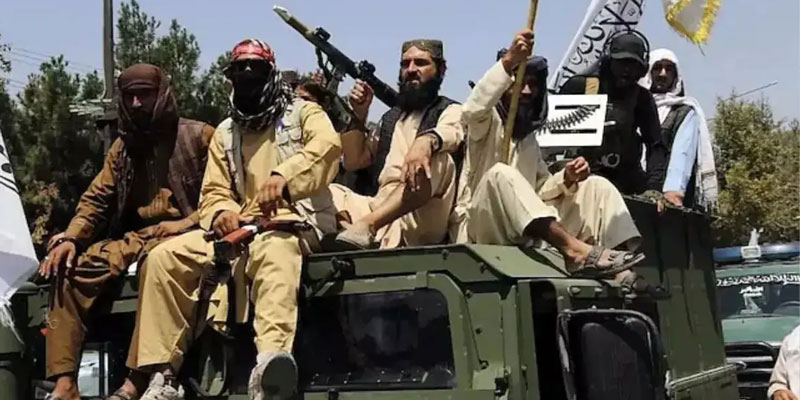
Addressing the Security Council, Pakistan’s Permanent Representative to the UN, Asim Iftikhar Ahmed, stressed that terrorist organizations like ISIL-K, Al-Qaeda, Tehrik-e-Taliban Pakistan (TTP), the East Turkistan Islamic Movement, and the BLA operate from sanctuaries within Afghanistan. He claimed over 60 terror camps exist across the border, facilitating cross-border attacks that imperil Pakistan’s security.
Ahmed called on the Taliban administration to uphold its international commitments against terrorism, warning that “terrorism emanating from Afghanistan remains the gravest threat to Pakistan’s national security.” Pakistan’s case was strongly supported by China, which as a permanent UNSC member, also framed the BLA as a destabilizing actor targeting Chinese projects in Balochistan.
The BLA and Its Suicide Wing
The BLA, active for decades, has positioned itself as a militant voice for Baloch separatism. Its Majeed Brigade, established in 2011, functions as its suicide squad, often targeting Chinese nationals, CPEC infrastructure, and security convoys. The group has claimed responsibility for multiple attacks over the years, including coordinated assaults in Karachi and Gwadar.
Interestingly, the United States has already recognized the BLA as a threat. In 2019, Washington designated the group as a Specially Designated Global Terrorist (SDGT). More recently, in August 2024, the US added the Majeed Brigade as an alias under the same designation and formally declared the group a Foreign Terrorist Organization (FTO). This makes the Western objection at the UN less about denial of BLA’s militant credentials, and more about the framework under which such a designation can be applied globally.
A Complex Balancing Act
The divergence at the UN highlights the friction between global counter-terrorism frameworks and regional political agendas. For Pakistan, securing UN recognition of BLA as a terrorist entity would bolster its case against separatists and lend legitimacy to its internal counterinsurgency operations. For China, the move is vital to safeguard multi-billion-dollar investments in Balochistan under CPEC.
For Western powers, however, the reluctance to equate BLA with groups like Al-Qaeda seems rooted in both technical interpretation and geopolitical caution, especially given the complex dynamics in Afghanistan and the balancing act with Pakistan-China narratives.
Beyond Labels, Toward Stability
While Pakistan and China frame the BLA as a direct threat to peace and development, the stalled UN listing exposes the fractured consensus in international counter-terror policymaking. Whether or not the BLA earns a place on the UN sanctions roster, its violent campaign has already destabilized Pakistan’s security and jeopardized regional projects.
Ultimately, real stability will depend not merely on designations but on addressing the root causes of militancy in Balochistan — long-standing grievances of marginalization, lack of development, and political exclusion. Without that, the cycle of insurgency and repression risks continuing, regardless of what label the world’s powers attach to the BLA.
(With agency inputs)