A Call for Calm and Engagement
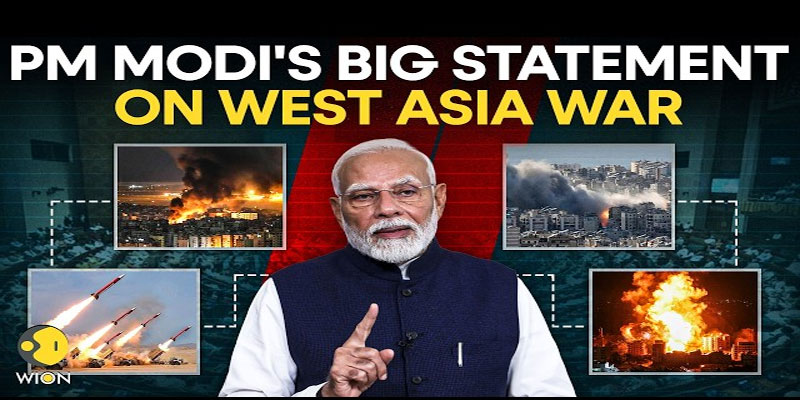
Prime Minister Narendra Modi has urged de-escalation in the intensifying US–Iran conflict, emphasizing that India is actively engaging with Iran, Israel, and the United States to reduce tensions. Speaking in the Rajya Sabha, Modi highlighted India’s diplomatic outreach as a key pillar of its response, positioning New Delhi as a balancing force seeking dialogue over confrontation. Even as the region remains volatile, the government’s approach reflects a careful mix of engagement and strategic caution.
Warning of a Prolonged Conflict
In a sobering address, Modi cautioned that the war could be “long-lasting,” urging the country to prepare for sustained disruptions. This warning underscores the scale of potential fallout, particularly for an economy deeply tied to global energy markets. Rising oil prices, supply-chain uncertainties, and inflationary pressures could persist well beyond the immediate crisis.
Modi’s message “be prepared for every challenge”—signals a shift from short-term crisis management to long-term resilience planning. It reflects an understanding that the conflict is not a temporary shock but a structural risk with cascading effects on trade, logistics, and domestic stability.
Managing Energy and Economic Pressures
However, these measures come with limits. Prolonged conflict could keep global prices elevated, feeding into inflation and increasing the cost of living. The government’s strategy, therefore, combines immediate safeguards with longer-term adjustments to reduce exposure to geopolitical shocks.
Diplomacy as the First Line of Defence
Even as risks mount, Modi has reiterated that diplomacy remains the only sustainable solution. India has maintained active communication with all key stakeholders, advocating for restraint and a return to negotiations. By avoiding alignment with any one bloc, New Delhi is preserving its strategic autonomy while safeguarding its economic interests.
This diplomatic posture also enhances India’s credibility as a neutral interlocutor. In a polarized environment, the ability to engage all sides without bias could prove crucial in keeping channels open and preventing further escalation.
Strengthening Security and Political Coordination
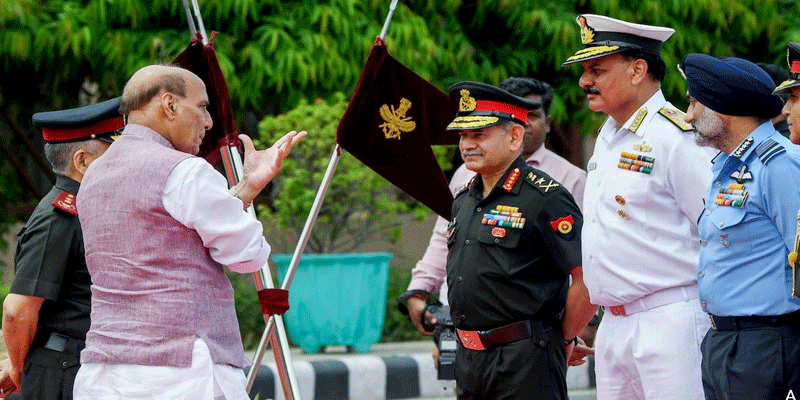
At home, the government has moved to bolster preparedness across multiple fronts. Under Defence Minister Rajnath Singh, security reviews have focused on military readiness and protection of critical assets. The Cabinet Committee on Security has assessed vulnerabilities in key sectors such as food, fuel, and shipping, while an all-party meeting reflects efforts to build political consensus.
Additionally, heightened vigilance across coastal, border, and cyber domains indicates awareness that external conflicts can trigger internal security challenges.
Balancing Preparedness and Prudence
Modi’s message encapsulates a dual strategy—prepare for the worst while working toward the best possible outcome. By combining diplomatic outreach, economic safeguards, and security readiness, India is attempting to navigate a complex and uncertain geopolitical landscape. Yet, the warning of a prolonged conflict serves as a reminder that resilience will be tested over time. In this delicate balance between caution and engagement, India’s ability to adapt will determine how effectively it weathers the storm.
(With agency inputs)