India has reportedly refused to import liquefied natural gas (LNG) from US-sanctioned Russian energy projects even as rising tensions in West Asia deepen fears of a major energy supply disruption. The decision comes at a time when conflict involving the United States, Israel, and Iran has pushed global energy markets into uncertainty, disrupting fuel shipments through critical maritime routes and increasing pressure on import-dependent economies like India.
According to reports, New Delhi formally conveyed its position during Russian Deputy Energy Minister Pavel Sorokin’s visit to India on April 30, rejecting LNG supplies linked to sanctioned Russian projects such as Portovaya LNG and Arctic LNG 2. While countries like China continue purchasing discounted Russian LNG despite sanctions, India has chosen a far more cautious route, prioritizing protection from potential secondary sanctions and maintaining strategic balance in its global partnerships.
Why India Is Refusing Sanctioned Russian LNG
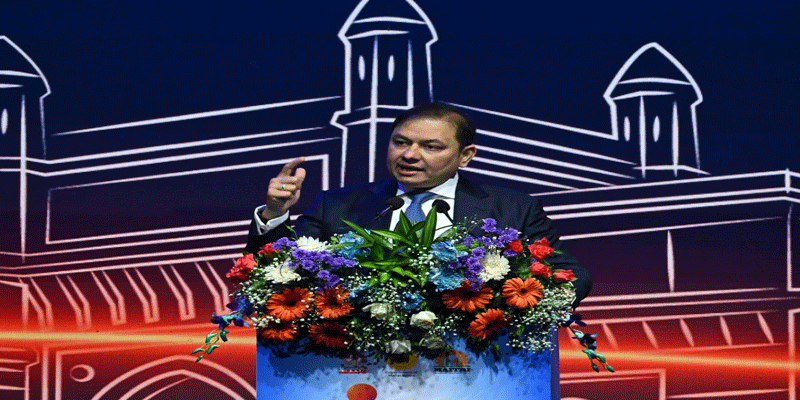
India’s stance was clearly articulated by Oil Secretary Pankaj Jain, who stated that India would not engage with projects facing “broad-based sanctions.” This marks a crucial distinction in India’s energy policy.
While India has continued buying discounted Russian crude oil since the Ukraine conflict began, LNG imports involve a more complex infrastructure and financial ecosystem, including long-term shipping contracts, international banking channels, insurance providers, and port operators—all areas heavily exposed to Western sanctions enforcement.
The concern is particularly significant under the administration of Donald Trump, which is believed to be pursuing stricter implementation of sanctions involving Russian energy exports. India appears unwilling to risk disruptions to its banking system, trade flows, or strategic relations with the United States for short-term energy gains.
The Kunpeng LNG Shipment: A Sign of India’s Red Line
India’s refusal has already created complications for Russian LNG shipments. One major example is the tanker Kunpeng, carrying nearly 60,000 tons of heavily discounted LNG. The vessel reportedly indicated Gujarat’s Dahej LNG terminal as its destination but failed to unload after Indian buyers and terminal operators declined acceptance.
The cargo remained stranded near Singapore despite attempts to classify it as non-Russian in origin. Shipping data reportedly made the cargo traceable, exposing efforts to conceal its source. India’s rejection demonstrated that even discounted fuel would not override sanctions concerns.
The episode also highlights how compliance risks now extend beyond governments to private importers, insurers, shipping companies, and port authorities.
India vs China: Two Very Different Energy Strategies
China has taken a dramatically different approach. Chinese companies, including CNPC and CNOOC, continue receiving shipments from sanctioned Russian LNG projects, attracted by discounts reportedly ranging between 30% and 40%.
Beijing’s strategy reflects its broader geopolitical alignment with Russia and its willingness to absorb sanctions-related risks in exchange for cheaper energy supplies. India, however, operates under very different strategic circumstances.
Unlike China, India maintains deep economic, technological, and defense partnerships with Western nations while simultaneously balancing ties with Russia. This requires New Delhi to pursue a more calibrated diplomatic and economic approach.
West Asia Crisis Deepens India’s Energy Challenge
India’s cautious policy comes despite mounting domestic pressure caused by disruptions in West Asia. Fuel shipments through the Strait of Hormuz have become increasingly uncertain, directly affecting LNG supplies from Qatar, India’s largest supplier.
As a result, industries dependent on natural gas are already facing stress. Some facilities, including ONGC Petro Additions’ Dahej gas cracker, are reportedly operating at reduced capacity due to supply constraints. The government has also invoked emergency regulatory measures under the Essential Commodities Act to manage distribution.
Balancing Energy Security with Global Diplomacy
India’s rejection of sanctioned Russian LNG reflects a carefully calculated strategic choice rather than a purely commercial decision. At a time of rising geopolitical instability and energy insecurity, New Delhi is attempting to balance immediate energy needs with long-term diplomatic, financial, and geopolitical interests. While China has chosen opportunistic energy expansion through discounted Russian imports, India is signaling that preserving global economic credibility and avoiding sanctions exposure remain equally important. The decision underlines India’s growing role as a balancing power navigating an increasingly fractured global energy order.
(With agency inputs)