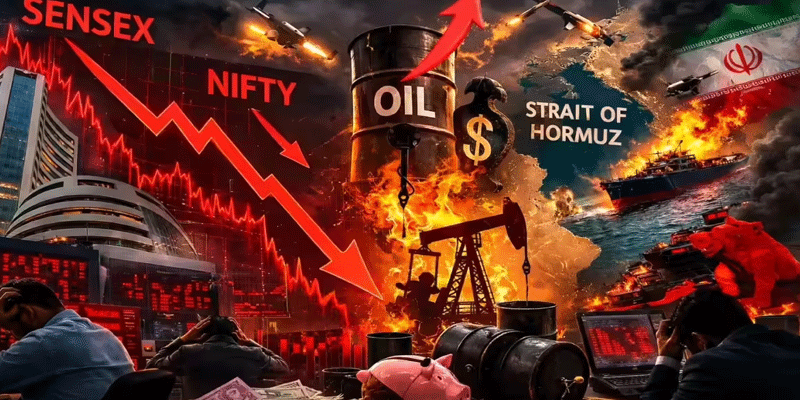
The Indian rupee plunged to an all-time low of ₹95.55 against the US dollar on Tuesday, reflecting the deepening anxiety in global markets over escalating tensions in West Asia. The immediate trigger was the increasingly fragile ceasefire between the United States and Iran after US President Donald Trump reportedly described the truce as being “on life support.” The remark sent Brent crude oil prices soaring beyond $105 per barrel, intensifying fears of prolonged supply disruptions in one of the world’s most critical oil-producing regions. For India, one of the largest crude-importing nations globally, the consequences are potentially severe.
Why Rising Oil Prices Hurt India So Deeply
India imports nearly 84–85% of its crude oil requirements, making the economy highly sensitive to fluctuations in global energy prices. When crude prices surge, India must spend substantially more dollars to secure its energy needs. This simultaneously increases demand for the US dollar and weakens the rupee further.
The oil shock also places enormous pressure on India’s Current Account Deficit (CAD), the gap between foreign exchange inflows and outflows. According to estimates, every sustained $10 rise in oil prices widens India’s CAD by around 0.5 percentage points and trims economic growth by approximately 0.3%. If crude remains above $100 per barrel, India’s CAD could widen sharply from nearly 1% to 3% of GDP, while projected GDP growth may slip from 6.4% to nearly 5%.
The Triple Economic Blow: Inflation, Slower Growth, and a Wider Deficit
The present crisis threatens to create a classic stagflationary environment—high inflation accompanied by slowing growth. Former Chief Economic Adviser Arvind Subramanian has warned that the oil shock could unleash “stagflation of considerable magnitude.”
Higher crude prices ripple across the economy. Fuel costs rise first, but the impact quickly spreads to fertilizers such as urea and DAP, irrigation expenses, logistics, transportation, and manufacturing inputs. Sectors including aviation, textiles, chemicals, plastics, paints, tyres, and transport are particularly vulnerable to rising operational costs. As companies pass these increases on to consumers, inflationary pressures intensify, reducing household purchasing power and slowing consumption demand.
RBI Steps in as Markets Turn Volatile
Since the Iran conflict intensified in late February, the rupee has weakened between 3.5% and 7%, making it one of Asia’s poorest-performing currencies. Currency traders indicated that the Reserve Bank of India intervened aggressively by selling dollars after the rupee breached the ₹95 mark, helping prevent an even sharper collapse.
Yet uncertainty remains elevated. The Strait of Hormuz—through which nearly one-fifth of global oil shipments pass—continues to be a major geopolitical flashpoint. Although India has diversified its energy sourcing across 40 countries and reduced reliance on Hormuz routes, its dependence on imported crude still leaves the economy exposed to global disruptions.
A Defining Test for India’s Economic Resilience
The rupee’s historic fall is more than a currency story; it is a warning sign about India’s structural vulnerability to global energy shocks. A prolonged geopolitical crisis in West Asia could fuel inflation, weaken growth, widen deficits, and strain household finances simultaneously. While RBI intervention and India’s macroeconomic resilience may cushion some damage, sustained oil volatility poses a serious challenge to economic stability. In an interconnected world where geopolitics increasingly dictates economic outcomes, India’s long-term security will depend not only on monetary management but also on accelerating energy diversification and reducing import dependence.
(With agency inputs)