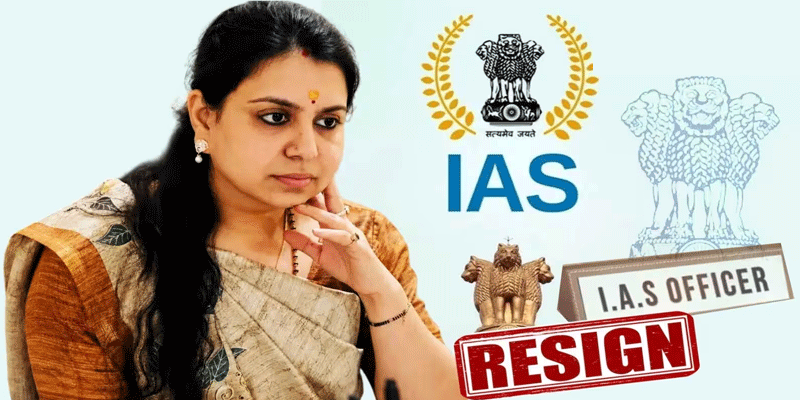
Thirty-two IAS officers had their resignations formally accepted between 2010 and 2026, with West Bengal recording the highest number of exits, according to an RTI response obtained by India Today. While the figure may appear modest for one of India’s most powerful civil services, it offers an unusual window into how rarely senior administrators actually leave the IAS through resignation.
What the RTI Data Reveals
The data covers resignations that were formally accepted by the competent authority. This distinction is important because merely announcing a resignation does not mean an officer has left the service. Requests may remain pending, be withdrawn or fail to receive the necessary approval.
West Bengal Records the Highest Exits
West Bengal emerged as the cadre with the largest number of accepted IAS resignations since 2010, followed by Maharashtra, Chhattisgarh and Karnataka.
The concentration in West Bengal is noteworthy, particularly because the state has witnessed several high-profile instances in recent years involving officers announcing or considering resignation. However, the RTI data does not identify individual reasons for the accepted resignations, making it impossible to establish a direct connection between the numbers and political, administrative or personal factors.
The pattern could reflect differences in officers seeking resignation, administrative circumstances or the willingness of authorities to approve such requests.
Resignations Cluster Around Certain Years
The year-wise figures reveal that exits have not occurred at a steady rate. 2010 recorded the highest number, with six resignations accepted, followed by four in 2018 and three in 2024. Most other years registered either one or two accepted resignations, while some recorded none.
Such clustering suggests that resignation from the IAS remains an exceptional event rather than a routine career decision.
Why Only 32 Officers Appear in the Record
The number becomes more striking when viewed against the overall size of the IAS. Thousands of officers serve across state cadres and the Union government, yet only a tiny proportion formally exit through resignation—and an even smaller number complete the acceptance process.
Several prominent resignation announcements in recent years have therefore not necessarily translated into actual departures. Officers may reconsider their decisions, withdraw their requests or remain in service while the resignation awaits approval.
The RTI figure should consequently not be interpreted as the total number of officers who attempted to resign.
What These Exits Mean for Governance
Every accepted resignation represents the departure of an experienced administrator whose institutional knowledge may have significant value. At the same time, the small number demonstrates the strong procedural and institutional barriers surrounding voluntary exit from the IAS.
The data also raises broader questions about bureaucratic morale, career satisfaction, administrative autonomy and retention of experienced officers. West Bengal’s comparatively higher number of accepted resignations makes the cadre particularly worthy of closer examination, although the available data does not establish why those officers chose to leave.
Beyond the Numbers: A Window into Bureaucracy
The most important lesson from the 32 resignations is not simply that IAS officers rarely quit. It is that resignation from India’s premier civil service is a highly regulated process in which an officer’s decision alone does not determine the outcome.
West Bengal’s position at the top of the list deserves attention, but numbers without individual circumstances cannot tell the complete story. The real policy question is not merely why 32 officers left, but what conditions make experienced administrators consider leaving—and what that reveals about the health, morale and resilience of India’s bureaucratic system.
(With agency inputs)