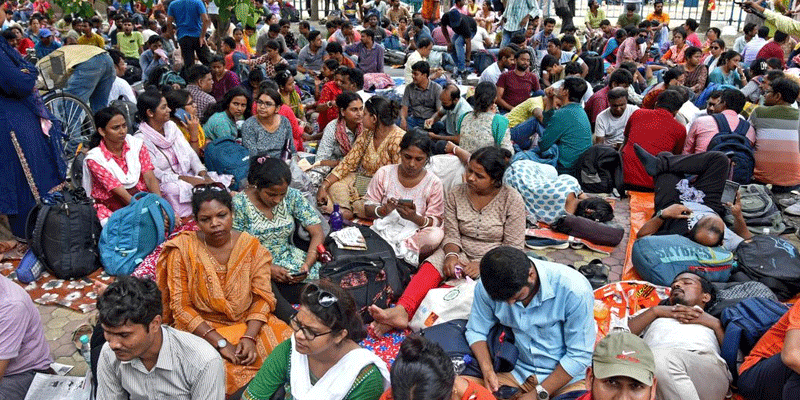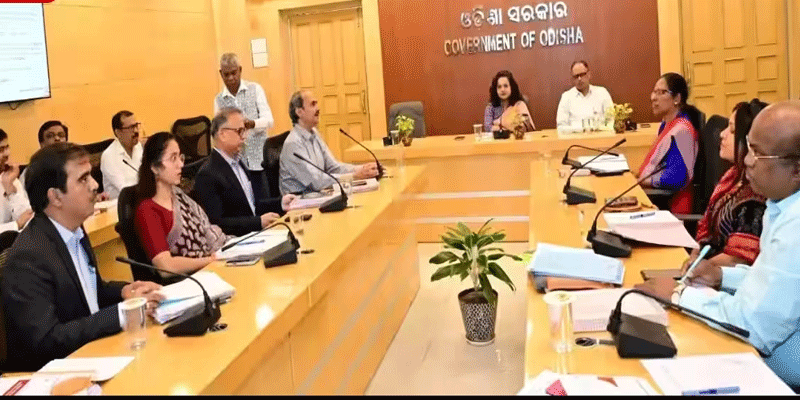
Normal life was disrupted across Odisha on Thursday as INDIA bloc parties enforced a 12-hour statewide bandh against the Mines and Minerals (Development and Regulation) Amendment Act, 2026. Beginning at 6 am, the shutdown saw road blockades, demonstrations and protests across several districts, affecting transport, businesses and everyday movement, while essential services such as healthcare and pharmacies were expected to remain operational.
A Bandh Driven by Multiple Political Demands
The immediate trigger is the opposition’s demand for repeal of the amended mining law. However, the bandh has also brought together several other political grievances, including:
· The resignation of School and Mass Education Minister Nityananda Gond over alleged textbook errors.
· Action against Chief Election Commissioner Gyanesh Kumar over alleged irregularities linked to the Special Intensive Revision of electoral rolls.
· Wider concerns over federalism, tribal rights and control over Odisha’s natural resources.
The participating parties include the Congress, CPI, CPI(M), CPI(ML) Liberation, Forward Bloc, NCP (Sharad Pawar), Samajwadi Party, RJD and JMM.
Why The Mining Law Is the Core Flashpoint
At the heart of the confrontation is control over Odisha’s mineral wealth. The MMDR Amendment Act, 2026 restricts state governments from imposing fresh taxes, cesses or other levies on mineral rights and mineral-bearing land, except under conditions prescribed by the Centre.
Opposition parties see it differently, arguing that the law:
· Weakens the state’s fiscal and constitutional powers.
· Increases central control over mineral revenues.
· Could reduce Odisha’s annual receipts by thousands of crores.
· May affect development programmes in mining-affected communities.
Why Odisha Has More at Stake
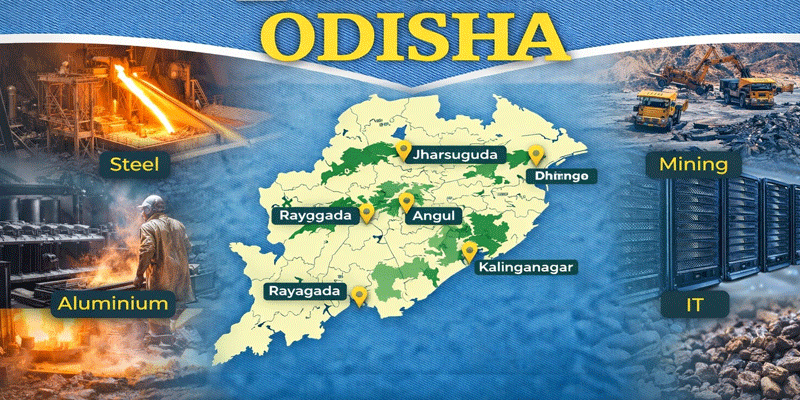
Odisha is among India’s leading producers of iron ore, coal, bauxite and chromite. Mining revenues are therefore crucial to the state’s infrastructure, welfare and regional development.
The opposition has particularly highlighted the possible impact on District Mineral Foundation projects, which are designed to benefit communities affected by mining.
The BJP-led state government rejects these concerns, arguing that Odisha will not lose even a rupee and that greater competition and investment could actually increase revenues. It has cited the rise in annual mining royalty from around ₹5,000 crore in 2013 to nearly ₹48,000 crore in recent years.
Federalism Becomes the Larger Political Battlefield
The political significance extends beyond the mining sector. Congress and Left parties are using the legislation to build a broader campaign around federalism, natural-resource rights and tribal interests.
The BJD, despite opposing the amendment, stayed away from the INDIA bloc bandh, maintaining its position of equidistance from both the BJP-led NDA and Congress-led alliance. Its separate protests nevertheless demonstrate that opposition to the mining legislation extends beyond the INDIA bloc.
Beyond One Day, A Battle Over Odisha’s Future
The Odisha bandh is ultimately a contest over who controls the economic value of the state’s minerals—the Centre, the state or communities living in mining regions. New Delhi argues that national coordination is essential for investment and strategic mineral security, while the opposition insists that national policy cannot erode state fiscal autonomy and local interests.
The disruption may end with the bandh, but the larger federalism debate is unlikely to disappear. For Odisha, the real challenge is finding a framework that combines mineral-led growth with fiscal fairness, constitutional balance and meaningful benefits for mining-affected communities.
(With agency inputs)