Imperial Blue Marks a Strategic Turning Point
Tilaknagar Industries’ Imperial Blue gamble is becoming much more than an acquisition story. The company’s decision to buy Pernod Ricard India’s popular whisky brand has transformed it from a predominantly brandy-led player into a potential national spirits consolidator. With management now open to another sizeable acquisition, the bigger question is whether Tilaknagar can convert its newly acquired scale into sustainable profitability without compromising financial discipline.
From Brandy Specialist to National Player
The strategic shift began with Tilaknagar’s acquisition of the Imperial Blue business from Pernod Ricard India. Announced in July 2025 at an enterprise value of €412.6 million, or roughly $486 million, the transaction was completed in November. Pernod Ricard’s decision reflected its broader focus on premium and faster-growing brands, while Tilaknagar saw an opportunity to enter the national whisky market at scale.
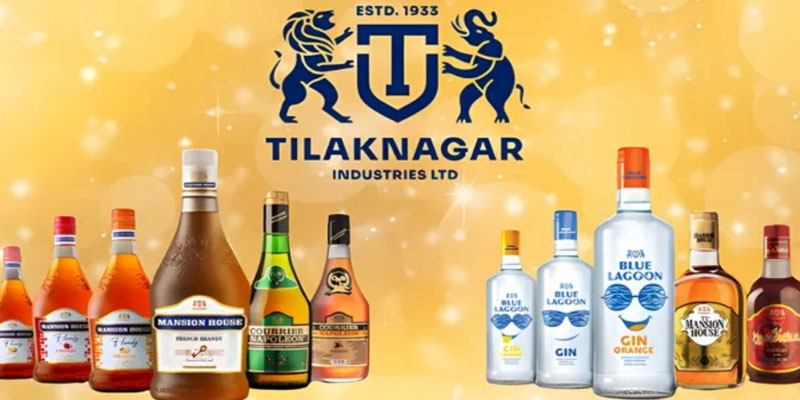
The acquisition has dramatically changed the company’s operating profile. Tilaknagar, known for brands such as Mansion House and Courrier Napoleon, reported 8.7 million cases of volume and ₹1,046 crore in net revenue in the June 2026 quarter, representing 166% year-on-year growth. Imperial Blue contributed nearly two-thirds of group volumes, underlining both the enormous opportunity and the concentration risk.
Why Another Acquisition Makes Strategic Sense
Chairman Amit Dahanukar’s indication that the company could consider another deal of similar magnitude should not necessarily be interpreted as an imminent transaction. Instead, it signals a much larger ambition: building a diversified spirits portfolio spanning value, premium, craft and luxury categories.
Management says it will consider opportunities across spirits, provided acquisitions strengthen route-to-market, premiumisation or scale economics. This is particularly relevant in India, where liquor markets remain fragmented by state-level taxation, pricing rules, distribution structures and regulatory requirements.
Acquiring established brands can therefore provide something organic expansion cannot easily replicate: immediate consumer recognition, distribution networks, retailer relationships and regulatory presence across multiple states.
India’s Spirits Consolidation Gathers Momentum
Tilaknagar’s strategy mirrors a broader industry trend. Major players are increasingly acquiring premium and craft brands to capture consumers willing to trade up. United Spirits’ acquisition of Nao Spirits and Sazerac’s investment in John Distilleries illustrate the growing appetite for differentiated portfolios.
The opportunity is substantial. Industry estimates suggest India could become the world’s largest spirits market by volume by 2032, potentially overtaking China. That makes the battle increasingly about controlling attractive brands across multiple price segments rather than simply selling more bottles.
The Real Test: Growth Without Losing Discipline
For Tilaknagar, however, Imperial Blue must first prove that its spectacular volume growth can translate into durable earnings. By June, around 90% of Imperial Blue’s operations had moved beyond transitional manufacturing and service arrangements, although disruptions occurred in some states. Higher packaging costs also put pressure on margins.
A second large acquisition before integration is fully stabilised could increase leverage and operational complexity. Yet, if managed carefully, Imperial Blue can become a national distribution backbone for higher-margin premium and craft brands.
The ultimate test, therefore, is not how many brands Tilaknagar acquires, but how intelligently it builds its portfolio. If Imperial Blue supplies scale while premium acquisitions deliver margins, Tilaknagar could emerge as a serious Indian spirits consolidator. The real gamble is turning size into profitable, disciplined growth.
(With agency inputs)