A Sudden Resignation
India’s political circles were stunned when Vice-President Jagdeep Dhankhar resigned on the night of July 21, citing health reasons. Only hours before stepping down, he had presided over Rajya Sabha proceedings with his usual vigor, making the abrupt decision all the more unexpected. Since then, his complete absence from public life has invited questions—was it solely about health, or did political pressures play a role?
The Official Line: Health Concerns
Union Home Minister Amit Shah, in a recent interview, dismissed the chatter and reiterated that Dhankhar quit because of health issues. He urged media and critics not to “stretch it too much” and to focus instead on “positive stories.” Shah pointed to Dhankhar’s resignation letter, which expressed gratitude for the tenure and mentioned only personal health as the reason for stepping down.
Still, doubts linger. The former Vice-President, normally active and outspoken, has not been seen or heard since that night. Opposition leaders allege he has been deliberately kept away from public engagement, even suggesting “house arrest,” a charge Shah brushed off as baseless political theater.
Opposition Raises Red Flags
The Opposition, however, is far from convinced. Senior lawyer and parliamentarian Kapil Sibal openly mused whether a habeas corpus petition should be filed to establish Dhankhar’s status. Congress leader Jairam Ramesh argued that Shah’s comments had only “deepened the mystery.” He pointed to Dhankhar’s long record of championing farmers’ causes and his irrepressible personality, asking why such a figure would suddenly vanish from public view.
This silence has fueled speculation that Dhankhar may have clashed with the Modi government on certain issues in Parliament. Whether true or not, the uncertainty has cast a shadow over what should have been a straightforward constitutional handover.
A Contentious Parliamentary Climate
The resignation comes as Parliament faces turbulence over three contentious bills that allow for the removal of ministers, including Prime Ministers or Chief Ministers, if they remain in custody for 30 days. Opposition parties have branded the bills “draconian” and walked out of the Joint Parliamentary Committee (JPC) examining them.
Shah defended the legislation, insisting the government cannot halt simply because the Opposition refuses to cooperate. This climate of confrontation sets the stage for the Vice-Presidential election, as the next office-bearer must manage Rajya Sabha debates with balance and authority.
The Succession Contest: Radhakrishnan vs. Reddy
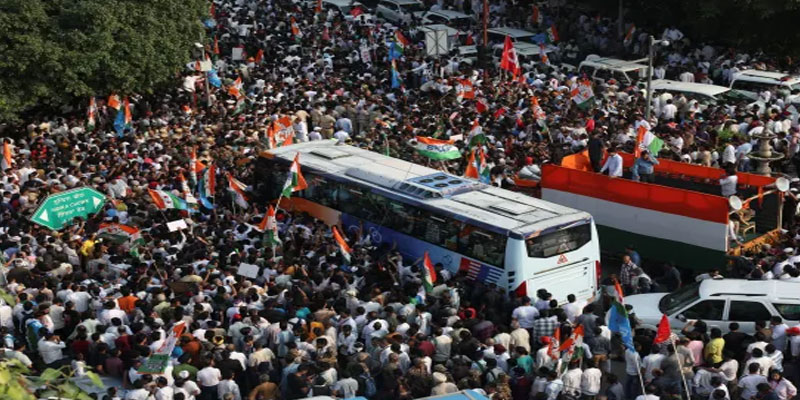
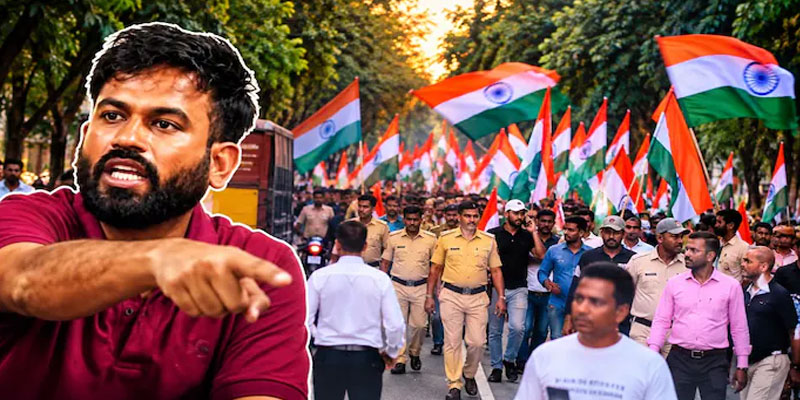
Attention has now turned to who will replace Dhankhar. The NDA has named Chandrapuram Ponnusamy Radhakrishnan, the current Governor of Maharashtra, as its candidate. His nomination papers were filed in a show of strength led by Prime Minister Narendra Modi and accompanied by senior ministers including Amit Shah, Rajnath Singh, JP Nadda, and Nitin Gadkari. With the NDA’s numerical edge in the electoral college, Radhakrishnan enters the race as the clear favorite.
On the other side, the I.N.D.I.A. opposition bloc has fielded Justice (Retd.) B. Sudershan Reddy, a former Supreme Court judge with a reputation for integrity and independent thinking. By nominating Reddy, the Opposition hopes to frame the contest as a larger battle over constitutional values and institutional autonomy. Though the arithmetic tilts in favor of the NDA, the Opposition aims to use the campaign to highlight transparency concerns surrounding Dhankhar’s resignation and to press its narrative about the Modi government’s centralization of power.
Between Mystery and Transition
Jagdeep Dhankhar’s sudden exit leaves behind a cloud of uncertainty that only his own words can eventually clear. Was it indeed a health-driven decision, or the result of quiet political friction? Until he reappears, conjecture will dominate.
Meanwhile, the Vice-Presidential election on September 9 is shaping up as more than a procedural vote. With Radhakrishnan representing continuity and the NDA’s strength, and Reddy symbolizing the Opposition’s bid to reclaim institutional space, the outcome will influence not just Rajya Sabha’s future but also the broader tenor of parliamentary democracy.
India now stands at a point where the credibility of its constitutional offices must be reinforced. The legacy of Dhankhar—marked by energy, assertiveness, and now mystery—remains unfinished. Whoever succeeds him must rise above the political din and restore faith that the Rajya Sabha’s chair belongs not to party lines but to the spirit of the Constitution itself.
(With agency inputs)