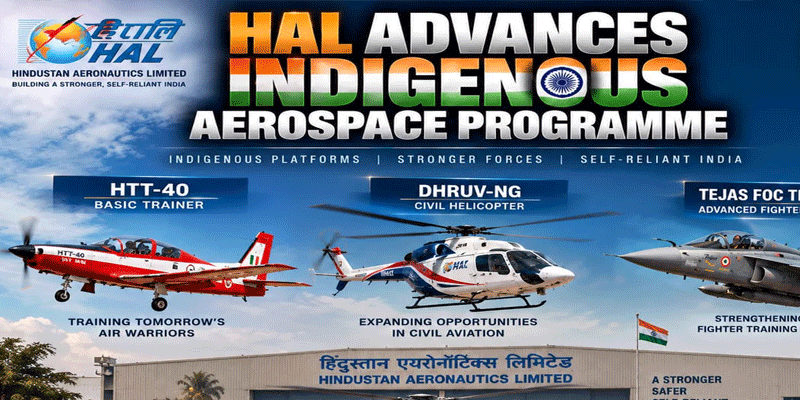
Hindustan Aeronautics Limited (HAL) is handing over LCA Tejas FOC twin-seater trainers and HTT-40 basic trainer aircraft to the Indian Air Force (IAF), along with Dhruv-NG helicopters to Pawan Hans Limited (PHL) in Bengaluru on September 18, 2026. The event, attended by Defence Minister Rajnath Singh and Civil Aviation Minister K. Rammohan Naidu, brings military and civil aviation programmes together around a common objective: strengthening indigenous aerospace capability.
HAL’s Expanding Indigenous Aerospace Legacy
HAL, India’s premier aerospace and defence manufacturer, has evolved from licensed production to designing and developing indigenous aircraft and helicopters. Its programmes include Tejas, Dhruv and HTT-40, giving India an increasingly broad domestic aerospace manufacturing base.
The latest handover demonstrates this widening portfolio, covering advanced fighter training, basic pilot training and civil helicopter operations. The government describes the event as an important milestone in reducing dependence on foreign sources.
Three Platforms, Three Strategic Requirements
The Bengaluru ceremony brings together three important indigenous platforms:
· LCA Tejas twin-seaters: Two FOC twin-seat trainers are being handed over to the IAF. The aircraft retain the capabilities of the indigenous light combat aircraft while providing an essential platform for advanced fighter-pilot training. HAL’s twin-seat Tejas programme is part of the broader LCA induction effort.
· HTT-40 basic trainers: Deliveries are beginning under the IAF’s contract for 70 aircraft worth ₹6,828.36 crore, signed in March 2023. The turboprop aircraft is designed for ab-initio training and features modern avionics, a glass cockpit and zero-zero ejection seats.
· Dhruv-NG helicopters: Four next-generation Dhruv helicopters are being handed over to Pawan Hans, expanding the use of an Indian-designed rotary-wing platform into civil aviation applications.
From Imported Platforms to Indigenous Training
The HTT-40 is particularly significant for building a domestic training pipeline. The aircraft was designed and developed by HAL specifically around Indian Armed Forces requirements. Its procurement was intended to address the IAF’s basic trainer requirement while strengthening domestic aerospace manufacturing.
The programme also has an industrial multiplier effect. The original contract envisaged indigenous content rising from approximately 56% to more than 60%, with domestic private companies and MSMEs participating in the supply chain.
Civil Aviation Gains a Homegrown Helicopter Option
The Dhruv-NG handover extends indigenous aerospace technology beyond military applications. Its induction by Pawan Hans demonstrates how an Indian-developed helicopter platform can support civil requirements, including offshore operations, passenger movement, emergency response and other specialised missions.
This civil-military convergence can create larger production volumes, wider supplier networks and greater opportunities for Indian maintenance, repair and overhaul capabilities.
A Stronger Aerospace Ecosystem Takes Flight
The triple handover is therefore more than a ceremonial transfer of aircraft. It reflects a broader transition towards designing, developing, manufacturing and operating aerospace platforms within India. The government says the initiative will strengthen domestic industry, expand indigenous capabilities and reduce reliance on foreign sources.
The journey to complete aerospace self-reliance remains substantial, particularly in areas such as advanced engines and critical components. Yet Tejas, HTT-40 and Dhruv-NG demonstrate that India is steadily building capabilities across multiple segments. HAL’s latest deliveries mark another tangible step from dependence on imported platforms towards a deeper, more integrated Indian aerospace ecosystem.
(With agency inputs)