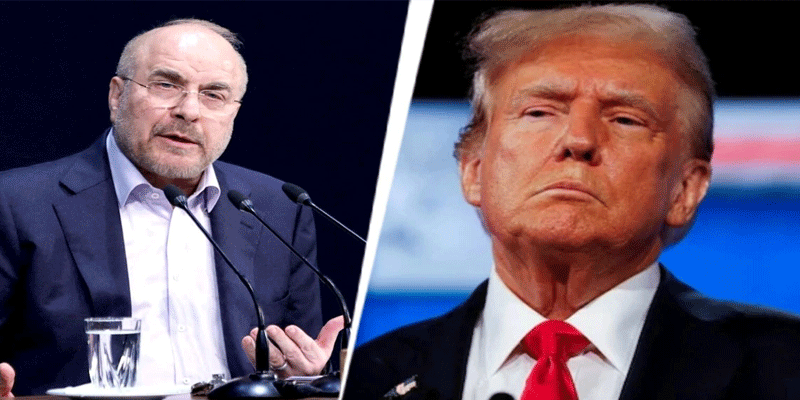
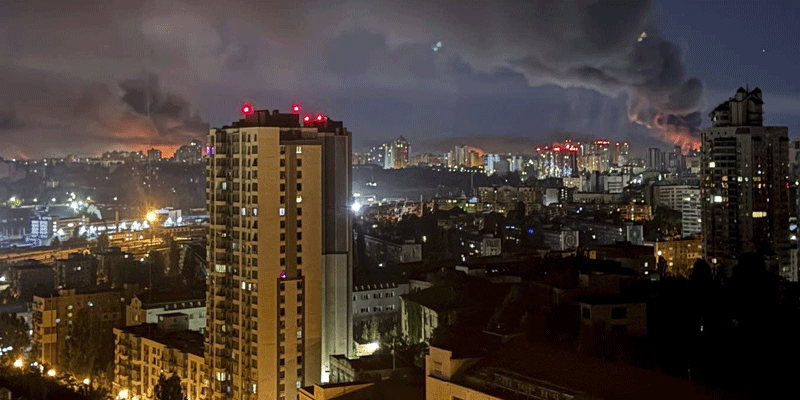
US and Iranian delegations are expected to arrive simultaneously in Islamabad today for potential talks, according to a Pakistani source, setting the stage for a critical diplomatic moment amid escalating tensions. The meetings—brokered by Pakistan—could mark the highest-level direct engagement between the two sides in decades. With the fragile ceasefire nearing its expiration and uncertainty looming, the stakes could not be higher for both United States and Iran.
Ceasefire on the Brink: A Narrow Window for Diplomacy
The current ceasefire, announced on April 7 after six weeks of conflict, is set to expire imminently. Donald Trump has signaled that an extension is “highly unlikely” without a breakthrough, warning that military action could follow if negotiations fail. The truce has been closely tied to US naval blockades targeting Iranian ports and shipping routes, which Tehran views as a violation of sovereignty.
Earlier talks held on April 11–12 in Islamabad collapsed after 21 hours of intense negotiations. Disagreements over sanctions relief and maritime access proved insurmountable, leaving both sides entrenched. Now, with JD Vance leading the American delegation, expectations are tempered by the urgency of the situation.
Strait of Hormuz: The Strategic Flashpoint
At the heart of the dispute lies the Strait of Hormuz, a vital artery through which roughly 20% of global oil supply passes. Iran’s temporary restrictions on navigation—triggered by US interceptions and alleged vessel attacks—have heightened global concerns.
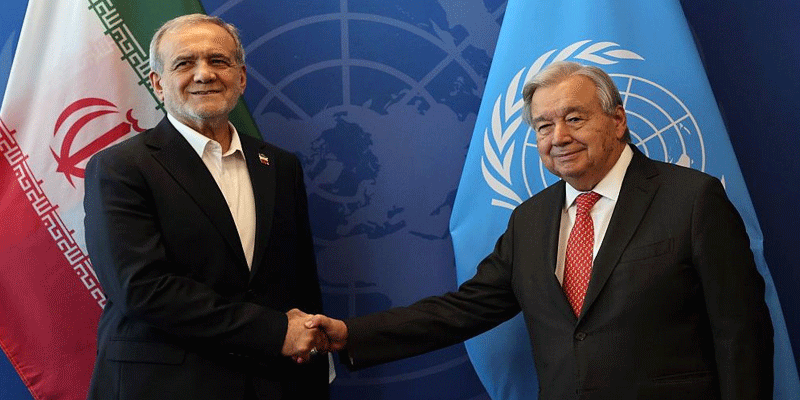
Antonio Guterres has called for the full restoration of navigation rights, emphasizing adherence to international law. While some passage has resumed, Iran insists that any meaningful participation in talks hinges on the lifting of US-imposed maritime restrictions. This linkage has created a diplomatic deadlock, with both sides unwilling to concede first.
Security Tightened, Participation Uncertain
Security in Islamabad has been significantly heightened, with lockdowns and barricades implemented across key areas. While US officials have already arrived, Iran’s participation remains uncertain. Reports from Iranian media suggest that Tehran may condition its attendance on tangible progress regarding maritime access in the Strait of Hormuz.
This uncertainty underscores the fragile nature of the talks. Pakistan’s role as mediator is crucial, but its ability to bridge the gap between two deeply mistrustful adversaries will be tested.
Strategic Implications: Beyond Bilateral Stakes
The outcome of these talks carries far-reaching implications. For the United States, a successful agreement would reinforce its geopolitical leverage and validate Trump’s assertive foreign policy approach. For Iran, securing concessions could ease economic pressures and stabilize its domestic situation.
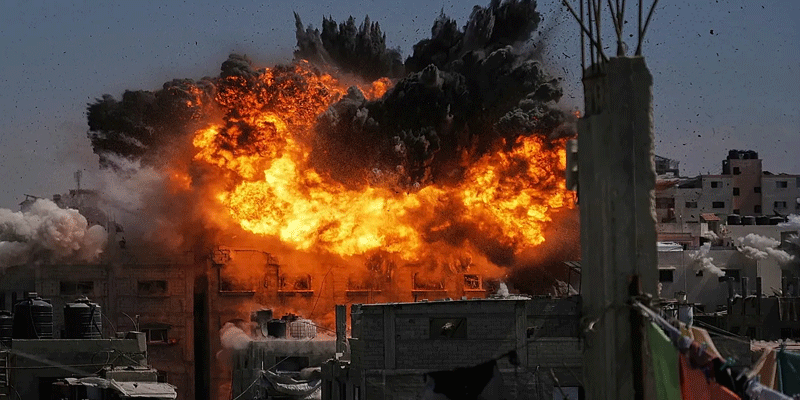
Globally, the conflict has already disrupted oil markets, with volatility in the Strait of Hormuz posing risks to energy security and inflation. Failure to reach an agreement could trigger renewed hostilities, potentially drawing in regional actors and escalating into a broader conflict.
A Defining Moment for Regional Stability
The Islamabad talks represent a pivotal opportunity to de-escalate one of the most volatile geopolitical crises of the moment. While deep divisions remain—particularly over sanctions and maritime rights—the cost of failure is immense. Beyond the immediate risk of military escalation, the ripple effects on global energy markets and regional stability could be profound. Whether diplomacy prevails will depend on both sides’ willingness to compromise under pressure, making this a defining moment not just for US-Iran relations, but for the broader international order.
(With agency inputs)