A Pattern of Silent Eliminations
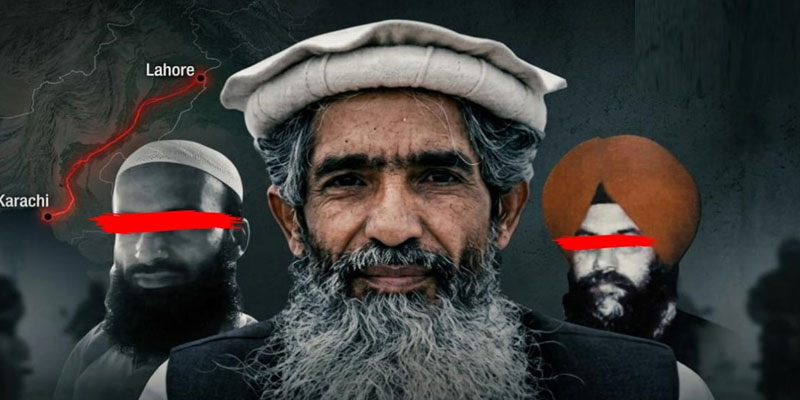
In recent years, a chilling pattern has emerged across Pakistan: some of India’s most-wanted terror operatives are being eliminated under murky and unexplained circumstances. Local reports almost invariably attribute these killings to “unidentified gunmen” or vague, mysterious causes—fueling intrigue and speculation. From shootings in crowded cities to unexplained deaths and brutal executions, the trend has intensified since 2022, steadily dismantling networks linked to groups like Lashkar-e-Taiba (LeT) and Jaish-e-Mohammed (JeM).
The latest incident involves Amir Hamza, a founding member of LeT and close aide to Hafiz Saeed. Shot by motorcycle-borne attackers in Lahore, Hamza now lies critically injured—another addition to a growing list of high-profile targets.
The Expanding List of Targets
The string of attacks spans multiple years and locations, each marked by precision and ambiguity. Muhammad Tahir Anwar, brother of JeM chief Masood Azhar, died mysteriously in Bahawalpur in 2026, with no cause disclosed. Abu Qatal was gunned down in 2025, continuing the trend.
In 2023 alone, multiple high-value figures were eliminated. Paramjit Singh Panjwar was shot during a morning walk in Lahore, while Mufti Qaiser Farooq was killed at a Karachi seminary. Shahid Latif died inside a mosque in Sialkot, and Khwaja Shahid was abducted and beheaded near the Line of Control.
Further, Akram Khan Ghazi was shot dead in Khyber Pakhtunkhwa, while Mistry Zahoor Ibrahim had already been assassinated in Karachi in 2022. Together, these cases form a consistent pattern: targeted, efficient, and largely unexplained.
Who’s Behind the Hits?
The central question remains unanswered—and fiercely debated. Three primary theories dominate the discourse.
First is the possibility of covert foreign involvement. Pakistani officials frequently allude to “external forces,” often implying India’s intelligence agency, RAW. However, there has been no official acknowledgment or credible evidence tying India directly to these operations. The silence, in itself, keeps the theory alive but unproven.
Second, internal dynamics within Pakistan may be at play. The country’s intelligence apparatus, particularly the ISI, has long maintained complex relationships with militant groups. Some analysts suggest these killings could represent a strategic recalibration—quietly eliminating liabilities under international pressure without overt crackdowns.
Third, factional infighting cannot be ruled out. Militant organizations like LeT and JeM are not monolithic; rivalries, power struggles, and financial disputes often simmer beneath the surface. The precision and frequency of these attacks could indicate internal purges or revenge killings disguised as external strikes.
Strategic and Geopolitical Implications
Regardless of the perpetrators, the impact is significant. The removal of key operatives disrupts recruitment, planning, and cross-border coordination, weakening anti-India terror infrastructure. For India, this translates into a reduced immediate threat without direct military escalation.
For Pakistan, however, the situation is more complex. These incidents expose vulnerabilities within its territory and challenge long-standing narratives about control over militant actors. As safe havens appear increasingly penetrable, Islamabad faces growing international scrutiny.
A Covert Conflict with Visible Consequences
The steady elimination of high-profile terror operatives signals a shadow war unfolding beyond official acknowledgment. Whether driven by foreign intelligence, internal recalibration, or militant infighting, the outcome is reshaping the region’s security landscape.
What remains clear is that ambiguity is the defining feature of this campaign. As long as the perpetrators remain unidentified, the killings will continue to blur the lines between covert strategy and chaotic violence—leaving behind both weakened networks and unanswered questions.
(With agency inputs)