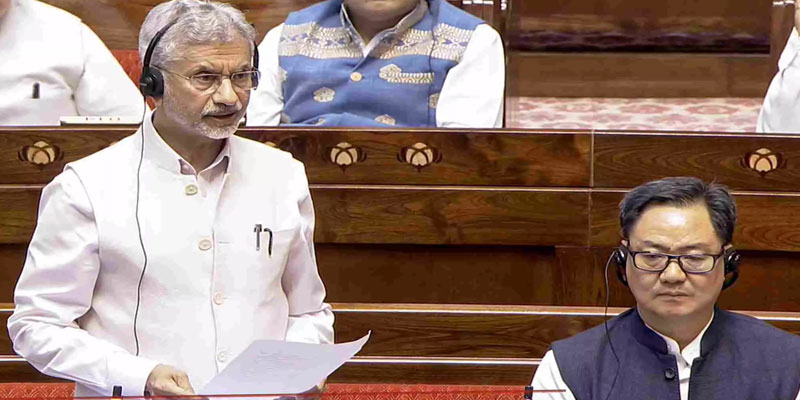
External Affairs Minister S. Jaishankar briefed the Rajya Sabha on the rapidly escalating conflict in West Asia, warning that the Iran–U.S.–Israel war poses serious risks to India’s citizens, energy supplies, and trade interests. Addressing the Upper House, Jaishankar outlined the government’s diplomatic and humanitarian response since the conflict erupted on February 28, following airstrikes on Tehran that killed Iran’s Supreme Leader Ayatollah Ali Khamenei.
However, the briefing quickly turned politically charged as sections of the opposition staged a walkout during his speech, triggering a sharp exchange in the House and highlighting the political tensions surrounding India’s response to the crisis.
Government Assessment of the Crisis
Jaishankar described the unfolding conflict as a “grave and complex situation” with direct implications for India. Soon after the initial strikes and subsequent Iranian retaliation across Gulf bases and shipping routes, Prime Minister Narendra Modi convened a Cabinet Committee on Security (CCS) meeting on March 1 to review the situation.
The minister informed the House that the conflict had already caused severe infrastructure damage across the region and disrupted international transport networks. The human toll has also affected Indians working at sea: two Indian mariners were killed and one remains missing after attacks on vessels operating in the Gulf.
India had anticipated rising tensions earlier in the year. According to Jaishankar, travel advisories were issued on January 5, January 14, and February 14, urging Indian citizens to leave Iran or avoid travel to conflict-prone areas.
Evacuations and Safety Measures
Protecting Indian nationals has been the government’s immediate priority. The minister confirmed that more than 52,000 Indians have returned safely from the Gulf region in the past week as commercial flights resumed operations.
Indian embassies have helped relocate vulnerable groups such as students and pilgrims in Iran to safer areas, including evacuation routes through Armenia. Special flight arrangements, including services by Air India, have been used to bring stranded passengers home.
Jaishankar also noted humanitarian efforts, including assistance to the crew of the Iranian vessel IRIS LAVAN, which was allowed to dock in Kochi for support.
Strategic and Economic Stakes
The minister emphasized that India’s stakes in West Asia are enormous. Nearly 10 million Indians live in the Gulf region, while trade with the region exceeds $200 billion annually. Remittances from Indian workers in West Asia alone contribute around $120 billion to the Indian economy.
Energy security remains a major concern. The Gulf supplies about 60% of India’s oil and gas imports, and any disruption to shipping routes—particularly the Strait of Hormuz—could sharply raise global energy prices. Brent crude has already climbed above $85 per barrel, raising fears of inflation and a wider current account deficit for India.
Diplomacy and Political Friction
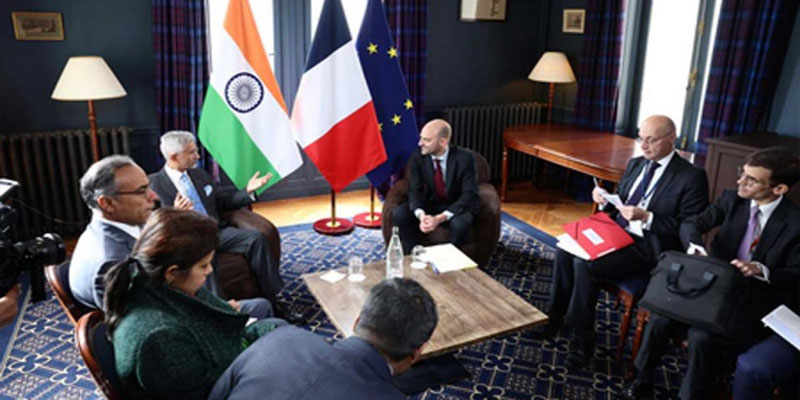
Jaishankar told the House that India is maintaining diplomatic engagement with all sides of the conflict, including Iran, Israel, and Gulf states. Despite the difficult environment following Khamenei’s death, India has remained in contact with Tehran’s new leadership, while also coordinating with regional partners.
The briefing, however, sparked political confrontation. Opposition parties demanded a longer debate and accused the government of avoiding parliamentary scrutiny. As Jaishankar continued his statement, opposition members walked out in protest, prompting sharp criticism from treasury benches. Government leaders argued that the briefing demonstrated transparency and that India’s response requires bipartisan support during a sensitive international crisis.
Navigating a Delicate Balancing Act
India’s response to the West Asia war reflects a careful balancing act between humanitarian responsibility and strategic interests. The safety of millions of Indian citizens abroad, the stability of vital energy supplies, and the protection of maritime trade routes all hinge on how the conflict evolves.
Jaishankar’s briefing underscored the government’s effort to manage these risks through evacuation operations, diplomatic outreach, and economic preparedness. Yet the political clash in Parliament also reveals how global crises can quickly intersect with domestic debates.
As tensions in West Asia remain volatile, India’s challenge will be to sustain calm diplomacy while safeguarding its citizens and economic lifelines in one of the world’s most strategically sensitive regions.
(With agency inputs)