Counting Begins After Turbulent Months
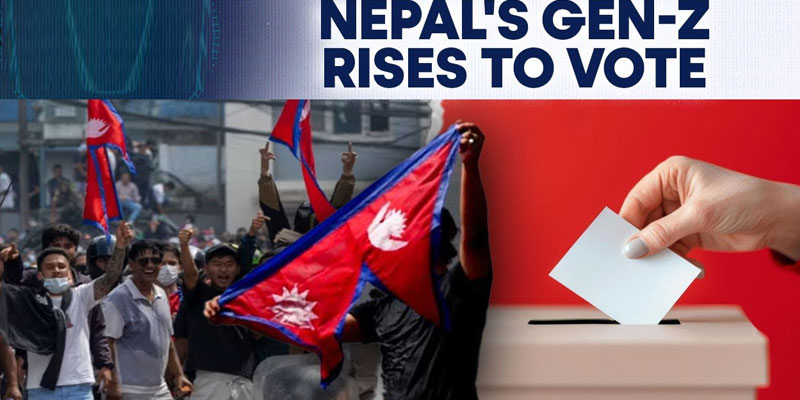
Nepal began counting votes on March 5, 2026, in its first general election since the dramatic Gen Z–led protests that toppled Prime Minister KP Sharma Oli’s coalition government last September. Nearly 18.9 million voters participated in the polls to elect 165 lawmakers through the First-Past-The-Post system and 110 through proportional representation, with 65 political parties in the fray.
Early figures suggest a strong youth turnout—estimated at over 65 percent among younger voters—reflecting the political awakening triggered by last year’s unrest. The vote pits traditional powerhouses such as the CPN-UML and Nepali Congress against rising anti-establishment forces, most prominently the Rastriya Swatantra Party (RSP).
What Sparked the Gen Z Protests
The protests that reshaped Nepal’s political landscape erupted on September 8, 2025, quickly escalating into the most serious political crisis in years.
The immediate trigger was the government’s decision to ban 26 social media platforms, including WhatsApp, Instagram, Facebook, and TikTok. Young Nepalis interpreted the move as an attempt to silence dissent. Within hours, activists bypassed the ban using VPNs and messaging platforms like Viber and Discord, mobilizing over 100,000 protesters in Kathmandu.
But the unrest ran deeper. Long-standing grievances over corruption, nepotism, and economic stagnation had been simmering for months. Nepal ranks 107th out of 180 countries on Transparency International’s corruption index, and allegations of ministers appointing relatives to influential posts intensified public anger.
Youth unemployment was another major flashpoint. With around 40 percent of people under 25 struggling to find stable jobs, many felt locked out of opportunities while political elites appeared insulated from hardship.
The situation spiraled after security forces opened fire on demonstrators. Seventy-six people were killed over two days, sparking nationwide outrage. Government offices were torched, Kathmandu airport temporarily shut down, and international rights groups condemned the use of force.
Under mounting pressure, Oli resigned, parliament was dissolved, and former Chief Justice Sushila Karki was appointed caretaker prime minister, paving the way for the current elections.
The Rise of Balendra “Balen” Shah
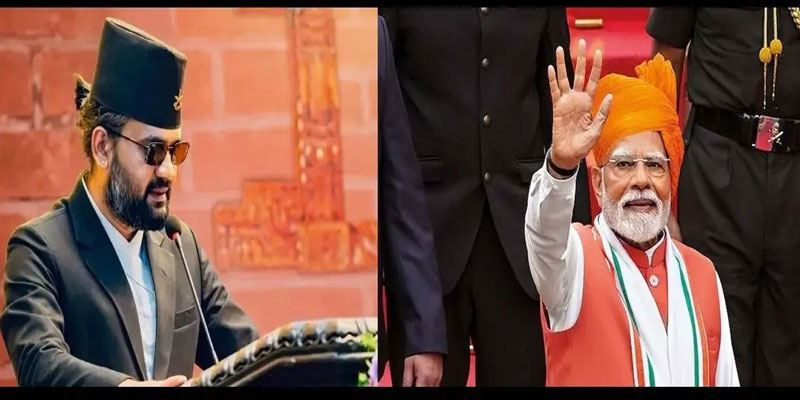
Amid the political upheaval, one figure has captured the imagination of Nepal’s younger voters—Balendra “Balen” Shah, the 35-year-old rapper-turned-Kathmandu mayor and rising star of the RSP.
Shah first gained prominence as an independent candidate who won the Kathmandu mayoral race in 2022, campaigning on transparency, digital governance, and urban reform. His anti-corruption messaging and direct communication through social media earned him a loyal youth following.
During the current election campaign, Shah’s rallies drew crowds of up to 50,000 people, blending political speeches with his signature hip-hop activism. His candidacy in Jhapa-5, a long-time stronghold of Oli, has emerged as one of the biggest surprises of the election. Early counting shows Shah leading significantly, symbolizing a potential generational shift.
Nationwide trends also indicate momentum for his party. By the afternoon of March 6, the RSP was leading in more than 50 constituencies, positioning itself as a potential kingmaker in a fragmented parliament.
Political Trends and Coalition Calculus
Despite the surge of new political actors, Nepal’s traditional parties remain competitive. Early tallies show the CPN-UML and Nepali Congress winning several seats, while Pushpa Kamal Dahal “Prachanda’s” Maoist faction trails but remains relevant in coalition negotiations.
Analysts say the election could produce a hung parliament, forcing alliances between old and new players. If RSP’s performance holds, the party could wield decisive influence in government formation.
A Defining Test for Nepal’s Political Future
Nepal’s 2026 election is more than a routine democratic exercise—it is the political aftershock of a youth-driven revolt. The Gen Z protests exposed deep frustration with corruption, inequality, and unresponsive leadership. Now, the ballot box is testing whether that energy can translate into lasting political change.
Figures like Balendra Shah embody the generational shift underway. Yet Nepal’s entrenched political structures remain powerful. As results emerge, the country faces a critical question: will the youth uprising usher in meaningful reform, or will traditional coalitions adapt and retain control of the system?
(With agency inputs)