Diplomatic Flashpoint Over a UN Human Rights Report
A fresh diplomatic confrontation has erupted between New Delhi and the United Nations following a contentious report by UN Special Rapporteur on Human Rights in Myanmar, Thomas Andrews. The report suggested that India’s treatment of Myanmar refugees, particularly the Rohingya community, worsened after the April 2025 Pahalgam terror attack in Jammu and Kashmir, which left 26 tourists dead. India has denounced the document as “misinformed, prejudiced, and politically motivated,” rejecting any suggestion that Myanmar nationals were harassed or linked to the assault. The controversy has reignited debate over India’s balancing act between humanitarian duty and national security priorities.
The UN Report: Allegations and Findings
The Special Rapporteur’s assessment, intended to evaluate the broader human rights crisis in Myanmar, extended its scope to India. The report claimed that Rohingya refugees in India faced intensified police scrutiny, detentions, and deportations in the weeks following the Pahalgam attack — despite no Myanmar national being implicated in the crime.
It cited testimonies from refugee groups alleging that dozens of Rohingyas were detained or threatened with removal, with some reportedly expelled toward Myanmar or Bangladesh. These actions, the report stated, constituted potential violations of the principle of non-refoulement, which prohibits forcing refugees back into danger zones.
Andrews further asserted that such measures created a “climate of fear and hostility,” accusing Indian authorities of using the tragedy as a pretext to exert pressure on vulnerable communities rather than protect them under international humanitarian norms.
India’s Response: Firm Rebuttal and Sovereignty Assertion
India’s counter came swiftly and unambiguously. Addressing the Third Committee of the UN General Assembly, Lok Sabha MP Dilip Saikia dismissed the report as “devoid of facts and steeped in bias.” He emphasized that no evidence connected Myanmar refugees to the Pahalgam attack and condemned what he termed an attempt to “communalize a terror incident through speculative narratives.”
Indian representatives argued that the Rapporteur relied on “media-driven accounts and unverified claims” that undermine the credibility of UN mechanisms. They also highlighted India’s pluralistic ethos, pointing out that over 200 million Muslims live peacefully in the country — a testament, they said, to India’s tradition of coexistence rather than persecution.
India’s position was clear: external entities cannot lecture on internal security or interpret domestic actions through a communal prism.
Rohingya Refugees and India’s Policy Dilemma
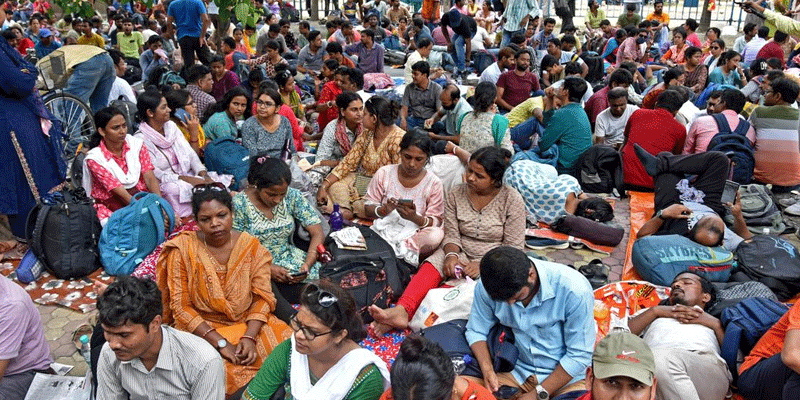
India currently hosts several thousand Rohingya refugees who fled persecution and military crackdowns in Myanmar since 2017. Most live in camps across Delhi, Jammu, and the Northeast. However, since India is not a signatory to the 1951 UN Refugee Convention, these individuals are treated under domestic immigration laws as irregular entrants rather than legally recognized refugees.
Over the past few years, New Delhi has adopted stricter border controls, increased surveillance, and periodically deported undocumented Rohingyas, citing security risks and potential infiltration by extremist elements. Rights organizations have criticized these actions as inhumane, but Indian officials maintain that national security considerations must take precedence.
(With agency inputs)