Pakistan Worries About Losing Market Advantage After India–EU Deal
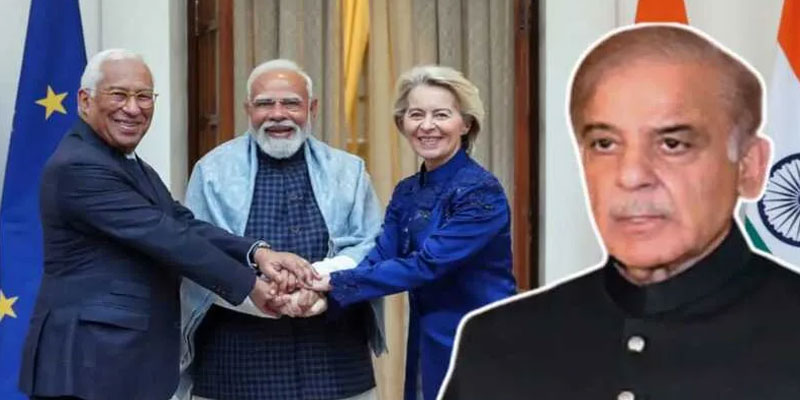
Pakistan’s export sector is on alert following the conclusion of the long-awaited India–European Union Free Trade Agreement, with industry leaders warning that Islamabad could lose a long-held competitive advantage in the European market. Pakistani textile exporters, in particular, fear that India’s newly secured tariff-free access to EU markets will dilute Pakistan’s pricing edge, threatening billions in exports and millions of jobs dependent on the sector.
A Trade Landscape Suddenly Shifts
For years, Pakistan enjoyed Favorable entry into the EU under the Generalised Scheme of Preferences Plus (GSP+), which granted reduced or zero duties on most of its textile and apparel exports. This advantage helped the country secure Europe as one of its top export destinations.
The India–EU agreement now levels the playing field. India, previously subject to tariffs on many textile products, will gain full or near-full duty-free access under the new arrangement. With Europe already one of India’s largest export markets, the new deal is expected to further boost Indian shipments, raising serious concerns among Pakistani exporters who depend heavily on EU demand.
Pakistan vs. India: Textile Competitiveness in the EU Market
Textiles form the backbone of Pakistan’s export economy, accounting for roughly 60 percent of overseas shipments. Europe alone absorbs a substantial portion of these exports, especially garments and home textiles.
Until now, Pakistan’s tariff-free access under GSP+ gave it an edge over Indian competitors, whose products faced duties of up to 12 percent in some categories. That gap allowed Pakistani exporters to compete effectively on price despite structural challenges at home.
Pakistan’s industry, meanwhile, struggles with higher energy costs, fragmented manufacturing networks, and slower modernization, which could weaken competitiveness if reforms are not accelerated.
What Changes Does Pakistan Seek in the EU’s GSP+ Framework?
Facing this new challenge, Islamabad is intensifying diplomatic engagement with Brussels to ensure continued preferential access beyond the current GSP+ timeline, which runs through 2027.
Pakistan seeks not only an extension of the program but also broader tariff coverage and smoother compliance processes to secure long-term market stability. Maintaining GSP+ benefits require adherence to 27 international conventions covering labor rights, governance standards, environmental protections, and human rights.
Officials argue that Pakistan’s compliance record and role in supplying affordable goods to European consumers justify sustained preferential access. At the same time, exporters are urging domestic reforms—lower energy tariffs, tax simplification, export financing support, and sustainability upgrades—to remain competitive irrespective of tariff advantages.
Reform or Risk Losing Ground
The India–EU trade deal marks a turning point for regional export competition. Pakistan can no longer rely solely on tariff advantages to sustain market share in Europe. Structural reforms, productivity improvements, and diversification into higher-value products are becoming essential.
If policymakers act swiftly, the challenge could catalyze overdue modernization. Failure to adapt, however, risks eroding Pakistan’s position in one of its most critical export markets, with far-reaching economic consequences.
(With agency inputs)