A Fast-Rising Startup Constellation
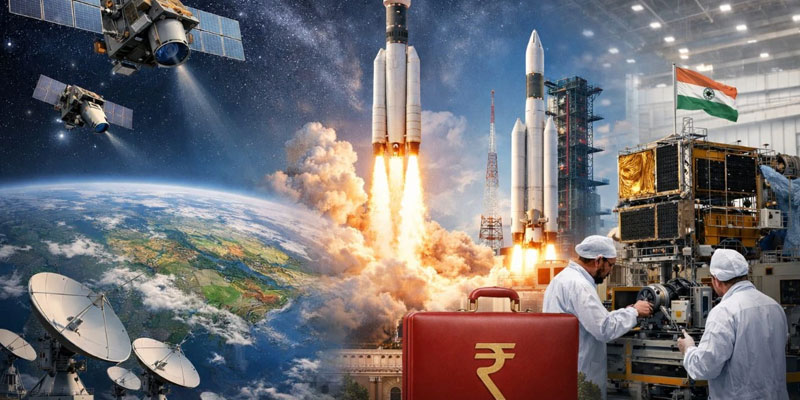
India’s commercial space sector is rapidly transforming from a state-led programme into a bustling private ecosystem. More than 400 space-focused startups are now operating across the country, and cumulative investment has crossed the $500 million mark, according to recent government disclosures in Parliament. The figures underline how a sector once dominated by the Indian Space Research Organisation (ISRO) is evolving into a broader industry where private companies build rockets, satellites and data platforms. Successful sub-orbital launches by firms such as Skyroot Aerospace and Agnikul Cosmos, alongside a growing number of private payloads and satellites in orbit, have become early indicators of this shift.
From Monopoly to Marketplace
For decades, India’s space programme was largely a government enterprise focused on national capability and strategic autonomy. That model is now being supplemented by a thriving commercial layer. Startups are developing launch vehicles, earth observation systems, propulsion technologies and satellite-based services for agriculture, logistics and climate monitoring. The government’s decision to open the sector has drawn domestic venture capital and international partnerships, positioning India as an emerging hub for cost-efficient space technologies. While the overall investment pool remains modest compared with global leaders, the pace of expansion suggests an inflection point for the country’s space economy.
Government Reforms Driving Growth
Policy changes introduced over the past few years have been central to this expansion. The creation of the Indian National Space Promotion and Authorisation Centre (IN-SPACe) in 2020 established a single-window mechanism for private firms seeking access to ISRO infrastructure, launch facilities and technical support. This streamlined approvals process has enabled dozens of companies to test payloads and develop hardware using government facilities, reducing entry barriers for new players.
Foreign direct investment rules have also been liberalised, allowing higher levels of automatic investment in satellite manufacturing, launch services and ground infrastructure. The Indian Space Policy 2023 further clarified the roles of public and private entities, formally allowing commercial launch vehicles and satellite constellations while encouraging public–private partnerships in earth observation and data services. Earlier regulatory shifts, including the Geospatial Policy of 2021, eased restrictions on mapping and data collection, creating downstream opportunities for analytics and location-based services.
In addition, the government has backed the ecosystem through technology transfers from ISRO, dedicated venture funding initiatives and state-level incentives from regions such as Karnataka, Gujarat and Andhra Pradesh. These measures have helped startups secure testing opportunities, collaborate internationally and integrate into global supply chains.
Opportunities and Structural Challenges
The surge in startups reflects both technological ambition and market demand. India’s competitive launch costs and strong engineering talent base provide a foundation for growth in satellite manufacturing, data services and launch capabilities. Analysts project that the country could capture a meaningful share of the global space economy over the next decade if funding levels and infrastructure keep pace.
However, challenges persist. Many startups require sustained capital to scale from prototype to commercial deployment, and the domestic funding pool remains limited compared with global counterparts. Launch infrastructure, regulatory clarity and talent retention will also shape the sector’s trajectory.
Building a Sustainable Space Economy
India’s expanding network of space startups and rising investment flows signal a structural shift toward a mixed public–private model in space exploration and services. Government reforms have opened doors, but long-term success will depend on continued policy support, deeper capital markets and reliable launch capacity. If these elements align, India’s private space sector could evolve into a significant contributor to both economic growth and technological leadership, marking a new chapter in the country’s journey beyond Earth.
(With agency inputs)