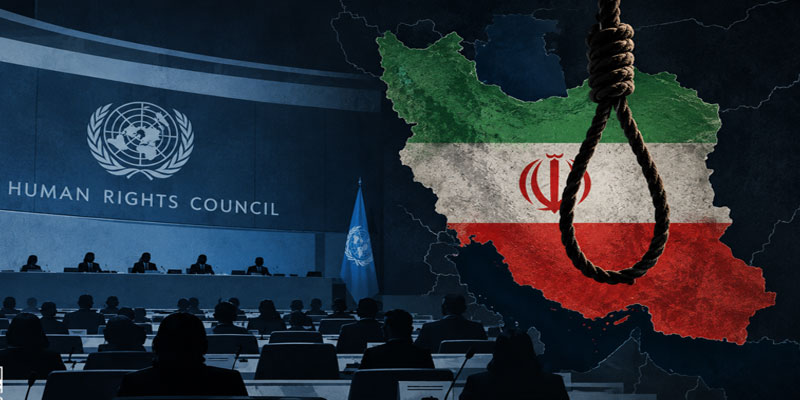
A Case at the Intersection of Faith and Dissent
Iran’s reported death sentence against 23-year-old accounting student Najmeh Amini has intensified concerns over freedom of expression, judicial fairness and capital punishment. Convicted over an allegedly blasphemous social-media post, Amini was reportedly arrested during nationwide anti-government protests earlier in 2026. Her case has attracted international attention because religious offences are intertwined with broader national-security allegations, raising questions about whether the prosecution distinguishes criminal conduct from dissent.
Charges and the Question of Criminal Intent
Amini was reportedly convicted of sabb al-nabi, or insulting the Prophet Muhammad, and faced additional accusations including moharebeh (enmity against God), cooperation with Israel, insulting Supreme Leader Ali Khamenei and clashes with security personnel. Both sabb al-nabi and moharebeh can attract the death penalty under Iranian law, although the precise legal basis of her sentence requires careful scrutiny.
Rights groups say the social-media posts have not been publicly released, limiting independent verification of the allegations. This lack of accessible evidence makes transparency particularly important when the potential punishment is irreversible.
Hallucination Defence and Judicial Review
Amini reportedly told the court that she had consumed psychedelic mushrooms with friends and published the remarks while hallucinating. Her defence characterised the post as an unintended “slip of the tongue”, arguing that she lacked the deliberate intent required for criminal blasphemy.
Iranian law provides for exceptions in certain circumstances involving the absence of intent, although their application depends on the relevant legal provisions and judicial findings. The judge reportedly questioned Amini’s explanation, asking why her alleged hallucinations had led her to insult religious figures rather than political adversaries.
The reported exchange raises a fundamental evidentiary concern: whether the court adequately examined her mental state, the circumstances of publication and the legal threshold for establishing intent. Her death sentence reportedly remains subject to Supreme Court review.
Imprisonment and Allegations of Mistreatment
In a separate case before a Revolutionary Court, Amini reportedly received a prison sentence of 12 years, six months and one day for offences including acting against national security and spreading anti-state propaganda. She has also alleged that she was beaten during her arrest, held in solitary confinement in Vakilabad Prison in Mashhad for nearly three months, and denied access to a lawyer of her choice. These allegations, if substantiated, would raise serious concerns about detention conditions and the right to a fair trial.
In an audio message released from prison, Amini reportedly appealed to the United Nations, lawyers and human-rights organisations for intervention. Her plea, “Remember my name; I may not be able to speak again,” has become a poignant expression of her fear of execution and desire for a freer Iran.
International Reaction and Wider Implications
Human Rights Activists in Iran, Iran Human Rights and Humanists UK have condemned the reported sentence, arguing that blasphemy and national-security laws can be used to intimidate dissenters. Iran Human Rights has also reported more than 600 executions in Iran during 2026, underscoring wider concerns about capital punishment. These figures and allegations require independent verification, but they reinforce calls for international scrutiny.
Justice Must Prevail Over Retribution
Amini’s case presents a critical test of Iran’s commitment to due process and proportional punishment. Religious sensitivities and national security are legitimate matters of public concern, but neither should exempt criminal proceedings from rigorous evidentiary standards, independent legal representation and meaningful judicial review.
The most troubling feature is the possibility that an unverified social-media post, coupled with disputed questions of intent, could result in an irreversible punishment. Her alleged conduct must be assessed through evidence and law, not assumptions about her political loyalties or religious convictions. The Supreme Court should examine the defence’s claims impartially, while independent observers should be permitted to scrutinise the proceedings.
Ultimately, a justice system demonstrates its strength not through the severity of its punishments, but through its ability to protect individual rights, establish guilt fairly and prevent wrongful executions. Amini’s sentence should be overturned if the evidence and law do not justify it; at the very least, execution should be suspended pending a transparent and credible review.
(With agency inputs)