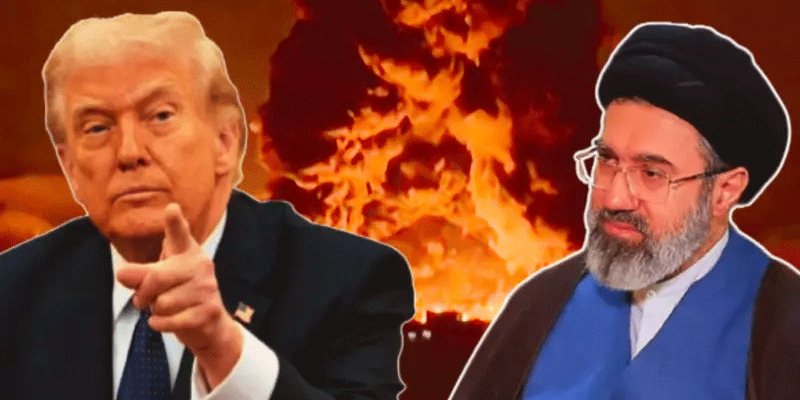
Tensions between the United States and Iran have escalated sharply after President Donald Trump threatened a forceful response to Iranian missile strikes targeting bases used by US forces in Jordan. The latest exchange marks the first direct flare-up between Washington and Tehran since late July.
The confrontation intensified after US forces struck two Iranian launchers on Larak Island in the Strait of Hormuz. US Central Command said the operation targeted Iranian forces allegedly preparing for mine-laying activity in the strategically important waterway. Iran described the strike as aggression and vowed retaliation.
Iran subsequently launched ballistic missiles toward the King Hussein and Al Azraq bases in Jordan. Jordan said its air defenses intercepted eight missiles, while no injuries were reported at the bases. Tehran claimed its operation caused damage, but those claims have not been independently established.
Iran also claimed to have targeted US military assets at Al Minhad Air Base in the UAE with drones. The UAE rejected that claim, although it confirmed intercepting an Iranian drone approaching over its territorial waters.
Trump responded by warning that the US would retaliate, saying Washington would “hit them hard.” The renewed military exchange raises fears that the conflict could again expand despite continuing diplomatic efforts to find an off-ramp.
Iranian President Masoud Pezeshkian, meanwhile, has maintained that Tehran does not seek war and remains interested in negotiations, while insisting Iran will respond to attacks against it.
The biggest global concern remains the Strait of Hormuz, one of the world's most important energy corridors. Further escalation could threaten regional security, disrupt oil and LNG flows, increase energy prices and draw neighboring Gulf states deeper into the confrontation