The Recent Attack: Details and Damage
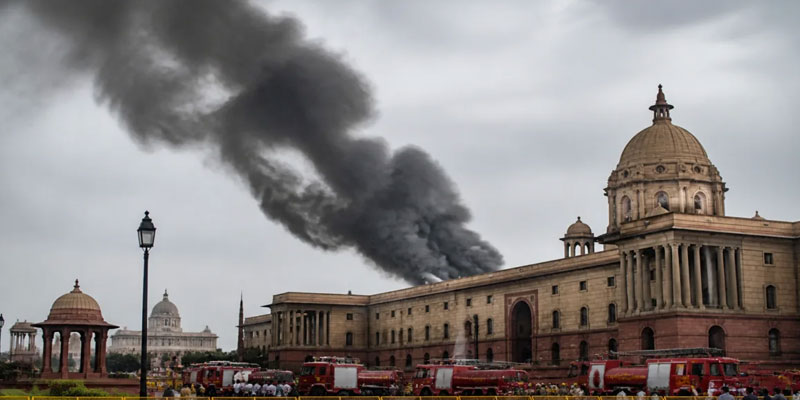
A new wave of Russian drone assaults struck Ukraine’s Odesa region early Tuesday, unleashing fires and crippling critical infrastructure just as the country braces for winter. Ukrainian officials confirmed that multiple energy facilities and a railway depot were hit in coordinated attacks, igniting large-scale fires and disrupting electricity and transport networks across the southern port city.
Emergency crews battled the blazes for hours as thick smoke engulfed key parts of Odesa. The damaged railway depot—vital to both freight and passenger routes—halted transport operations, impeding the movement of humanitarian aid, military equipment, and essential goods. At least one civilian was injured, highlighting the persistent danger to ordinary Ukrainians amid daily bombardments.
The strikes were part of Russia’s intensified campaign to disable Ukraine’s power grid and logistical backbone, deliberately timed to exploit freezing temperatures and energy shortages during the winter months.
A Protracted and Evolving War
The Russia-Ukraine war, now nearing its fourth year since erupting in February 2022, has become one of the most destructive European conflicts in modern history. What began as a large-scale invasion has morphed into a drawn-out war of attrition marked by high civilian casualties, mass displacement, and widespread infrastructural devastation.
Recent months have seen Russia increasingly pivot toward hybrid warfare—using drones, cyberattacks, and long-range missiles to target non-military installations. Energy grids, railway systems, ports, and communication hubs have become recurring targets, revealing Moscow’s intent to destabilize Ukraine’s domestic resilience and economy rather than focus solely on battlefield advances.
Odesa’s strategic position on the Black Sea makes it a prime target. As a key gateway for exports, energy imports, and military logistics, its disruption ripples across the entire Ukrainian war effort and global grain markets.
The Strategy Behind the Strikes
Russia’s focus on energy and transport networks reflects a calculated strategy rooted in both military and psychological warfare.
1. Undermining Civilian Resilience:
By hitting power plants and substations, Russia seeks to plunge Ukrainian cities into darkness and cold. The resultant blackouts strain heating systems, hospitals, and essential services—creating cascading hardship for millions of civilians.
2. Disrupting Military Logistics:
The destruction of rail depots like Odesa’s hampers Ukraine’s ability to transport troops, ammunition, and humanitarian supplies efficiently. With winter constraining road mobility, rail networks become even more crucial, making them a high-value target.
3. Political and Psychological Pressure:
Repeated attacks on cities far from the frontlines aim to wear down public morale and signal to Western allies that Russia retains escalation dominance. By demonstrating its capacity to strike deep inside Ukraine, Moscow attempts to deter Western support and reinforce a sense of insecurity among Ukrainians.
4. Economic Paralysis:
Each attack deepens Ukraine’s economic wounds. Damaged infrastructure delays exports, raises reconstruction costs, and undermines foreign investment confidence—key factors for post-war recovery.
Ukraine’s Response and International Support
In response, Kyiv has ramped up air defense systems in southern regions, deploying Western-supplied interceptors and drones. Repair crews are working around the clock to restore electricity and transportation lines, while Western nations have pledged additional aid to bolster Ukraine’s grid resilience and defense capabilities.
Global condemnation of Russia’s tactics continues, with NATO and the EU calling the attacks “deliberate acts of terror” against civilian infrastructure—a violation of international law.
Resilience Amid Ruin: Ukraine’s Fight for Survival
Russia’s drone strikes on Odesa mark yet another escalation in its hybrid war strategy—weaponizing winter and infrastructure to break Ukraine’s endurance. The assault underscores how the conflict has evolved beyond frontlines, targeting the very systems that keep a nation functioning.
For Ukraine, survival now depends not only on military strength but also on the speed of repair, civilian resolve, and sustained international backing. As the war grinds deeper into another bitter winter, Odesa stands as both a symbol of Ukraine’s vulnerability—and its unyielding resilience.
(With agency inputs)