Strategic Calls Signal India’s Expanding Role
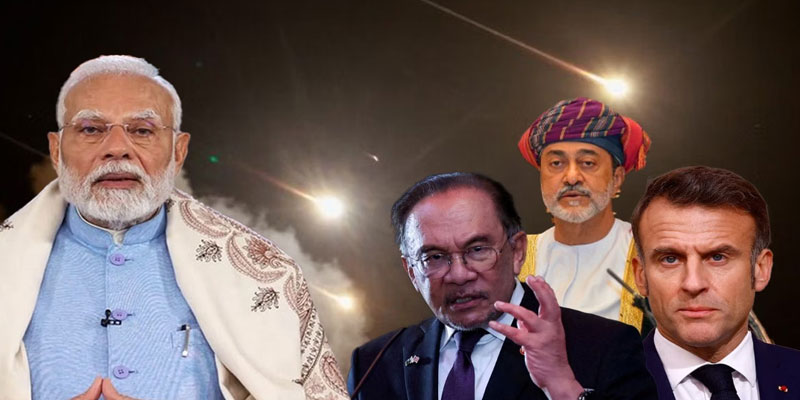
As tensions escalate across West Asia, Narendra Modi has stepped up diplomatic engagement with key global partners. In quick succession, he held conversations with Haitham bin Tariq and Anwar Ibrahim, focusing on regional stability and the security of the Strait of Hormuz. These parallel engagements underline India’s growing concern over the conflict’s spillover effects—particularly on energy routes and expatriate safety—while also hinting at a broader diplomatic ambition.
Oman Outreach: Sovereignty, Safety and Sea Lanes
Modi’s call with Oman’s Sultan carried both symbolic and strategic weight. While the exchange included customary greetings, the core message was clear: India condemned recent strikes as violations of Oman’s sovereignty and emphasized the importance of protecting territorial integrity. This stance aligns New Delhi with neutral regional actors rather than any warring bloc.
Equally significant was the focus on the Strait of Hormuz—a lifeline for global oil and LNG shipments. Both leaders reaffirmed the need for safe and uninterrupted navigation, reflecting India’s deep dependence on Gulf energy flows. Additionally, Modi acknowledged Oman’s role in facilitating evacuations, reinforcing India’s priority of safeguarding its large diaspora in conflict zones.
Malaysia Engagement: Messaging to the Muslim World
The conversation with Malaysia’s Anwar Ibrahim served a complementary diplomatic purpose. Here, the emphasis shifted toward broader political messaging within the Muslim world. Anwar reiterated strong criticism of ongoing military actions in the region, while both leaders converged on the need for immediate de-escalation.
For India, this engagement helps position it as a balanced and constructive voice—one that is willing to engage with diverse perspectives across the Islamic world. The discussion also touched on strengthening coordination in multilateral forums, suggesting that India is exploring coalition-building avenues beyond traditional alliances.
Dialogue Diplomacy: Is Modi Pushing for a Ceasefire?
Taken together, these engagements reflect what can be described as Modi’s “dialogue diplomacy”—a calibrated effort to remain engaged with multiple stakeholders while avoiding overt alignment. The question, however, is whether this approach signals an attempt to actively push for a ceasefire.
The answer appears nuanced. India is not positioning itself as a direct mediator in the traditional sense. Instead, it is advocating principles—sovereignty, de-escalation, and freedom of navigation—that form the foundation of any ceasefire framework. By echoing ceasefire language in discussions with leaders like Anwar Ibrahim, while simultaneously reinforcing maritime security concerns with Oman, India is building a diplomatic narrative that supports de-escalation without overcommitting.
This approach allows New Delhi to maintain strategic flexibility. It keeps communication channels open across ideological divides, from Gulf monarchies under threat to nations critical of Western involvement. In doing so, India enhances its credibility as a neutral stakeholder rather than a partisan actor.
Balancing Interests with Influence
India’s recent diplomatic outreach highlights a careful balancing act between national interests and global responsibility. By engaging Oman and Malaysia simultaneously, Modi is signaling that India’s stakes in West Asia go beyond energy imports—they extend to stability, security, and international cooperation.
While this may not amount to a direct ceasefire initiative, it is a meaningful step toward shaping the conditions necessary for one. In a region increasingly defined by escalation, India’s emphasis on dialogue offers a measured alternative—one that seeks to reduce tensions while safeguarding its own strategic priorities.
(With agency inputs)