India Joins Key EU Foreign Ministers’ Gathering
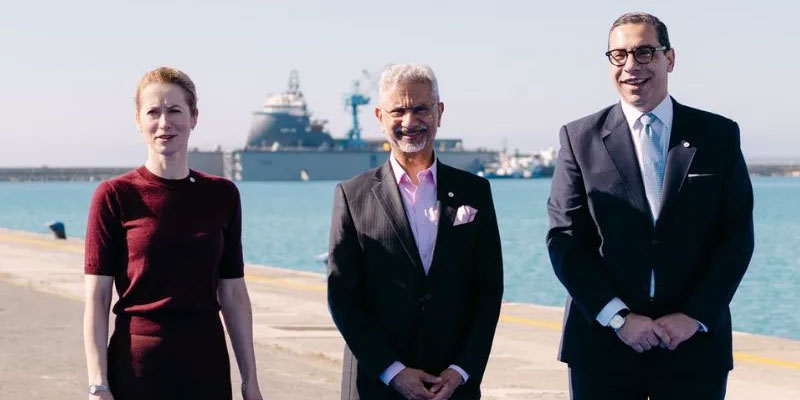
External Affairs Minister S. Jaishankar visited Cyprus from May 27 to 28 to participate in the informal meeting of European Union foreign ministers, known as the Gymnich meeting, as a special invitee. The visit marked an important diplomatic engagement at a time of heightened geopolitical uncertainty, particularly in West Asia and Europe. India’s presence at the high-level forum reflected its growing strategic relevance in global affairs and its expanding partnership with the European Union.
the Gymnich Format
The Gymnich meeting is a unique platform where EU foreign ministers gather informally to discuss pressing international issues outside the framework of formal European Council deliberations. Held every six months, the 2026 edition was hosted by Cyprus in Limassol.
India’s invitation carried particular significance because only a select group of non-EU countries participated in portions of the discussions. Alongside India, Saudi Arabia and Ukraine were invited, highlighting the importance European policymakers attach to these countries in addressing contemporary geopolitical challenges.
The invitation was extended by EU foreign policy chief Kaja Kallas and Cyprus Foreign Minister Constantinos Kombos, underscoring the increasing depth of India-EU engagement.
Focus of Discussions: West Asia and a Changing Global Order
A major focus of the meeting was the rapidly evolving situation in West Asia. Regional tensions, concerns over maritime security and the wider implications of ongoing conflicts dominated deliberations among participating ministers.
Jaishankar emphasized the importance of identifying opportunities for practical cooperation and advancing shared interests in an emerging multipolar world. His intervention reflected India’s broader foreign policy approach, which seeks to build partnerships across regions while maintaining strategic autonomy.
The discussions gained additional relevance against the backdrop of instability in critical maritime corridors, including the Strait of Hormuz, a vital route for global energy supplies and international trade. Both India and the EU have significant stakes in ensuring the security and uninterrupted functioning of these shipping lanes.
Bilateral Engagements and Diplomatic Outcomes
Beyond the main meeting, Jaishankar held a series of bilateral interactions with counterparts from several countries, including Spain, Ukraine and Saudi Arabia, as well as senior EU representatives. These discussions covered a broad range of issues, including trade, security cooperation, connectivity initiatives and regional developments.
His meeting with Spanish Foreign Minister José Manuel Albares focused on expanding practical cooperation and strengthening bilateral engagement. Conversations with European leaders also explored avenues for enhancing strategic collaboration amid shifting geopolitical realities.
The visit reinforced India’s image as a constructive and dependable partner capable of contributing to solutions on issues extending from regional security to economic cooperation.
Strategic Significance for India and Europe
The Cyprus visit comes at a critical moment for both India and Europe. As geopolitical rivalries intensify and traditional alliances undergo recalibration, the EU is increasingly engaging with partners that can contribute to regional stability and economic resilience.
For India, participation in the Gymnich meeting provided an opportunity to articulate its perspectives directly to European policymakers and deepen cooperation across multiple sectors. The engagement highlighted shared interests in maritime security, trade expansion, regional stability and global governance reforms.
Toward a More Substantive Partnership
Jaishankar’s participation in the Gymnich meeting demonstrated the growing strategic convergence between India and the European Union. Beyond diplomatic symbolism, the discussions reflected a shared willingness to address common challenges through practical cooperation. As global politics moves toward a more multipolar framework, India and Europe appear increasingly committed to transforming their relationship into a broader and more consequential strategic partnership.
(With agency inputs)