Moscow Tells Foreigners to Leave Kyiv
Fears of a new phase in the Russia–Ukraine war intensified after Moscow issued a warning urging foreign nationals to leave Kyiv, shortly after launching one of its largest missile and drone assaults on the Ukrainian capital in recent months. The advisory, coupled with threats to target Ukraine’s “decision-making centres,” has fuelled speculation that Russia may be preparing a more aggressive air campaign against the capital.
The development comes as the conflict enters its fifth year, with both sides increasingly relying on long-range strikes, drones and psychological warfare to gain strategic advantage amid a battlefield largely defined by attrition.
A War Increasingly Defined by Long-Range Firepower
Since Russia’s full-scale invasion of Ukraine in February 2022, the conflict has evolved significantly. What began as a conventional military campaign has gradually transformed into a prolonged war of attrition marked by entrenched front lines, drone warfare and sustained missile attacks.
By mid-2026, Russia has struggled to secure decisive territorial breakthroughs despite continued operations in eastern Ukraine. As a result, military pressure has increasingly shifted toward aerial and missile strikes aimed at critical infrastructure, command networks and urban centres. Kyiv, as Ukraine’s political and administrative heart, remains a key target in this strategy.
Latest Escalation Around the Ukrainian Capital
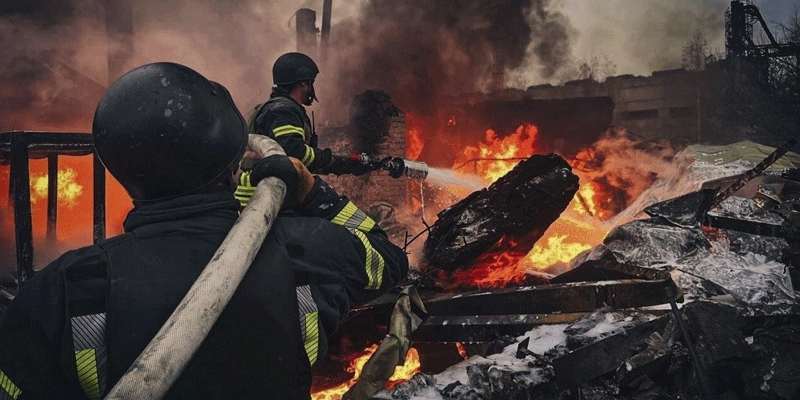
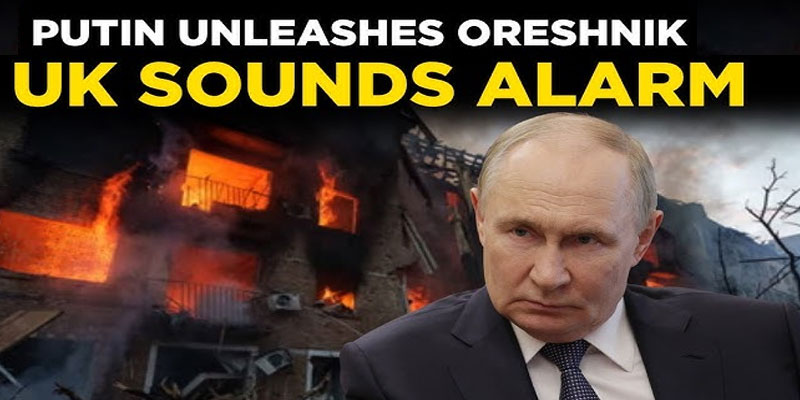
The latest wave of attacks saw Russia launch a large-scale barrage of missiles and drones across Ukraine, with Kyiv bearing the brunt of the assault. The strikes reportedly killed at least four people, injured dozens and caused extensive damage to residential and public infrastructure.
Particularly notable was the reported use of the Oreshnik intermediate-range hypersonic ballistic missile. Russian authorities claim the weapon can travel at approximately ten times the speed of sound, penetrate fortified underground facilities and potentially carry nuclear-capable payloads. Ukrainian officials said this was the third documented use of the missile during the war, highlighting Moscow’s growing reliance on advanced strategic weaponry to project power and demonstrate technological superiority.
The Significance of Moscow’s Warning
Russia’s call for foreign nationals to leave Kyiv is being viewed as more than a routine security advisory. Analysts see it as a deliberate signal that Moscow intends to intensify attacks on what it describes as administrative, military and political centres within the capital.
The warning serves multiple purposes. Militarily, it prepares the narrative for future strikes. Diplomatically, it seeks to create uncertainty among Ukraine’s international partners and foreign missions. Psychologically, it aims to amplify public anxiety and undermine confidence in Ukraine’s ability to protect its capital.
However, many observers note that such messaging also reflects Russia’s limited success on the ground. With major territorial gains proving elusive, strategic pressure is increasingly being exerted through long-range attacks rather than battlefield advances.
Ukraine Pushes Back
Ukrainian officials have strongly rejected Moscow’s warning, characterising it as intimidation and political coercion. Foreign Minister Andriy Sybiha has urged international partners not to succumb to what Kyiv describes as psychological blackmail.
At the same time, Ukraine has expanded its own long-range operations, including drone attacks deep inside Russian territory and strikes targeting military and logistical assets. These actions underscore Kyiv’s determination to demonstrate that it can impose costs on Russia despite facing a larger military adversary.
A Conflict Expanding Beyond the Battlefield
The latest developments highlight how the Russia–Ukraine war is increasingly being fought across multiple domains—military, informational and psychological. Russia’s missile barrages and warnings are intended to project strength and influence perceptions, while Ukraine continues to rely on resilience, international support and innovative long-range capabilities. As battlefield momentum remains limited for both sides, the struggle for deterrence, morale and strategic messaging is becoming as significant as territorial control, ensuring that the conflict remains volatile and unpredictable in the months ahead.
(With agency inputs)