A Session Marked by Prolonged Disruptions
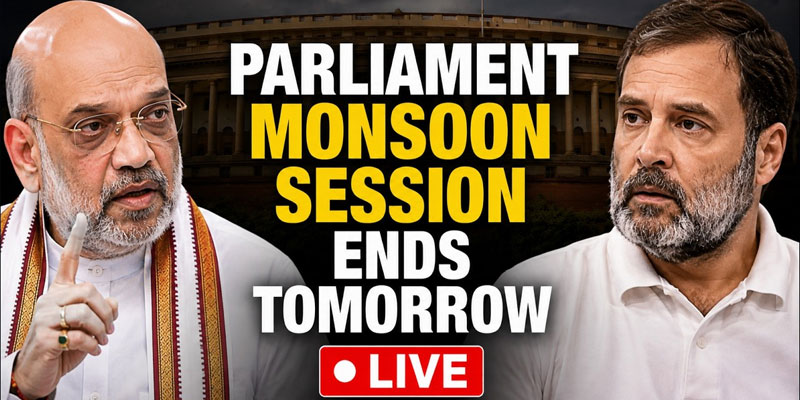
The Monsoon Session of Parliament, which began on July 20, ended on August 13 with both the Lok Sabha and Rajya Sabha adjourned sine die, bringing to a close a session dominated by repeated disruptions, political confrontation and an unresolved government-opposition deadlock. Despite 19 sittings and several important legislative measures, parliamentary scrutiny and debate were repeatedly overshadowed by protests over the NEET controversy, student demonstrations, alleged police action and the Ram temple donation row.
From Day One, Politics Overshadowed Business
The session began amid a sharp confrontation between the government and the Opposition. Opposition parties, led by Congress president Mallikarjun Kharge and INDIA bloc leaders, demanded accountability over the alleged NEET paper leak and sought a statement from Home Minister Amit Shah, along with Prime Minister Narendra Modi’s presence in Parliament.
The government offered a two-day discussion on the NEET controversy, followed by the Home Minister’s reply. The Opposition, however, rejected the arrangement, insisting on an immediate statement and direct answers. With neither side willing to concede ground, repeated adjournments became a defining feature of the session.
In the Lok Sabha, Question Hour was disrupted for 18 consecutive days and was reportedly not completed even once. Zero Hour, intended to provide MPs an opportunity to raise urgent public issues, was similarly curtailed by sloganeering and protests.
Rajya Sabha Faces the Same Political Storm
The Rajya Sabha witnessed a similar pattern. Opposition members repeatedly raised slogans and sought adjournment motions, while Chairman C. P. Radhakrishnan urged MPs to allow listed business to proceed.
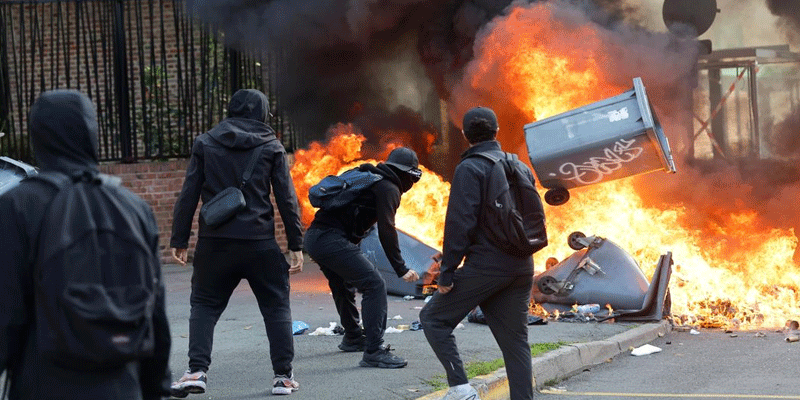
The confrontation extended beyond the chambers. NDA and INDIA bloc MPs faced off near Makar Dwar, exchanging slogans over the student protests and the Ayodhya temple donation controversy. The increasingly visible street-style politics inside the parliamentary complex highlighted the depth of the political divide.
On the final day, proceedings were brief. The Lok Sabha played all six stanzas of Vande Mataram before Speaker Om Birla adjourned the House sine die. The Rajya Sabha subsequently followed, formally ending a session that had generated more political heat than sustained legislative debate.
Bills Passed Despite the Persistent Logjam
Yet the session was not entirely devoid of legislative activity. The Public Examination (Prevention of Unfair Means) Amendment Bill, 2026, addressing examination-related malpractice, was debated and passed by both Houses.
Other significant legislative proposals concerning women’s reservation, delimitation and amendments to the Foreign Contribution (Regulation) Act also featured prominently on the government’s agenda. Some measures advanced amid limited debate, while others remained caught in the broader political stalemate.
This created a paradox: Parliament managed to clear important legislation, but the quality and duration of deliberation were repeatedly questioned as disruptions reduced opportunities for detailed scrutiny.
The Opposition’s Demands Became a Larger Challenge
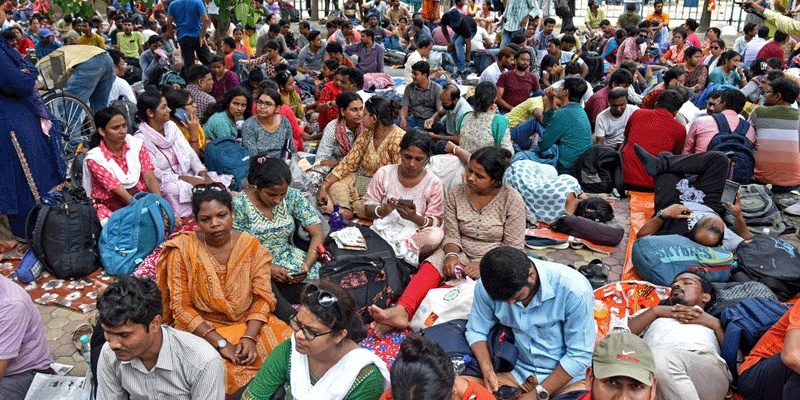
For the Opposition, the protests were about accountability, transparency and the government’s response to contentious public issues. Student protests and allegations surrounding the NEET examination became symbols of a wider demand for answers.
For the government, however, prolonged disruptions threatened to prevent Parliament from functioning and completing its legislative programme. The inability to bridge these competing positions ultimately defined the session.
Deadlock Must Not Become Parliament’s New Normal
The conclusion of the Monsoon Session exposes a worrying trust deficit between government and Opposition. Disagreement is intrinsic to democracy, but repeated disruptions can weaken Parliament’s central purpose: debate, scrutiny and accountability.
The real measure of this session, therefore, is not merely the number of bills passed, but how effectively elected representatives allowed competing voices to be heard. When confrontation replaces conversation, Parliament may remain open—but democracy’s most important forum risks falling silent.
(With agency inputs)