Oil Shock Jolts an Already Cautious Market
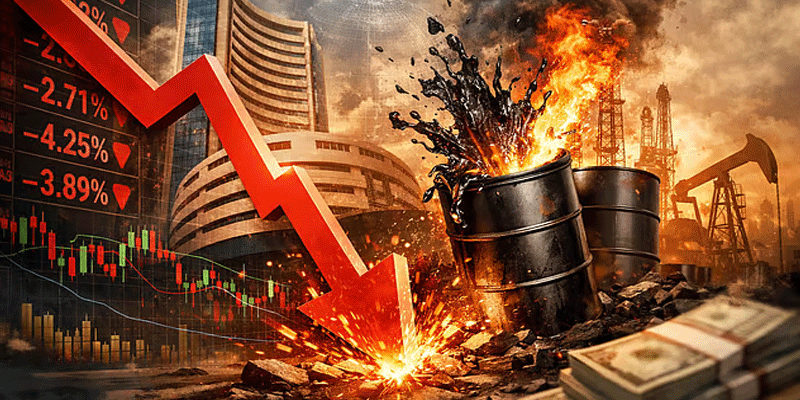
Indian equities opened sharply lower on Monday as rising crude prices, renewed concerns over US interest rates and heavy index-related trading combined to trigger a broad risk-off mood. The Nifty 50 fell 0.68% to 24,011.48, while the Sensex declined 0.58% to 76,824.45 around 10:13 a.m. By noon, the Sensex had lost more than 450 points and the Nifty remained below 24,050, showing that the weakness was persisting rather than being limited to the opening session.
Why Rising Oil Is a Major Risk for India
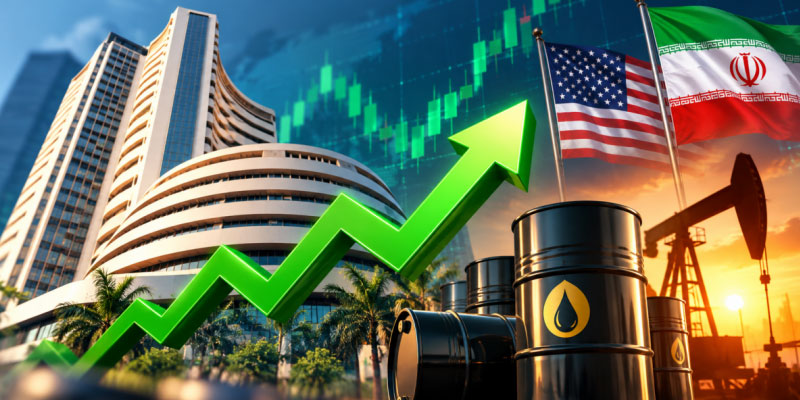
The immediate trigger was crude. Brent futures climbed around 2.5% to nearly $90 a barrel, as renewed US-Iran military tensions increased fears of disruption around the Strait of Hormuz.
For India, which relies heavily on imported crude, expensive oil can quickly become a domestic macroeconomic problem. A prolonged price rise can increase the import bill, weaken the rupee, complicate inflation management and squeeze companies’ dependent on fuel and transportation.
The concern extends beyond energy costs. Higher oil prices could keep inflation elevated globally and make it harder for the US Federal Reserve to ease monetary policy. Higher US interest rates and bond yields can attract global capital towards dollar assets, putting additional pressure on emerging markets such as India.
IT, Cyclicals and Smaller Stocks Bear the Pressure
The selling was broad-based, with information-technology stocks among the major drags. IT companies remain sensitive to US economic conditions and corporate technology spending. Tata Steel and other cyclical shares also faced pressure, while mid-cap and small-cap stocks underperformed larger companies.
The pattern suggests caution rather than outright panic. Investors appeared to be reducing exposure to segments vulnerable to expensive commodities, weaker global risk appetite and potentially higher international borrowing costs. The Nifty had already recorded its third consecutive weekly decline on Friday, leaving market sentiment vulnerable to another external shock.
HDFC Bank Provides a Crucial Cushion
Against the broader decline, HDFC Bank emerged as an important stabilising force. Its shares gained around 1.5% in early trading and more than 2% by midday after CEO Sashidhar Jagdishan decided not to seek another term when his tenure ends in October.
Because HDFC Bank carries the largest weighting in India’s benchmark indices, its rise helped cushion the Sensex and Nifty from an even sharper fall. Deputy managing director Kaizad Bharucha is among the names being considered for succession.
MSCI Rebalancing Adds a Technical Risk
Monday also carries an unusual market-structure challenge. MSCI’s quarterly index changes are scheduled to be implemented at the August 31 close, with four Indian stocks added to its Global Standard index and three removed.
Such changes can generate substantial institutional buying and selling as passive funds rebalance their portfolios. This can produce sharp price movements, particularly near the closing bell.
New Closing Auction Faces Its First Major Test
The MSCI rebalancing also provides an important test for India’s new closing-auction mechanism. Under the NSE framework, eligible F&O stocks move from continuous trading into a separate 20-minute closing auction from 3:15 p.m. The mechanism is intended to improve price discovery but could concentrate liquidity when large institutional orders arrive simultaneously.
Markets Face a Three-Way Test
Monday’s weakness therefore reflects more than one negative headline. Crude prices, US monetary policy expectations and market-structure flows are converging at the same time. If oil remains elevated and global yields rise, pressure on Indian equities could intensify.
But if geopolitical tensions ease, crude retreats and the MSCI-related auction passes smoothly, the selloff could remain a technical adjustment rather than the beginning of a deeper correction. For Indian investors, the real question is no longer whether volatility has returned, but whether these temporary shocks can evolve into a broader earnings and macroeconomic problem.
(With agency inputs)