Indian Railways: A Journey of Transformation
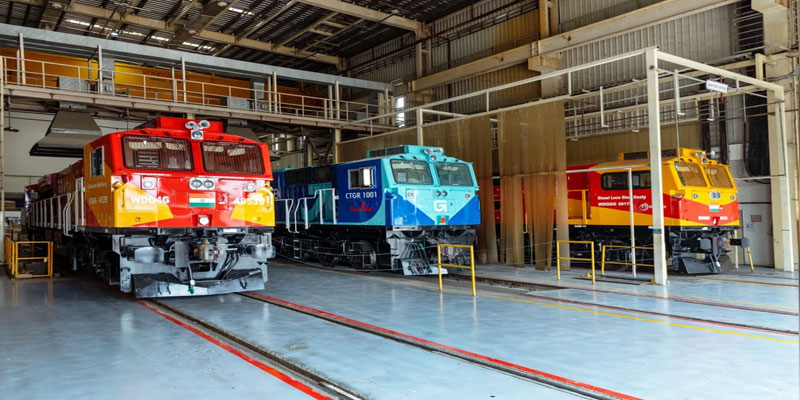
From being the backbone of India’s connectivity for over a century to becoming a modern lifeline with high-speed trains, smart ticketing, and freight corridors, Indian Railways has steadily reinvented itself. In recent years, the focus has shifted to building passenger-friendly services, adopting advanced technology, and integrating sustainability into its expansion. The latest push came this week with the Union Cabinet approving four major railway projects worth ₹12,328 crore, reaffirming the government’s commitment to infrastructure-led growth.
Boost to Connectivity and Freight
The Union Cabinet, chaired by Prime Minister Narendra Modi, has approved four major railway projects worth ₹12,328 crore aimed at improving connectivity, easing freight movement, and fostering regional growth. Spread across Gujarat, Karnataka, Telangana, Bihar, and Assam, the projects will collectively add 565 route kilometers of capacity and benefit over 47 lakh people.
Gujarat: Industry and Tourism Link
In Gujarat’s Kutch region, two new lines—Deshalpar–Hajipir–Luna and Vayor–Lakhpat—will be built at a cost of ₹2,526 crore. The 145 km stretch, to be completed in three years, is expected to facilitate transport of salt, coal, cement, clinker, and bentonite, while also boosting tourism to destinations such as the Rann of Kutch, Dholavira, Koteshwar Temple, and Narayan Sarovar. The project will create 13 new stations and benefit nearly 16 lakh people across 866 villages.
Southern Corridor Expansion
In Karnataka and Telangana, the Secunderabad (Sanathnagar)–Wadi third- and fourth-line project will be undertaken at a cost of ₹5,012 crore. Scheduled for completion in five years, the project will ease congestion on one of the busiest passenger and freight corridors in the south.
Projects in Bihar and Assam
In Bihar, the Bhagalpur–Jamalpur third line project, covering 53 km, has been approved at a cost of ₹1,156 crore. The project will help decongest routes vital for both passenger services and freight operations in the eastern region.
In Assam, the Cabinet cleared the Furkating–New Tinsukia doubling project (194 km), worth ₹3,634 crore, to improve capacity and efficiency in the northeast.
Employment and Green Gains
The projects are expected to generate 251 lakh man-days of work during construction. Once operational, they will enable Indian Railways to carry an additional 68 million tonnes of freight annually, cutting logistics costs and easing passenger services.
Environmentally, the projects are projected to reduce 360 crore kg of CO₂ emissions annually—equivalent to planting 14 crore trees.
Gatishakti and Aatmanirbhar Bharat
All four projects fall under the PM Gatishakti National Master Plan, which aims to integrate multimodal connectivity and boost economic growth. According to the Railway Ministry, the initiatives also support the Aatmanirbhar Bharat vision by creating employment and self-employment opportunities.
A Passenger-Centric Future
The latest approvals highlight how Indian Railways is balancing freight efficiency with passenger convenience. From cleaner stations and faster trains to digital ticketing and renewable-powered operations, the network is steadily upgrading itself into a modern, public-centric service. By combining industrial transport needs with tourism opportunities, reducing congestion, and embracing eco-friendly practices, Indian Railways is positioning itself as not just a carrier of people and goods, but as a driver of national progress.
With these projects, the Railways continues to prove that it is more than an old institution—it is a forward-looking, high-tech service provider keeping India on track for sustainable growth.
(With agency inputs)