Russia Launches Huge Daytime Drone Offensive Across Ukraine
Russia unleashed one of its largest drone assaults of the war on Wednesday, targeting western Ukraine in a sweeping daytime offensive that killed at least six people, damaged critical infrastructure, and triggered alarm across neighbouring NATO states. The scale and proximity of the attacks to NATO borders prompted Poland to scramble fighter jets as a precautionary measure, underscoring fears that the conflict could spill further into the region.
According to Volodymyr Zelenskyy, Moscow launched an unprecedented barrage of up to 800 drones from midnight through the day, aiming to overwhelm Ukrainian air defences and strike sensitive infrastructure in regions closest to NATO territory. The offensive came immediately after the collapse of a three-day US-brokered ceasefire, signaling a sharp escalation in Russian military operations.
Drone Tactics Designed to Overwhelm Defences
Ukrainian military intelligence said Russian drones approached through corridors near Belarus and Moldova to exploit weaknesses in Ukraine’s defensive network and overload interception systems. Officials reported that the drone assault was coordinated with later missile strikes, suggesting a broader strategy aimed at exhausting Ukrainian response capabilities.
Authorities recorded repeated attacks on railway infrastructure and logistics networks, indicating Moscow’s focus on disrupting transport and supply chains crucial to Ukraine’s war effort. Despite at least 23 confirmed strikes on railway facilities, Ukrainian officials stated that rail services continued operating, presenting the country’s infrastructure resilience as a sign of defiance.
Civilian Casualties and Energy Infrastructure Hit
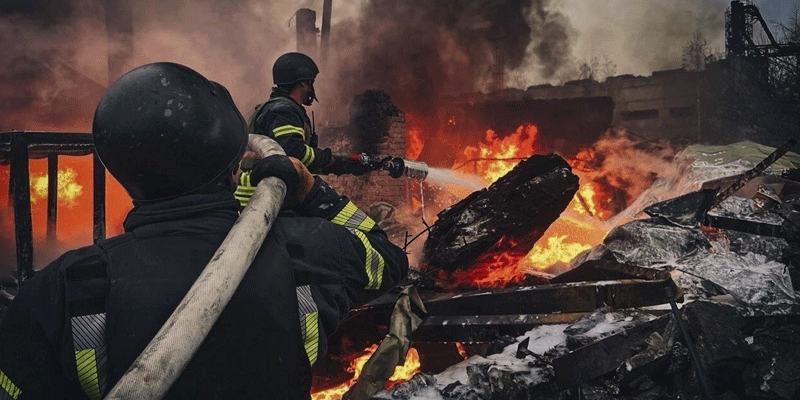
The attacks caused extensive destruction across several western regions. Officials confirmed at least six deaths and dozens of injuries, including fatalities in Rivne and power outages following strikes in Zhovkva. Energy facilities linked to Naftogaz were also reportedly damaged in the Kharkiv and Zhytomyr regions.
Ukraine’s military simultaneously reported 187 combat clashes along the approximately 1,200-kilometre frontline over a 24-hour period, alongside dozens of Russian air strikes and guided bomb attacks concentrated near eastern battlegrounds such as Pokrovsk and Huliaipole.
NATO States and Neighbours React to Escalation
The scale of the offensive triggered immediate reactions across the region. Poland deployed fighter aircraft to monitor airspace security near its border with Ukraine, while Slovakia temporarily closed certain crossings with Ukraine as a precautionary measure.
Meanwhile, Hungary summoned the Russian ambassador after strikes reportedly affected areas populated by ethnic Hungarians. Ukraine welcomed Budapest’s response, viewing it as a significant diplomatic signal against Russian escalation.
Concerns deepened after Moldova reported that at least one drone crossed into its airspace and travelled hundreds of kilometres before disappearing from radar, highlighting the increasing regional risks associated with the war.
War’s Regional Risks Continue to Grow
Russia’s latest drone offensive demonstrates how the conflict is evolving into a broader regional security challenge with growing implications for NATO and neighbouring states. By combining mass drone barrages with missile strikes, Moscow appears intent on stretching Ukraine’s defensive systems while signaling its ability to project force deep into western regions. Although Ukraine continues to demonstrate resilience, the attacks underscore the rising danger of cross-border incidents, airspace violations, and wider geopolitical instability as the war enters an increasingly unpredictable phase.
(With agency inputs)