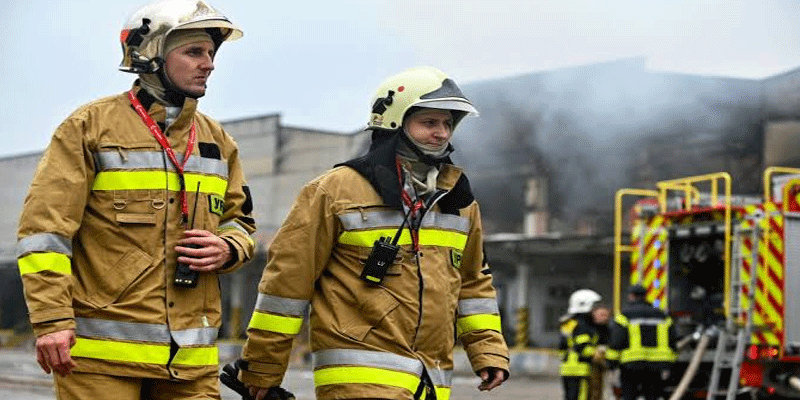
A Deadly Strike with Consequences Beyond the Battlefield
A Russian drone strike near Kyiv has killed at least 27 people and injured 42, after an initial explosion triggered a massive fire and secondary detonations at an enterprise in Bucha district. Ukrainian authorities say the attack highlights Russia’s continuing campaign against infrastructure and logistics, but also raises difficult questions about wartime safety standards when explosive materials are stored near populated areas.
What Happened in Myla
The attack occurred late on August 28 in Myla village, near the Kyiv-Chop highway, when a Russian drone hit an enterprise or warehouse complex. The impact sparked a major fire that spread towards nearby homes and a restaurant before repeated secondary explosions intensified the destruction.
Kyiv regional governor Tymur Tkachenko said 27 people were killed and 42 injured, including four children. More than 380 residents, among them 59 children, were evacuated, while around 50 residential buildings suffered damage.
Rescue operations were complicated by continuing explosions and hazardous debris. Authorities warned that the casualty figures could change as emergency teams cleared the site and searched damaged structures.
The Difficult Question of Responsibility
Ukraine has unequivocally blamed Russia for the drone attack. President Volodymyr Zelenskyy confirmed that the strike caused the detonations and heavy casualties. At the same time, Ukrainian prosecutors have opened an investigation into whether explosive materials were legally stored at the facility and whether appropriate permits and safety measures were in place.
Prime Minister Serhii Koretskyi has described possible safety failures as “criminal negligence” and demanded accountability. This creates two parallel questions: who launched the attack, and whether preventable domestic failures magnified its consequences?
Russia’s Defence Ministry claimed the target was a warehouse containing Ukraine’s Flamingo cruise missiles and rocket-booster fuel. Ukrainian authorities have not immediately confirmed that assertion, and independent verification remains unavailable.
A Wider Campaign Around Kyiv
The Myla disaster came amid several days of intense Russian drone and missile attacks around Kyiv. On August 28, residents endured approximately 15 hours of air-raid alerts, disrupting transport, businesses, schools and everyday economic activity.
Repeated attacks have damaged residential buildings, warehouses, vehicles and critical infrastructure across the Kyiv region. Ukrainian officials have also warned about so-called “double-tap” attacks, in which a second strike follows an initial attack after emergency personnel arrive, increasing risks to rescuers.
The Economic and Civilian Cost
The consequences extend far beyond immediate casualties. Persistent attacks disrupt supply chains, damage productive infrastructure, affect exports and deepen concerns about electricity and heating supplies ahead of winter.
Ukraine’s Economy Ministry has reportedly lowered its 2026 growth forecast from around 1.3% to 0.8%, partly reflecting the economic damage caused by continuing attacks.
Civil Defence Must Evolve with the War
The Myla tragedy exposes a painful reality of prolonged conflict: air defence alone cannot guarantee civilian safety. Ukraine must simultaneously strengthen hazardous-material regulations, disperse sensitive facilities, improve evacuation planning and protect emergency responders.
Russia’s attacks remain the immediate cause of the destruction, but wartime resilience also requires reducing the consequences when attacks inevitably penetrate defences. The lesson from Myla is stark: in a prolonged war, protecting civilians means defending the skies—and eliminating avoidable dangers on the ground.
(With agency inputs)