A Trade War with Far-Reaching Ripples
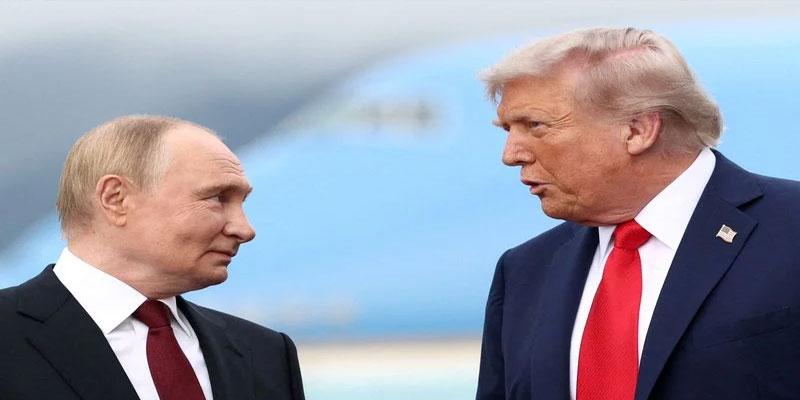
Donald Trump’s return to tariff-heavy policies has reopened old wounds in the global economy. What began as a U.S.-China trade war in his first term—centered on steel, solar panels, and consumer goods—has now sharpened into a fight over semiconductors, the building blocks of artificial intelligence and the digital economy. While Washington’s measures are aimed squarely at Beijing, their spillover effects are being felt from Europe to Southeast Asia—and crucially, in India, a country navigating between opportunity and risk.
Trump’s Onshoring Drive
Unlike Joe Biden’s multilateral approach, Trump has opted for unilateral protectionism. His “One Big Beautiful Bill” (OBBB) extends the CHIPS Act tax credits, incentivizing American chip giants like Intel, Nvidia, and Micron, as well as Taiwan’s PSMC, to build fabs within the U.S. The policy reflects Washington’s desire to dominate semiconductor production, but comes at a domestic cost—shrinking social programs and swelling deficits projected to exceed $3 trillion.
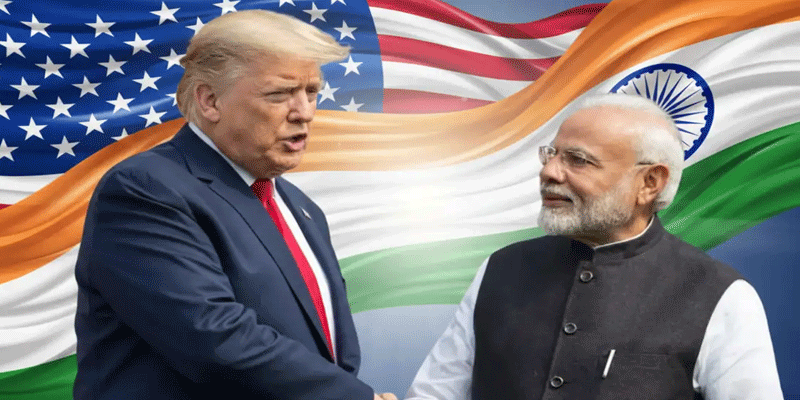
For allies like India, this shift complicates collaboration. Instead of deepening cooperative supply chains under Quad or the Indo-Pacific Economic Framework, Trump’s policies prioritize reshoring, sometimes at the expense of allies who face tariffs as high as 30 percent. This protectionist tilt risks fragmenting the global semiconductor ecosystem, where no country—including the U.S.—can stand entirely on its own.
The Nvidia Reversal: Profit vs. Security
The most controversial twist came with Trump’s decision to first restrict and then approve Nvidia’s H20 chip exports to China. Initially presented as a national security imperative, the ban was expected to cost Nvidia $15.5 billion. Under industry pressure, the administration reversed course, allowing sales to China but sparking alarm among security analysts who argue that Washington is undermining its own efforts to stay ahead in AI.
For India, this inconsistency is troubling. New Delhi, like many others, seeks predictable policy signals to plan its semiconductor strategy. Instead, Washington’s oscillation between bans and approvals injects uncertainty, potentially pushing countries to hedge their bets rather than rely solely on U.S. partnerships.
China’s Counteroffensive
Beijing, for its part, has doubled down on self-reliance. The “Made in China 2025” plan initially targeted 70 percent chip self-sufficiency, later revised to 75 percent by 2030. Despite setbacks—so-called “zombie fabs” that drained $50–100 billion—China has made significant strides. SMIC’s surprise production of 7-nanometer chips in 2023 proved that U.S. export controls cannot entirely stall its progress.
China has also wielded its dominance in rare earth refining, controlling about 80 percent of global capacity. By restricting exports of gallium and germanium, Beijing has signaled that it can retaliate in areas critical to the chip supply chain. Simultaneously, its Digital Silk Road has expanded partnerships across Asia, Africa, and Eastern Europe, further entrenching its technological influence.
India at the Crossroads
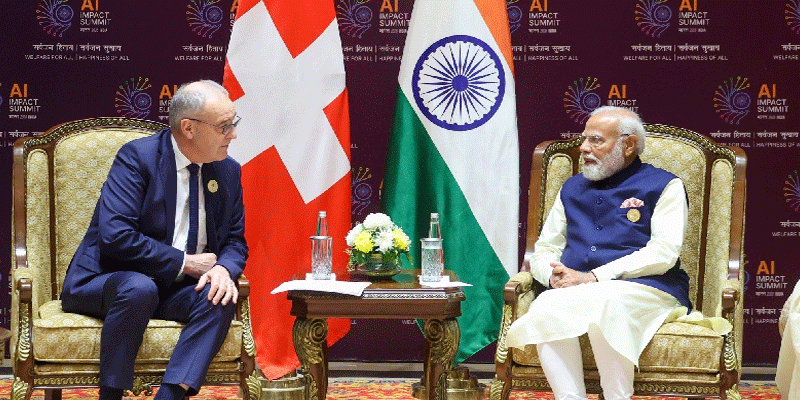
Caught between these two giants, India faces both challenges and openings. On the one hand, Trump’s tariffs on partners create uncertainty for Indian exports, while U.S.-China tensions risk disrupting global supply chains that India depends on. On the other hand, Washington’s emphasis on “friend-shoring” could give India a unique role as a trusted manufacturing and R&D hub.
Already, India has launched a $10 billion semiconductor incentive program to attract global chipmakers, and firms like Micron have announced assembly and testing facilities in Gujarat. The Quad’s Semiconductor Supply Chains Contingency Network also provides a platform for India to integrate more deeply into allied supply chains. But India must tread carefully: overdependence on either Washington’s unpredictable tariffs or Beijing’s price-competitive chips could undermine its long-term strategy.
Europe and Southeast Asia: Shifting Landscapes
Another factor shaping India’s calculus is the rise of Europe and Southeast Asia as chip battlegrounds. European firms like ASML dominate advanced lithography, while Malaysia, Thailand, and Vietnam are emerging as alternative manufacturing bases. Chinese firms, including Huawei and StarFive, are embedding themselves in these ecosystems, even as U.S. companies like Intel invest billions in Penang and Bangkok.
For India, this diversification is a double-edged sword: it reduces global dependence on China but also creates new competitors for attracting semiconductor investment. To stand out, New Delhi must combine incentives with robust infrastructure and skilled labor pipelines.
A High-Stakes Future
The semiconductor race is not just about economics—it is a struggle shaping the future of artificial intelligence, military power, and the global order. Trump’s playbook, focused on tariffs and onshoring, has unsettled even close allies. China, while constrained, is resourceful in finding workarounds and leveraging its dominance in raw materials.
For India, the lesson is clear: hedging is no longer enough. It must accelerate domestic chip production, deepen its role in allied networks, and balance ties with both Washington and Beijing without becoming overly reliant on either.
Navigating Between Giants
As the fourth industrial revolution gathers pace, semiconductors are the new oil—vital, scarce, and geopolitically sensitive. Trump’s aggressive tariffs and erratic export controls may serve short-term U.S. interests but risk destabilizing the global supply chain. China’s resilience, though imperfect, shows that isolation is not feasible.
India’s challenge lies in turning disruption into opportunity. By positioning itself as a reliable, innovation-driven player in the semiconductor race, New Delhi can not only safeguard its economic security but also shape the balance of power in the unfolding U.S.-China rivalry.
(With agency inputs)