From Payment Platform to Digital-Public Infrastructure
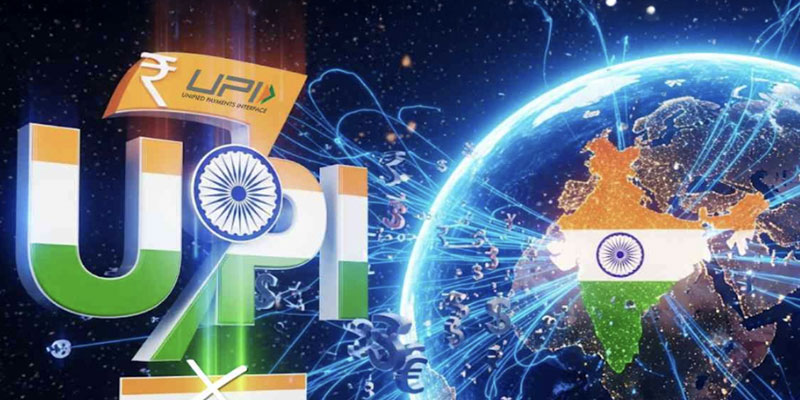
As UPI completes ten years, its transformation from a payment mechanism into a foundation of India’s digital economy is remarkable. Launched on August 25, 2016, by the National Payments Corporation of India (NPCI) under RBI oversight, the Unified Payments Interface has fundamentally changed how Indians exchange money. From roadside vendors and small shops to large retailers and businesses, instant bank-to-bank payments have become an everyday habit.
A Small Beginning, An Extraordinary Scale
UPI emerged from the need for a simple, interoperable payment system that could connect different banks and applications. Instead of locking users into individual wallets or banking ecosystems, it created a common digital rail through which money could move instantly using a mobile number, UPI ID, or QR code.
The numbers tell the story. Annual UPI transactions increased from just 1.78 crore in FY2016-17 to 24,161.69 crore in FY2025-26—nearly a 13,000-fold rise. Transaction value climbed from ₹0.07 lakh crore to ₹314.23 lakh crore. In July 2026 alone, UPI processed 2,365.8 crore transactions worth ₹29.87 lakh crore, averaging roughly 76 crore transactions every day. The number of participating banks has simultaneously expanded from 44 to 741.
Why UPI Changed Everyday India
UPI’s success rests on an unusual combination of public infrastructure and private innovation. NPCI established the common rails and rules, banks provided accounts and settlement, while competing apps made digital payments accessible and convenient.
Smartphones, cheaper mobile data and QR codes accelerated adoption. But UPI’s significance lies equally in its attempts to reach beyond digitally sophisticated users. UPI 123PAY brought payments to feature phones through voice and other assisted methods, while UPI Lite simplified small-value transactions. UPI Circle, introduced in 2024, enabled a primary user to delegate payments to another person within defined limits.
The impact has been economic as well as technological. Small merchants can accept digital payments without expensive card infrastructure; transactions leave digital records, and consumers can move money instantly for groceries, transport, utilities, rent, and countless everyday purchases.
India Takes UPI Beyond Its Borders
UPI is increasingly becoming an instrument of India’s digital diplomacy. It is operational for merchant payments and/or remittances across countries including Bhutan, Nepal, Singapore, the UAE, France, Sri Lanka, Mauritius, Qatar, Cambodia, Greece, and the Maldives.
Recent developments indicate that the ambition is moving beyond tourist convenience towards deeper payment-system connectivity. Partnerships with Cambodia and Greece, along with India-Maldives remittance integration, underline UPI’s growing international footprint.
The Next Decade Must Build Trust
UPI’s first decade demonstrates that well-designed digital public infrastructure can transform economic behaviour on a national scale. But its next phase will require equally strong attention to fraud prevention, data protection, cybersecurity, reliability, consumer grievance mechanisms, and digital inclusion.
UPI’s greatest achievement is not that India learned to pay digitally—it is that digital payments became ordinary. Its next challenge is to make that extraordinary infrastructure safer, more inclusive, and globally consequential.
(With agency inputs)