CCPA Cracks Down on Misleading Online Practices Across Major Platforms
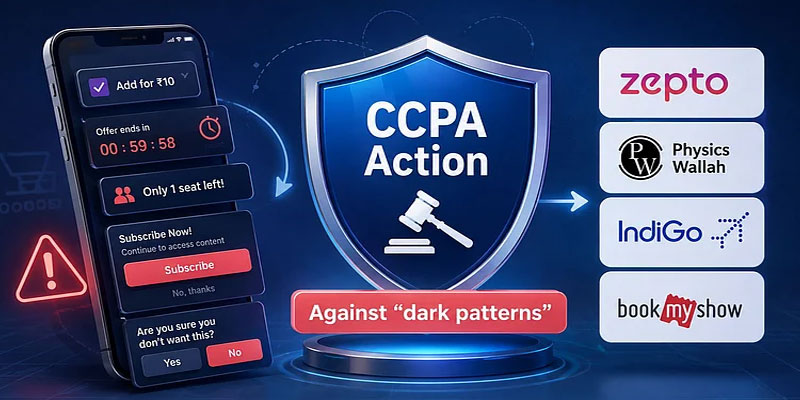
India has stepped up its campaign against deceptive digital practices, imposing cumulative penalties of nearly ₹20 lakh on nine leading online platforms, including Zepto, BookMyShow, IndiGo, Physics Wallah, FirstCry, PharmEasy, SpiceJet, McAfee and coaching platform Anuj Jindal. The Central Consumer Protection Authority (CCPA) has accused these companies of using "dark patterns"—design techniques that subtly manipulate consumers into making choices they might not otherwise make. The move marks a significant shift from issuing advisory notices to actively enforcing consumer protection norms in India's rapidly expanding digital marketplace.
What Are Dark Patterns?
Dark patterns are deceptive user-interface and user-experience (UI/UX) designs that influence consumers into taking actions against their best interests. They exploit users' limited attention, urgency and behavioural biases during online purchases, subscriptions or cancellations.
Recognising the growing threat, the Central Consumer Protection Authority (CCPA) notified the Guidelines for Prevention and Regulation of Dark Patterns in November 2023 under the Consumer Protection Act, 2019. These guidelines prohibit interface designs that undermine consumer autonomy or impair informed decision-making.
The regulations identify 13 categories of dark patterns, including:
· False urgency: Creating artificial scarcity or limited-time offers.
· Basket sneaking: Adding products, memberships or donations without explicit consent.
· Drip pricing: Revealing additional charges only at the final payment stage.
· Subscription traps: Making cancellation difficult while encouraging easy sign-ups.
· Confirm shaming: Using guilt-inducing language to discourage users from declining offers.
· Other prohibited practices include interface interference, bait-and-switch, disguised advertisements, nagging, trick wording, software-as-a-service billing and rogue malware.
Latest Enforcement Action
The latest penalties demonstrate how these practices appear in everyday digital transactions.
Zepto Marketplace received the highest penalty of ₹7 lakh after the CCPA found that additional handling charges and membership fees were introduced later in the checkout process, amounting to alleged drip pricing and basket sneaking.
BookMyShow was directed to discontinue its pre-selected ₹1 BookASmile donation, with the regulator emphasising that charitable contributions also require explicit user consent.
IndiGo came under scrutiny for alleged confirm shaming, where users declining an optional service reportedly encountered the message, "No, I will take risk," making the refusal appear irresponsible.
Earlier, in June 2026, the CCPA had also fined PhysicsWallah ₹5 lakh and McAfee ₹1 lakh while directing both companies to eliminate misleading interface practices.
Although the monetary penalties are relatively modest for large corporations, the regulator has stressed that mandatory design changes, public accountability and continued monitoring are equally important components of enforcement.
Consumer Rights Must Shape Digital Innovation
India's action against dark patterns reflects a growing recognition that consumer protection must evolve alongside digital commerce. As online platforms increasingly rely on behavioural design to influence purchasing decisions, transparency and informed consent have become fundamental rights rather than optional features. The latest enforcement sends a clear message that convenience cannot come at the cost of consumer autonomy. Going forward, businesses will need to ensure that pricing is transparent, choices are presented fairly and consent is genuinely voluntary. A trustworthy digital economy depends not only on technological innovation but also on ethical design that places consumers—not algorithms—at the centre of every transaction.
(With agency inputs)