India’s ₹62,500-crore Mobile Phone Manufacturing Scheme (MPMS), notified by the Ministry of Electronics and Information Technology on August 21, represents a new phase in the country’s electronics ambitions. Effective retrospectively from April 1, 2026, through FY2030-31, MPMS replaces the Production-Linked Incentive scheme for Large Scale Electronics Manufacturing, signalling a shift from simply producing phones in India to building an ecosystem in which Indian companies increasingly control brands, technology, intellectual property and supply chains.
From Make in India to Deeper Value Creation
The mission builds on Make in India and Atmanirbhar Bharat, but addresses a crucial weakness in the earlier manufacturing model. India is now the world’s second-largest mobile-phone manufacturer by volume, while 99.2% of phones consumed domestically are manufactured locally. Electronics production has increased seven-fold and exports eleven-fold since FY2014-15, with smartphones becoming India’s largest export product category in 2025.
Yet much of this success remains assembly-led. Domestic value addition has improved from roughly 15% to 23%, but components, design, patents and critical supply chains remain areas where India has significant ground to cover.
Two Tracks, One Strategic Objective
MPMS divides support into two target segments.
· Target Segment 1 (TS1) focuses on large-scale manufacturers and electronics manufacturing services firms registered in India. Eligible companies can receive incentives of 2.25% to 5% on eligible sales. Applicants need a FY2025-26 turnover of at least ₹10,000 crore. Existing brands must generate incremental sales of ₹5,000 crore over the baseline, while new brands qualify after reaching ₹10,000 crore in annual Indian sales.
An additional incentive of up to 1.5 percentage points is available for domestic sourcing of specified components and sub-assemblies, encouraging manufacturers to deepen localisation.
· Target Segment 2 (TS2) represents the scheme’s more ambitious technological objective. Qualifying Indian brands receive a 5% incentive, with another 3% available for Indian design and R&D. Companies must have at least ₹1,000 crore turnover in FY2025-26, Indian incorporation, domestically held intellectual property and trademarks, Indian management control and more than 51% ownership by Indian citizens.
These conditions are designed to ensure that incentives create genuine Indian technology and brands rather than merely foreign products carrying Indian labels.
PLI’s Scale Creates the Launchpad
The earlier PLI-LSEM programme demonstrated that incentives could dramatically expand production. Reported output reached ₹11.61 lakh crore against an ₹8.12-lakh-crore target, while investment exceeded ₹20,500 crore against ₹7,000 crore envisaged. The programme helped attract major global players and Apple-linked manufacturers, while the broader electronics ecosystem reportedly generated around $14 billion in investment and approximately 12 lakh jobs.
MPMS now targets cumulative mobile-phone production of about ₹39 lakh crore and 60,000 direct jobs over five years.
The Real Test: Can India Own the Value Chain?
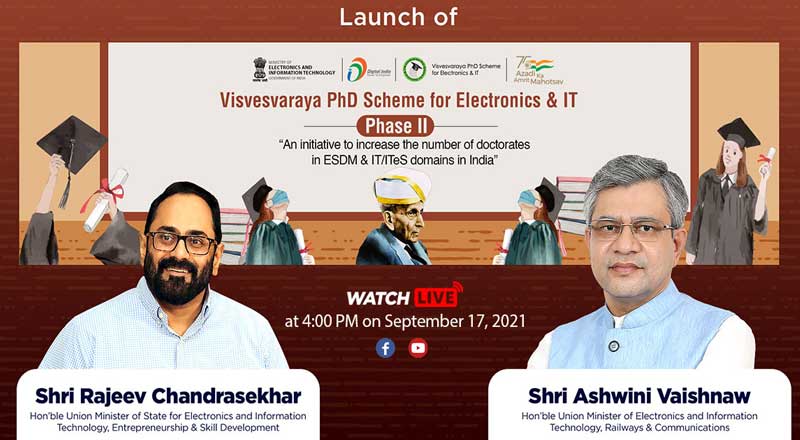
With the scheme operationalised, three domestic companies are reportedly discussing TS2 participation. Union Minister Ashwini Vaishnaw has indicated that an India-designed phone with domestically owned IP could potentially reach the market within 10–14 months.
From Manufacturing Powerhouse to Technology Owner
MPMS is therefore more than another production subsidy. Its real test will be whether India can develop globally competitive suppliers, stronger design capabilities, quality systems and semiconductor linkages. The ultimate ambition is clear: India should not merely manufacture the world’s phones; it should increasingly own the ideas, technology, brands and value chains behind them.
(With agency inputs)