Washington and New Delhi Move Closer to Critical Minerals Deal
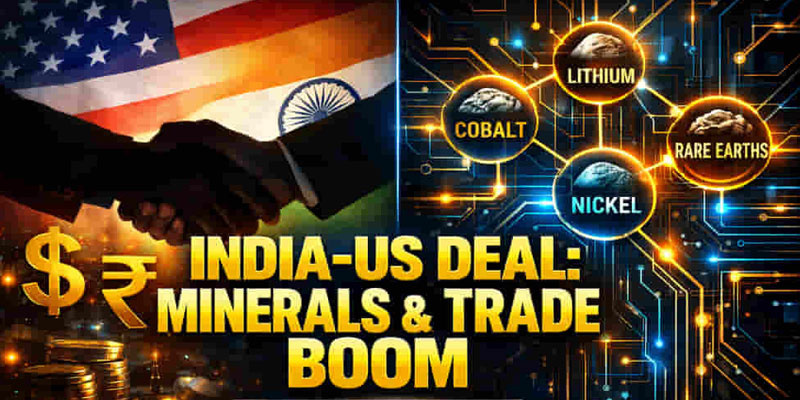
The United States and India are on the verge of finalizing a landmark agreement on critical minerals, signaling a major shift in global supply chain strategy. Speaking at the India Today Conclave 2026, US Ambassador Sergio Gor said Washington and New Delhi are “very close” to concluding a pact that will secure key mineral resources essential for emerging technologies and national security.
The proposed deal comes at a time of rising geopolitical uncertainty and supply disruptions. Critical minerals such as lithium, cobalt, graphite, gallium and rare earth elements power industries ranging from electric vehicles and batteries to advanced defense systems and semiconductors. Currently, much of the global supply chain for these minerals is heavily dominated by China, creating strategic vulnerabilities for both nations.
For India and the United States, the agreement represents a broader push to diversify supply sources while strengthening technology partnerships under expanding bilateral cooperation.
Strategic Imperatives Behind the Deal
India currently imports a significant portion of these minerals, exposing its industries to supply disruptions and price volatility. A formal partnership with the United States would enable joint sourcing from mineral-rich regions such as Africa and South America through initiatives like the Mineral Security Partnership.
For Washington, the agreement supports efforts to reduce dependence on Chinese-controlled mineral supply chains. For New Delhi, it complements domestic industrial policies such as the “Make in India” initiative while strengthening economic resilience amid global uncertainties.
Impact on India’s Semiconductor Ambitions
One of the most significant beneficiaries of the minerals pact could be India’s rapidly developing semiconductor sector. Chip manufacturing relies heavily on rare earth elements such as neodymium, gallium and germanium, which are used in fabrication equipment and advanced electronics.
India currently imports nearly all of its semiconductor-grade rare earth materials, leaving new fabrication projects vulnerable to external shocks. Stable mineral supplies under the proposed deal could reduce input costs and improve reliability for chip manufacturers.
This is particularly important as India expands semiconductor production through government incentive programs and international partnerships. Companies such as Micron Technology and Tata Group have already begun investing in fabrication and assembly facilities in the country.
With secure mineral access, India hopes to accelerate its goal of becoming a major player in the global semiconductor ecosystem by the end of the decade, supporting sectors such as artificial intelligence, electric vehicles, telecommunications and defense electronics.
The Role of Modi–Trump Diplomacy
Beyond economics, the deal also reflects the role of political chemistry between leaders. Ambassador Gor credited the strong personal relationship between Prime Minister Narendra Modi and US President Donald Trump for pushing negotiations forward.
Their rapport—built over several years of high-profile diplomatic engagements—helped break bureaucratic deadlocks and accelerate discussions around a broader Bilateral Trade Agreement. Gor described the two leaders as decisive “dealmakers” who were able to move negotiations across the finish line when talks stalled.
This leader-driven diplomacy has already revived trade momentum between the two countries, with bilateral commerce surpassing $200 billion. The minerals pact is expected to become another cornerstone of this expanding strategic partnership.
A Strategic Partnership for the Future
The impending US–India critical minerals agreement marks more than a trade deal—it reflects a deeper geopolitical realignment in an era of contested supply chains and technological competition. By securing access to essential resources, both nations aim to strengthen economic resilience, support advanced manufacturing, and counter strategic dependencies.
For India, the pact could accelerate the rise of its semiconductor and clean-energy industries. For the United States, it reinforces a partnership with one of the world’s fastest-growing economies. If finalized soon, the agreement may well become a defining pillar of the evolving US–India strategic partnership in the global technology race.
(With agency inputs)