Brent Surges as Gulf Tensions Rock Energy Markets
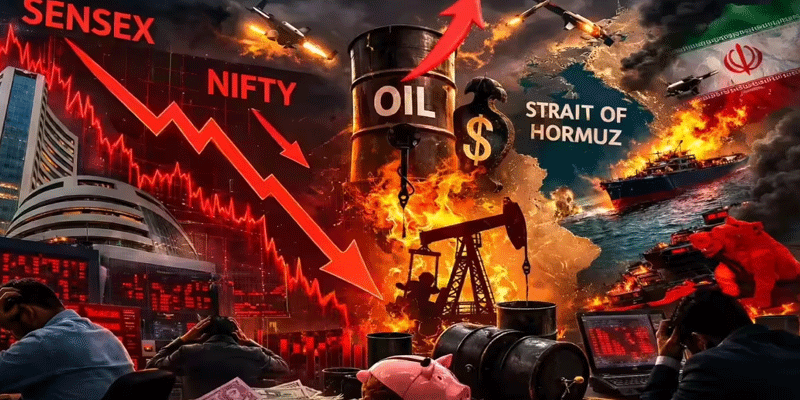
Global oil markets were jolted after Brent Crude surged past the $100-per-barrel mark on March 12, climbing nearly 9 percent amid escalating attacks on shipping in the Gulf region. The spike followed a series of Iranian strikes on commercial vessels and energy infrastructure, intensifying fears of a supply disruption in one of the world’s most vital oil corridors.
In response to the sharp price surge, the International Energy Agency announced an emergency release of 400 million barrels of oil from strategic reserves held by its member nations. The move—one of the largest coordinated energy interventions in history—is designed to stabilize markets and cushion the global economy from a prolonged supply shock.
War-Driven Supply Shock in the Gulf
The surge in oil prices reflects growing disruptions linked to the ongoing conflict involving Iran, the United States, and Israel. Reports indicate that Iranian strikes targeted more than 16 vessels across the Gulf, including two tankers near Iraq’s al-Faw port and a cargo ship transiting the Strait of Hormuz.
The waterway is a critical artery for global energy trade, carrying around 13 million barrels of oil per day—roughly one-fifth of global petroleum shipments. Any disruption here can quickly send shockwaves through global markets.
Iran’s tactics reportedly include drone strikes, missile attacks, and maritime mines. The United States Navy has responded by intercepting several suspected mine-laying operations, underscoring the growing militarization of the shipping route.
IEA’s Historic Emergency Oil Release
To counter the supply shock, the International Energy Agency coordinated a massive release of 400 million barrels from strategic petroleum reserves across its 32 member states. The initiative aims to inject enough supply into global markets to offset temporary disruptions and curb price volatility.
The United States will contribute the largest share, releasing approximately 172 million barrels from its Strategic Petroleum Reserve. The intervention surpasses the record drawdown during the 2022 energy crisis, when about 180 million barrels were released to stabilize markets following geopolitical disruptions.
While the move is expected to ease immediate panic, analysts warn that reserves provide only temporary relief if physical oil flows remain restricted.
Global Market Ripples
Despite the intervention, energy markets remain volatile. Analysts caution that a full closure of the Strait of Hormuz could push oil prices toward $150 or even $200 per barrel, triggering widespread inflation and economic slowdown.
Import-dependent economies such as India and European nations are particularly vulnerable. India, which imports roughly 88 percent of its crude needs, faces rising fuel costs, currency pressure, and potential disruptions to sectors like aviation and shipping.
Major producers such as Saudi Arabia are attempting to increase output to stabilize supply, but spare production capacity remains limited following earlier production cuts by oil-exporting alliances.
Energy Security in a Fragile Geopolitical Landscape
The latest surge in oil prices highlights how quickly geopolitical tensions can destabilize global energy markets. The coordinated release of strategic reserves may calm markets in the short term, but it cannot fully replace sustained oil flows through the Gulf.
Ultimately, the crisis underscores the fragility of global energy supply chains and the world’s continued dependence on a handful of strategic chokepoints. Until tensions ease and shipping routes are secured, markets are likely to remain volatile—reminding policymakers and economies alike that energy security is inseparable from geopolitical stability.
(With agency inputs)