87 Dead, over 1.28 Lakh Still Affected in Assam
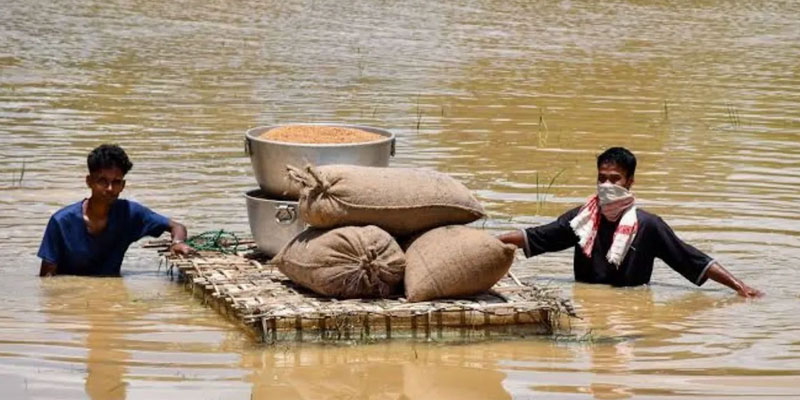
Assam's annual battle against floods remains far from over despite signs of gradual improvement. According to the Assam State Disaster Management Authority (ASDMA), the death toll has climbed to 87 after two more fatalities were reported from Sivasagar, while 1,28,071 people continue to be affected across seven districts. Although floodwaters have receded in several areas over the past few days, the India Meteorological Department (IMD) has issued a fresh warning of heavy to very heavy rainfall, raising fears that the fragile recovery could once again be disrupted.
Why Assam Faces Annual Flood Devastation
Flooding has become a recurring monsoon challenge for Assam due to its unique geography and hydrology. The mighty Brahmaputra River and its numerous tributaries frequently overflow during the southwest monsoon, inundating vast stretches of the state's low-lying plains.
Heavy rainfall in Assam and upstream catchment areas of Arunachal Pradesh and neighbouring states further aggravates the situation. Riverbank erosion, silt accumulation, shrinking wetlands and inadequate drainage reduce the river system's capacity to absorb excess water, making floods more frequent and destructive.
Current Situation Shows Improvement, But Risks Persist
The latest ASDMA bulletin indicates that around 380 villages remain submerged, while nearly 14,230 hectares of agricultural land continue to be under floodwaters.
Among the worst-hit districts, Sivasagar has reported around 55,200 affected residents, followed by Charaideo with 34,050 and Jorhat with 20,209 people impacted.
The situation has improved considerably compared to late July, when more than three lakh people were affected across the state, with over 551 villages inundated and approximately 21,500 hectares of farmland submerged. Falling river levels and receding waters have allowed many families to begin returning home, but restoration of normal life remains a distant goal.
IMD Issues Fresh Rain Warning
Even as relief operations continue, the IMD has forecast heavy to very heavy rainfall accompanied by thunderstorms over Assam, Arunachal Pradesh and Nagaland in the coming days.
The warning is significant because rainfall in upstream catchment areas can rapidly swell the Brahmaputra and its tributaries, causing downstream flooding even if local rainfall remains moderate. Districts already battered by flooding—including Sivasagar, Charaideo, Golaghat and Jorhat—remain particularly vulnerable.
Fresh rainfall could trigger flash floods, urban waterlogging, landslides in adjoining hill regions and renewed disruptions to roads, bridges, schools and essential services, potentially delaying rehabilitation efforts.
Beyond Relief: Building Long-Term Flood Resilience
The floods have once again exposed the vulnerability of Assam's rural communities, whose livelihoods depend heavily on agriculture and livestock. Crop losses, damaged infrastructure, disrupted drinking water supply and prolonged displacement continue to affect thousands of families even after floodwaters begin to recede.
While rescue operations, relief camps and compensation remain immediate priorities, experts stress that Assam's recurring flood crisis demands long-term solutions. Strengthening embankments, restoring wetlands, improving drainage systems, enhancing river management and expanding early-warning networks are essential to reducing future losses. As authorities closely monitor river levels and prepare for the IMD's latest weather warning, the focus must remain on protecting lives today while building resilience for tomorrow. For Assam, true recovery will come not merely when the waters recede, but when communities can rebuild their homes, livelihoods and confidence against the certainty of future floods.
(With agency inputs)